

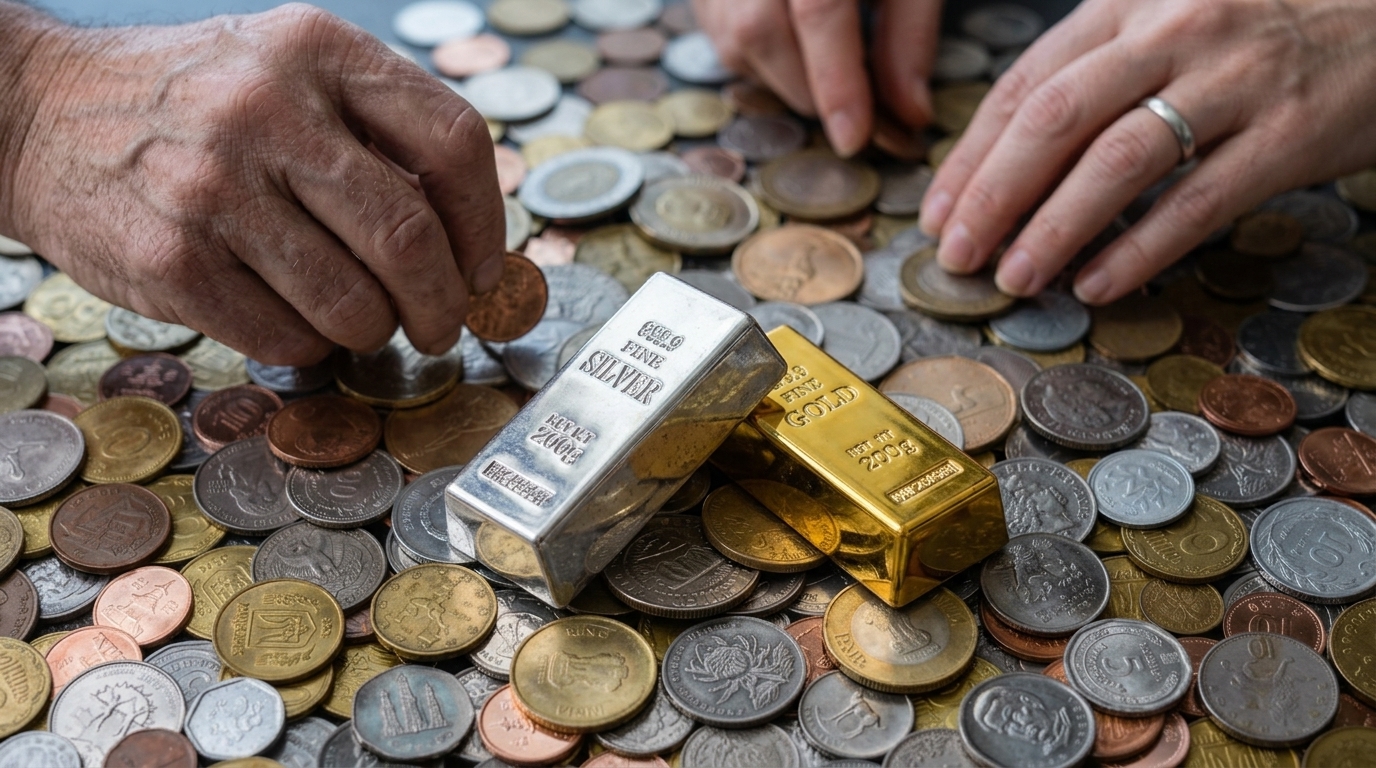
The history of markets has taught us that during a storm, investors seek a "harbor." Traditionally, this harbor was built with gold, Swiss francs, and US Treasury bonds. However, the escalation of the conflict between the United States and Iran in the first half of 2026 did not follow the familiar script. Instead of a steady rise in "safe havens," we witnessed unprecedented volatility that left analysts wondering if the old rules still apply.
The Demystification of Gold and the Liquidity Trap
For centuries, gold was considered the ultimate hedge against inflation and war. When the first missiles struck strategic infrastructure, gold prices saw an initial spike, which proved short-lived. The cause lies in the desperate need for liquidity. In a world dominated by high-frequency algorithms, investors were forced to liquidate their gold positions to cover margin calls in other, more exposed sectors.
Furthermore, the rise of digital assets has created a competitive pole. Although Bitcoin did not function as a pure safe haven, its existence fragmented the capital flow that would traditionally have been directed exclusively toward precious metals. Gold is no longer the only "alternative currency," and the lack of physical portability in conditions of global supply chain crisis reduced its attractiveness for large institutional portfolios.
The Crisis of Confidence in Government Bonds
The most disturbing phenomenon was the behavior of US Treasury bonds. Historically, in every crisis, bond yields fell as prices rose due to demand. This time, fear of the massive US fiscal deficit, combined with the costs of a new military involvement, led to a paradoxical bond sell-off.
- Foreign bondholders, particularly Asian central banks, began reducing their exposure fearing potential sanctions or asset freezes.
- Inflation, fueled by skyrocketing energy prices due to the Strait of Hormuz conflict, made fixed bond yields less attractive.
- The weaponization of the dollar as a foreign policy tool has led many countries to seek alternatives outside the US financial system.
This "de-dollarization" in practice meant that US debt is no longer considered the ultimate risk-free asset. When the shelter starts leaking, the entire structure of the modern economy is called into question.
The Role of AI and Algorithms
A parameter often overlooked is the speed at which markets react in 2026. AI models managing trillions of dollars do not operate on the emotion of fear but on statistical correlation. As soon as data showed that traditional correlations (e.g., stocks down - bonds up) were breaking, algorithms proceeded with massive sell-offs across the board.
"We are not just experiencing a geopolitical crisis, but a crisis of the predictive models we have trusted for forty years," said a leading Wall Street analyst.
This automated panic response created a liquidity "black hole." Even the Swiss franc, considered the world's most stable currency, suffered violent fluctuations as central banks tried to balance their own foreign exchange needs. Safety, as we knew it, has now become a luxury that the market cannot accurately price.
Conclusion: The New Architecture of Safety
The lesson from the US-Iran conflict is clear: in a multipolar world, no asset is perfectly safe. Diversification is no longer just about the type of asset, but also its geographic and jurisdictional base. Investors are now turning to hard assets, such as energy infrastructure and agricultural land, which have intrinsic value regardless of the stability of monetary systems. The end of the safe haven myth marks the beginning of an era where the only true safety is adaptability.





