

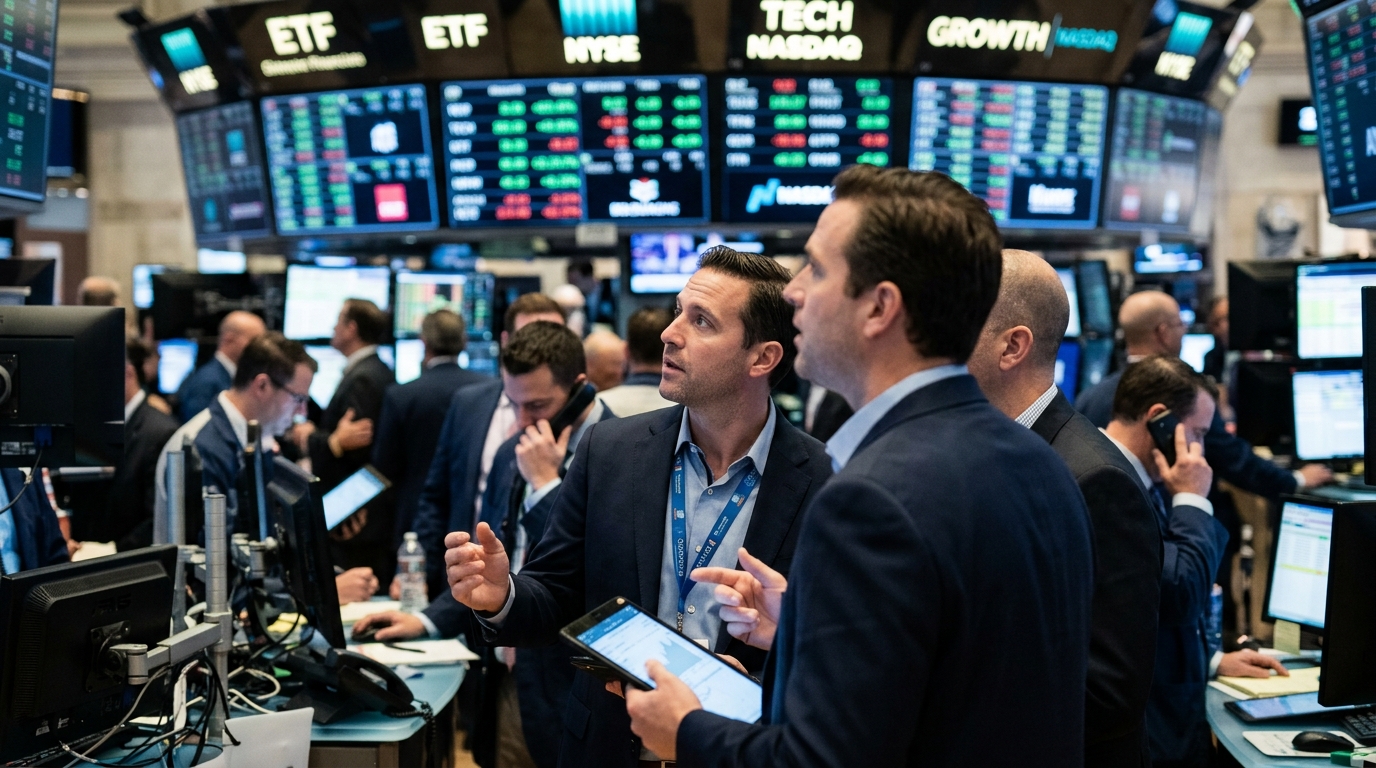
The era of speculative AI mania has matured into a calculated, fundamental-driven landscape. As we navigate through 2026, investors are no longer merely hunting for the next 'Nvidia'; they are seeking comprehensive ecosystems that integrate Artificial Intelligence into the very fabric of daily business operations. For the retail investor with $1,000 to deploy, choosing an Exchange-Traded Fund (ETF) remains the most rational move, providing diversification and exposure across the entire technology value chain.
The Shift from Hardware to Software and Services
In previous years, market attention was almost exclusively fixated on semiconductor manufacturers. Today, the momentum has shifted. The central question is no longer who makes the chips, but who uses those chips to generate tangible value. The top AI ETFs of 2026 reflect this evolution. The Global X Artificial Intelligence & Technology ETF (AIQ) remains one of the most balanced choices. It doesn't restrict itself to hardware; it extends into companies providing cloud solutions, big data analytics, and Generative AI applications.
By investing $1,000 in AIQ, an investor gains a stake in giants like Microsoft, Alphabet, and Meta, but also in rising software powers that have successfully capitalized on AI-driven productivity. This strategy mitigates reliance on the intense volatility of the semiconductor industry, which is often buffeted by geopolitical tensions and supply-demand cycles.
The Rise of Robotics and Physical AI
Another standout option for 2026 is the Global X Robotics & Artificial Intelligence ETF (BOTZ). While digital AI dominated headlines in the early 2020s, 'Physical AI'—the integration of intelligence into robotic systems—is now driving growth in manufacturing and healthcare. BOTZ offers exposure to companies developing autonomous systems, surgical robots, and automation solutions for the global supply chain.
Investing in robotics is essentially a bet on solving the demographic challenges of developed economies. As the workforce ages, the necessity for automation becomes undeniable. For an investor with a five-year horizon, BOTZ provides a unique opportunity to participate in a structural shift of the global economy, moving beyond the narrow confines of Silicon Valley software.
Risk Management and Cost Efficiency
When investing $1,000, every dollar counts. A critical factor often overlooked is the expense ratio. Specialized ETFs tend to carry higher costs compared to traditional index funds like the S&P 500. However, the potential alpha offered by the AI sector can justify costs in the range of 0.40% to 0.70%.
- Diversification: Avoid putting all your capital into a single niche ETF if possible, though with $1,000, selecting one robust, broad-based ETF is usually more efficient than fragmentation.
- Dividend Yield: Most AI ETFs focus on growth rather than dividends. If you are looking for passive income, you might need to look toward more traditional sectors.
- Geopolitical Risk: AI is the new frontline for US-China competition. Ensure your chosen ETF has appropriate geographical allocation to weather trade restrictions.
"Artificial Intelligence is no longer a sector of technology; it is the operating system of the global economy."
In conclusion, for the investor starting today with $1,000, the Global X Artificial Intelligence & Technology ETF (AIQ) stands out as the most comprehensive and secure choice for long-term growth. It combines the stability of Big Tech with the explosive potential of new AI applications, offering a balanced exposure to the future of human innovation.





