

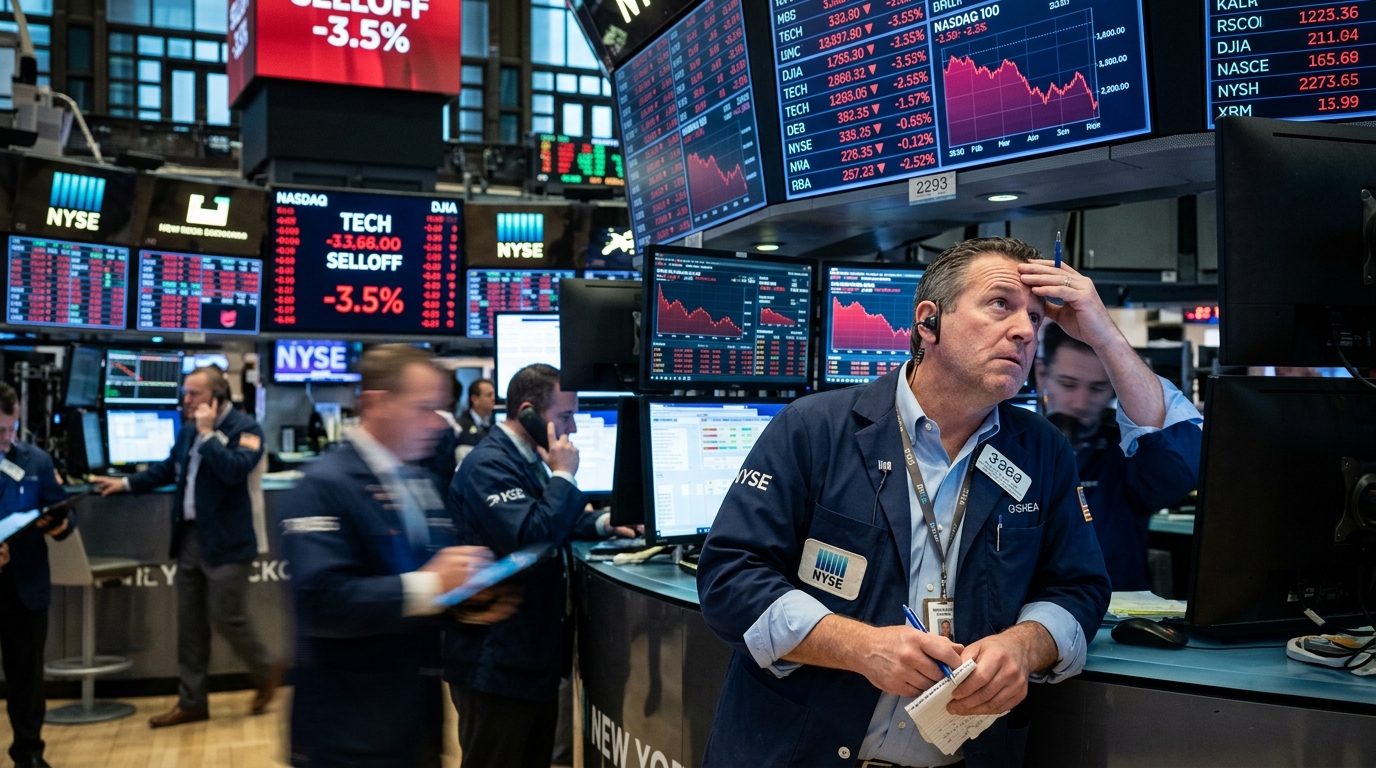
Yesterday's session on Wall Street was more than just a day of red numbers; it was a moment of introspection for the global capital markets. As we approach mid-2026, the euphoria that defined the previous two years—fueled by the Artificial Intelligence explosion—seems to be giving way to a more measured, if not skeptical, approach. The technology sector, the traditional engine of the S&P 500 and Nasdaq, found itself at the epicenter of a selloff that dragged the broader market lower.
Anatomy of the Selloff: From Expectations to Reality
According to analysis by Veronica Willis, Global Investment Strategist at Wells Fargo, the market is currently in a "digestion" phase. Valuations for semiconductor companies and cloud infrastructure providers have reached levels that demand not just positive results, but absolute perfection. Yesterday's decline wasn't triggered by a single catastrophic event, but by an accumulated investor fatigue regarding the promise of future earnings that are taking longer than expected to materialize on the balance sheets of non-tech companies.
The "Magnificent Seven," which has now evolved into a more diverse group of tech leaders, saw their market capitalizations shrink by billions within hours. The primary concern centers on the cost of capital. With interest rates remaining at levels the market deems "restrictive," financing the massive computational power required for AI is becoming increasingly expensive, putting significant pressure on profit margins.
The Role of Banking and Business Credit
A crucial perspective was provided by Shruti Patel, Chief Product Officer at US Bank, who emphasized the importance of business banking in the current environment. While big tech firms sit on massive cash piles, the small and medium-sized enterprises (SMEs) that form the backbone of the economy are struggling to adopt these technologies due to high borrowing costs. This creates an "adoption gap" that affects revenue projections for software giants.
- Investors are rotating capital into more defensive sectors, such as energy and consumer staples.
- The 10-year Treasury yield remains the primary regulator of risk appetite.
- Geopolitical uncertainty surrounding the chip supply chain continues to cause market jitters.
"We aren't seeing a crash, but a necessary reallocation of capital," Willis noted during Bloomberg's 'The Close'.
Outlooks for the Second Half of 2026
The movement on June 22 is seen by many as a harbinger of a more "grounded" period. Analysts at Susquehanna point out that the focus is now shifting from hardware (the chips) to software and services. The market is looking for proof that AI can generate real value for the end-user and increase productivity in sectors like healthcare and manufacturing. If upcoming quarterly earnings reports do not confirm this trend, the pressure on tech stocks may persist, forcing the Federal Reserve to reconsider its monetary policy sooner than anticipated.
In conclusion, Wall Street is at a crossroads. Technology remains the core of growth, but the era of "blank checks" has passed. Spending discipline and strategic clarity are now the keywords for any CEO wishing to maintain shareholder confidence in an environment of increased volatility. The coming months will determine whether this is a temporary correction or a fundamental repricing of the digital economy.





