

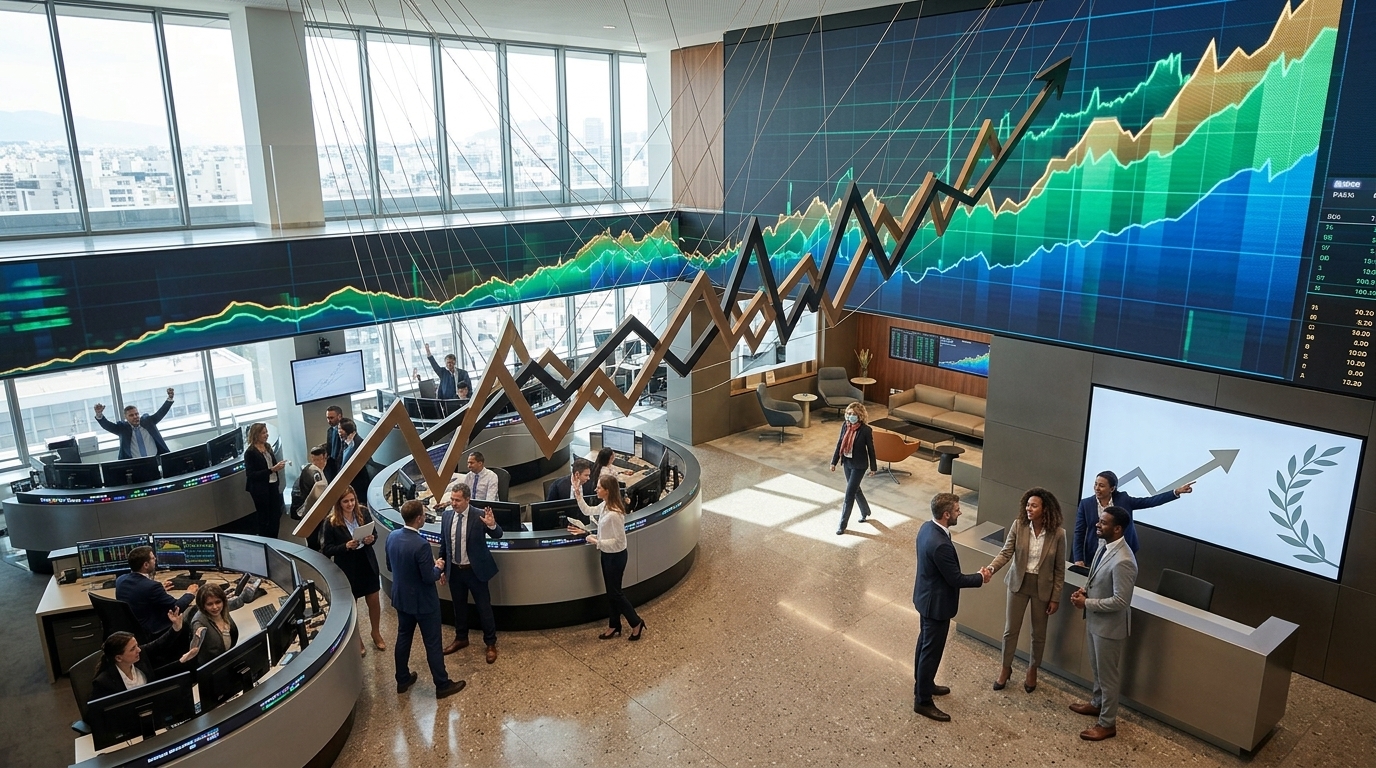
The announcement by STOXX, the index provider owned by Deutsche Börse, to upgrade Greece from "Emerging" to "Developed" market status marks a milestone that extends far beyond the confines of stock exchange tickers. Scheduled for implementation on September 21, 2026, this decision serves as the formal validation of the Greek economy's return to European normalcy, decisively closing a chapter of marginalization that began in 2013.
Historical Context: From Crisis to Reinstatement
To grasp the significance of this upgrade, one must recall 2013. At the time, amidst the deepest economic crisis experienced by a Western nation in peacetime, Greece was downgraded to emerging market status. It was a move reflecting collapsed market capitalization, a lack of liquidity, and existential uncertainty regarding the country’s future in the Eurozone. For thirteen years, the Athens Stock Exchange (ATHEX) shared the same category as markets like Vietnam or Egypt, despite Greece remaining a core member of the Euro.
Rejoining the Developed Markets is not merely a title of honor. It is the culmination of years of fiscal consolidation, the cleaning up of the banking system, and the attraction of foreign direct investment. STOXX, evaluating both qualitative and quantitative criteria—such as free float, ease of access for foreign investors, and the regulatory framework—has determined that Greece now meets the requirements to compete in the "premier league" of global capital markets.
Impact on Investment Flows: The Transition Paradox
The transition from Emerging Markets (EM) to Developed Markets (DM) carries a unique challenge known as the "upgrade paradox." In the world of emerging markets, Greece was a "big fish in a small pond," holding significant weight in relevant indices. In the world of developed markets, it will initially be a "small fish in a vast ocean."
- Outflows from EM Funds: Investment funds focused exclusively on emerging markets will be forced to liquidate their Greek holdings as the country exits their mandate.
- Inflows from DM Funds: Conversely, the massive pools of capital tracking developed market indices will begin allocating to Greek equities. The scale of these funds is many times larger than EM funds, promising greater depth and stability in the long run.
- Qualitative Investor Upgrade: Greece will now attract institutional investors with long-term horizons, such as pension funds and insurance companies, which typically avoid the volatility of emerging markets.
The Role of Banks and Blue Chips
Greek banks and large-cap companies (blue chips) play a central role in this transition. The full divestment of the Hellenic Financial Stability Fund (HFSF) from systemic banks and the successful placement of shares with international investors acted as a catalyst. Companies in energy, construction, and technology now possess the scale and transparency required by international STOXX indices.
"The upgrade is not the finish line, but the starting point for a new period of maturity. Greece is no longer treated as a 'special case' of crisis; it is becoming part of the European investment mainstream," market executives noted.
However, the period leading up to September 2026 requires diligence. The government and regulatory bodies must ensure that the momentum of reforms does not wane. Digitalization of the state, the speed of justice, and maintaining fiscal discipline remain critical factors in convincing new, more demanding investors that Greece is a safe and profitable destination.
Conclusion: A New Chapter
September 21, 2026, will be recorded as the day Greece fully regained its economic dignity in international markets. The STOXX upgrade is a seal of resilience for an economy that managed to transform itself from its ashes. The challenge now is to diffuse this success into the real economy, ensuring that a "developed market" status translates into a developed society and sustainable prosperity for all citizens.





