

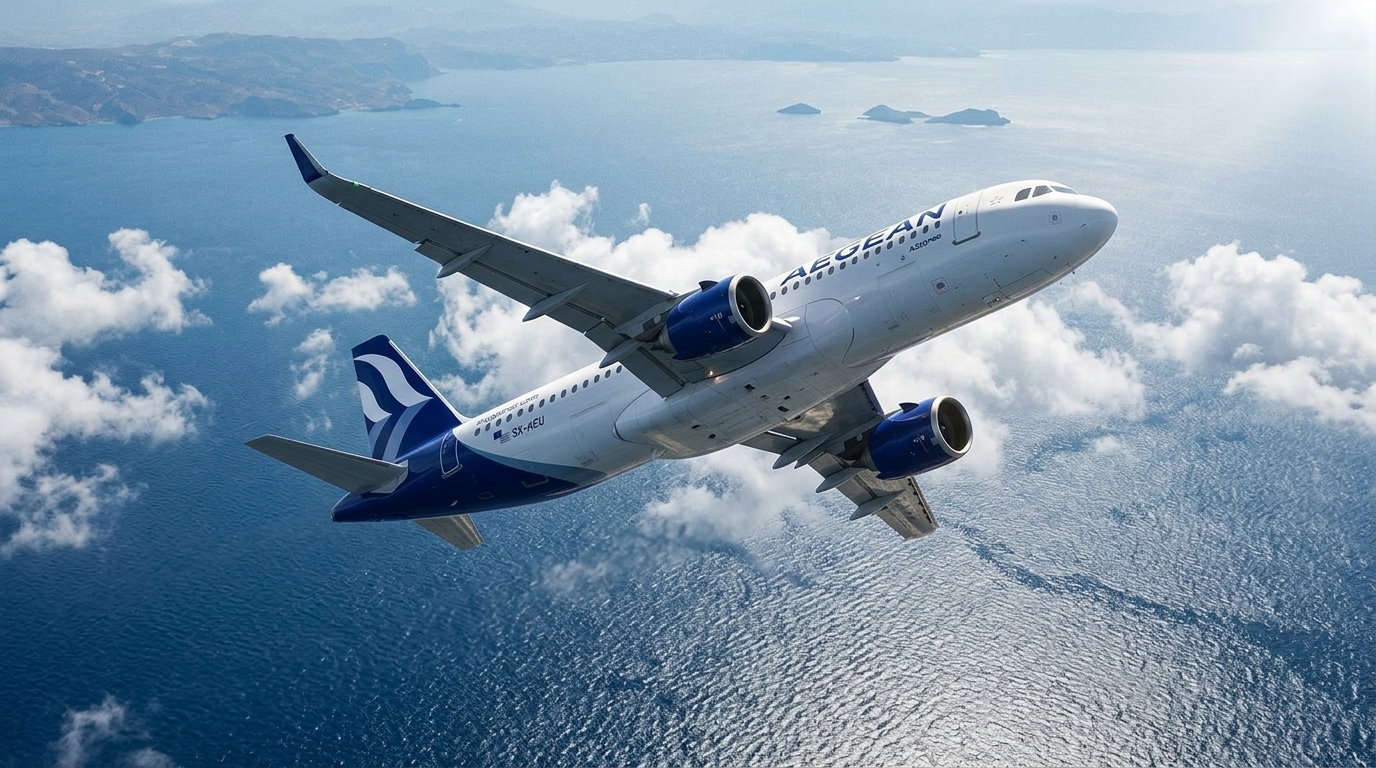
In a period of significant volatility for international markets, Aegean Airlines has managed to solidify its position among the elite of the Athens Stock Exchange, crossing the critical threshold of a €1 billion market capitalization. This development is not merely a numerical achievement; it reflects the profound recovery of the Greek tourism sector and the company's successful restructuring strategy following the pandemic crisis. The company's stock has shown remarkable resilience, drawing momentum from improving international relations in the Eastern Mediterranean and expectations for a de-escalation of tensions between the US and Iran.
Geopolitics as a Growth Catalyst
For an airline based in Greece, geopolitical stability is not a luxury but a prerequisite for survival. Recent reports of a potential rapprochement between Washington and Tehran have acted as a "tailwind" for Aegean's shares. A reduction in geopolitical risk in the Middle East translates directly into lower risk premiums, more stable fuel prices, and, most importantly, the uninterrupted flow of tourists to and from the wider region. Aegean, having invested significantly in routes to the Middle East and North Africa, is uniquely positioned to reap the benefits of any diplomatic normalization.
Analysts point out that the stock's sensitivity to Middle Eastern developments is twofold. On one hand, there is the cost of fuel, which is directly impacted by the oil balance in the Persian Gulf. On the other hand, traveler psychology is extremely vulnerable to armed conflicts. The current rise in market cap indicates that investors are betting on a "calm waters" scenario, which will allow the company to fully exploit the 2026 summer season, which is expected to be historic for Greek tourism.
Strategic Investment in Fleet and Efficiency
Beyond exogenous factors, Aegean's internal strategy forms the foundation of its stock market ascent. The gradual replacement of the older fleet with new Airbus A320neo and A321neo aircraft has been a game-changer for profitability. These aircraft offer up to 20% lower fuel consumption, shielding the company against oil price fluctuations. Furthermore, the increased range of the new models allows Aegean to explore routes to new, more distant markets, expanding its customer base beyond traditional European borders.
The company's management, under Eftichios Vassilakis, has demonstrated rare discipline in cost management without sacrificing the service quality that has ranked it among the top regional airlines globally. The return to dividend distributions after the COVID-19 hiatus provided the "signal" institutional investors were waiting for to take significant positions in the stock. This confidence is reflected in the current valuation, which is now moving at levels that attract international capital from major foreign investment houses.
Challenges and the Future of the Skies
Despite the optimism, the path forward is not without turbulence. Competition from low-cost carriers (LCCs) remains intense, especially on routes to popular Greek island destinations. Aegean must balance maintaining its premium character with the need for competitive pricing. Additionally, new European Union environmental regulations (Fit for 55) impose strict limits on emissions, which will increase operating costs through the mandatory use of Sustainable Aviation Fuels (SAF).
However, Aegean appears well-prepared for these challenges. Investments in digital infrastructure and the optimization of hub-and-spoke networks through Athens International Airport give it a comparative advantage. The recent listing of Athens International Airport on the stock exchange has also been supportive, creating a robust aviation ecosystem in the Greek capital market. The "flight" toward the €1 billion mark is perhaps only the beginning for a company that has proven it can survive and thrive in the most difficult conditions.
- Aegean Airlines' market cap surpassed €1 billion, confirming strong investor confidence.
- Geopolitical shifts in the Middle East and a potential US-Iran deal are major catalysts for the stock.
- Fleet modernization with Airbus Neo reduces operating costs and boosts competitiveness.
- The return to a dividend policy is attracting long-term institutional capital.





