

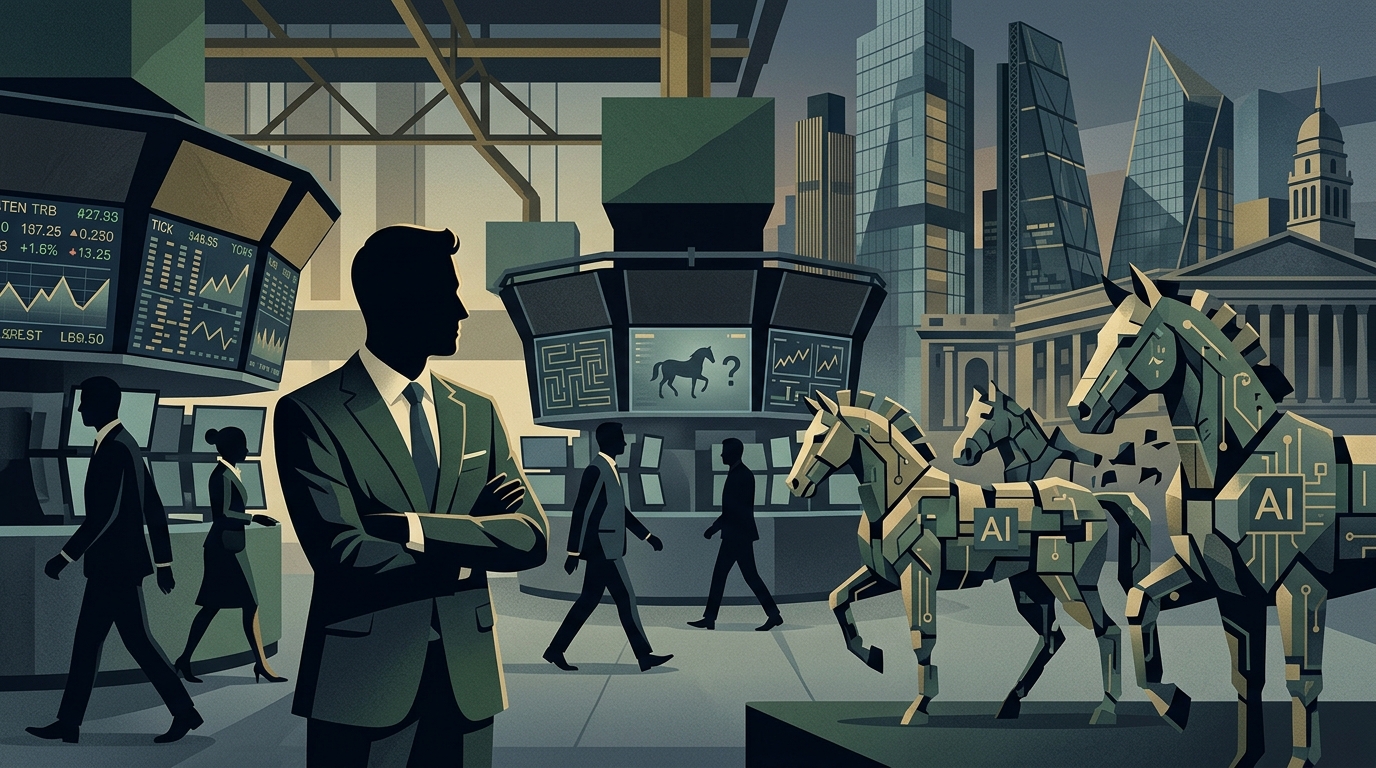
In the high-stakes world of finance, few names carry as much weight as Steve Eisman. The man who famously predicted and profited from the 2008 subprime mortgage collapse, immortalized by Steve Carell in the film *The Big Short*, is back with a warning that is sending ripples through Silicon Valley and Wall Street. According to Eisman, the current Artificial Intelligence (AI) frenzy has led investors into a dangerous misunderstanding: they are buying the wrong stocks, fueled by narratives rather than fundamental economics.
The Controversy: SpaceX vs. Froot Loops
Eisman’s most biting critique is aimed at Elon Musk’s SpaceX. In a recent market analysis, he characterized the aerospace giant as the most "absurdly valued" entity in today's market. His reasoning is ruthlessly mathematical: SpaceX is valued at over $200 billion, yet its estimated annual revenue of approximately $9 billion is comparable to that of Kellogg’s—the company that makes Froot Loops cereal.
"SpaceX is an infrastructure company with profit margins that do not justify such astronomical multiples," Eisman argues. His critique isn't about the company's undeniable technological prowess or its mission to Mars; it’s about the chasm between actual profitability and the almost "religious" devotion investors have for Musk’s vision. For Eisman, when a rocket company is priced like a software monopoly that will conquer the universe, we are in the territory of a classic investment bubble.
Where Are the Real Winners Hiding?
If investors are buying the wrong stocks, where should they be looking? Eisman suggests a pivot from "flashy" software to "boring" but essential infrastructure. AI requires massive amounts of energy and physical resources. Consequently, the true victors won't just be the creators of sophisticated chatbots, but the companies that power and cool the massive data centers required to run them.
- Utilities and the Power Grid: Demand for electricity is expected to skyrocket. Eisman is betting on power providers that are modernizing the grid to handle AI’s voracious appetite.
- Hardware and Thermal Management: Beyond Nvidia, there is an entire sector dedicated to managing the immense heat generated by AI processors. These "unsexy" industrial companies are the backbone of the revolution.
- Apple: The Consumer Gateway: Eisman views Apple as the primary conduit for AI to reach the masses. The necessity for users to upgrade devices (iPhones, Macs) to run local AI models will trigger a massive new hardware super-cycle.
Market Psychology and the 2008 Lesson
Eisman’s analysis is rooted in the belief that markets often confuse "stories" with "value." In 2008, the story was that home prices never fall. Today, the story is that AI will replace every human activity overnight, yielding infinite profits. While he doesn't deny the AI revolution's significance, he warns that the path to profitability will be much more mundane and heavily dependent on the cost of semiconductors and electricity.
"Everyone is looking for the next great software application, but no one is looking at who is going to pay the electricity bill to run that software," he noted.
Conclusion: A Return to Fundamentals
Steve Eisman’s warning serves as a cold shower for a market in a state of euphoria. The comparison of SpaceX to Froot Loops might sound cynical, but it highlights a profound truth: at the end of the day, stocks must reflect cash flows, not just promises. For the discerning investor, the opportunity lies not in chasing the titles that dominate the headlines, but in understanding the physical value chain that makes AI possible. The technology may be digital, but its requirements—and its ultimate profits—remain deeply rooted in the physical world.





