

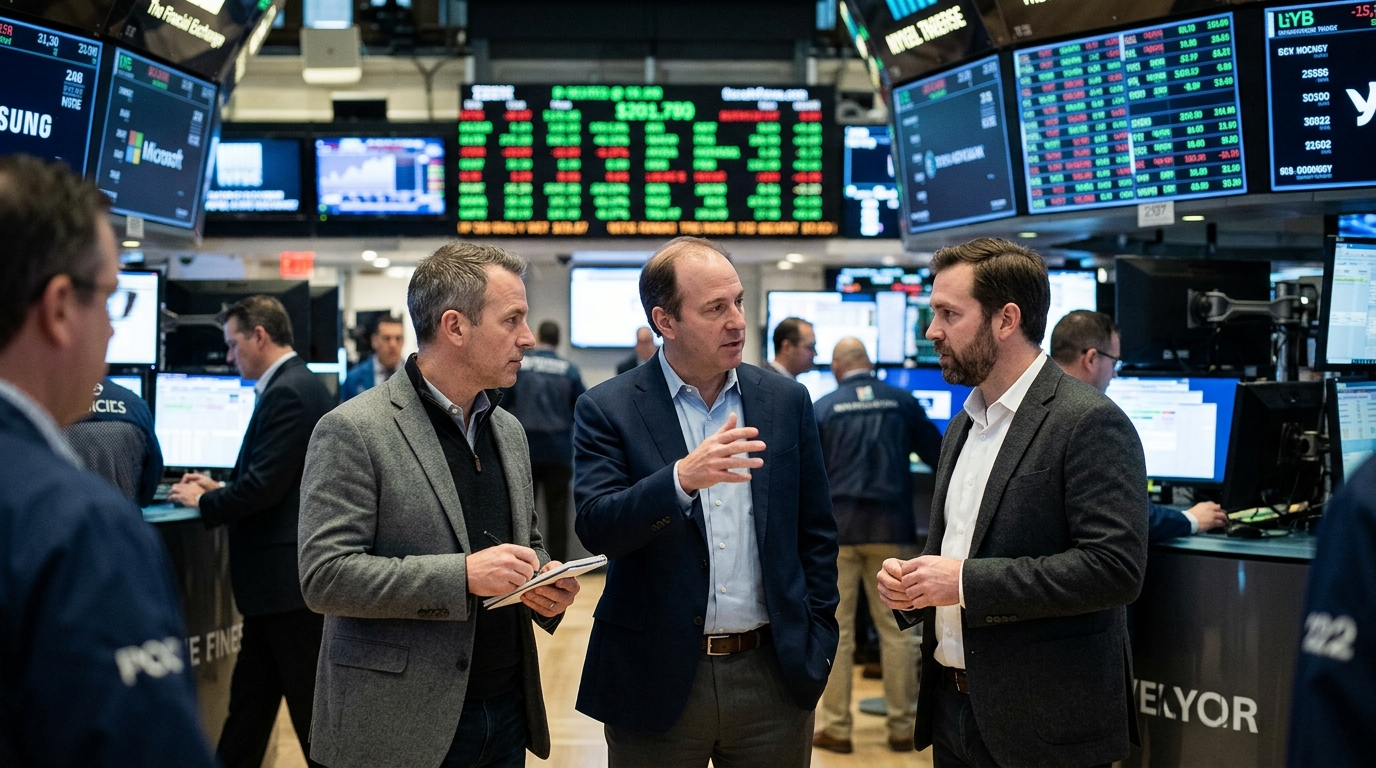
The history of megacap initial public offerings (IPOs) is littered with cautionary tales. From Facebook’s much-anticipated 2012 debut to Uber’s rocky 2019 premiere, the pattern has remained remarkably consistent: an initial burst of euphoria followed by a sobering correction as investors realize that expectations have outpaced revenue reality. However, as we move through June 2026, the financial landscape is bracing for a trio of listings that promise to shatter this historical precedent: Elon Musk’s SpaceX, Anthropic, and OpenAI.
The Shadow of History: Why Megacaps Usually Stumble
In the financial world, the term "megacap IPO" often triggers a sense of trepidation. Historically, companies entering the public market with valuations exceeding $50 billion or $100 billion tend to underperform during their first year of trading. This occurs primarily because private market investors—venture capitalists and private equity firms—have already extracted the lion's share of exponential growth before the company reaches the public. By the time shares are available on Wall Street, the price is often "priced to perfection," leaving little upside for retail and institutional newcomers.
However, Bloomberg Tech analysts suggest that SpaceX, Anthropic, and OpenAI are not just "another set of tech firms." They represent what is increasingly called "systemic technology." They aren't merely selling software or a niche service; they are constructing the foundational infrastructure upon which the global economy will rest for decades. SpaceX dominates orbital access and satellite connectivity, while OpenAI and Anthropic hold the keys to Artificial Intelligence—the utility often described as the "new electricity."
The SpaceX Anomaly: Infrastructure vs. Speculation
SpaceX stands in a league of its own. With its private market valuation already hovering around $200 billion, its impending IPO (or the potential spin-off of Starlink) is expected to be the financial event of the decade. Unlike the ephemeral dot-com companies of the past, SpaceX possesses massive physical assets and a market position that resembles a natural monopoly.
- Starlink: The satellite internet service is no longer an experiment; it is a profitable entity with millions of global subscribers, providing critical telecommunications for governments and remote enterprises.
- Starship: The successful deployment of the largest rocket in history is slashing the cost of orbital payloads to levels that make asteroid mining and Martian colonization economically feasible scenarios.
"SpaceX isn't an investment in a transportation company; it's a bet on the future of human presence beyond Earth," notes a senior investment banking strategist in New York.
AI's Public Debut: Anthropic and OpenAI as Systemic Assets
If SpaceX represents the hardware of the future, OpenAI and Anthropic represent the cognitive software. The transition from private to public markets for these two giants will be the ultimate litmus test for the sustainability of the AI boom. Yet, there is a fundamental difference compared to previous tech cycles: the revenue is real, and it is growing at an unprecedented velocity.
OpenAI, backed by Microsoft, has successfully integrated GPT-5 (and its successors) into the daily workflows of billions. Conversely, Anthropic, with its focus on "Constitutional AI" and safety, has become the preferred partner for corporate clients wary of the unpredictable nature of large language models. Their public listings will provide the massive liquidity required to fund the astronomical compute costs necessary to achieve Artificial General Intelligence (AGI).
Navigating the Risks: Capital Intensity and the Regulatory Moat
Naturally, significant risks remain. The energy crisis driven by hyper-scale data centers and the increasingly stringent AI regulations in the EU and the US could dampen growth. Furthermore, geopolitical instability directly impacts the semiconductor supply chains upon which these companies are entirely dependent.
Nevertheless, 2026 appears to be the year the rules change. Investors are no longer hunting for the next social media app; they are seeking companies that guarantee national security and technological autonomy. In this context, SpaceX, Anthropic, and OpenAI are not just stocks—they are "systemic institutions." If they manage to maintain their momentum post-IPO, they will have authored a new chapter in economic history, proving that massive size is not an inherent barrier to continued, explosive growth.





