

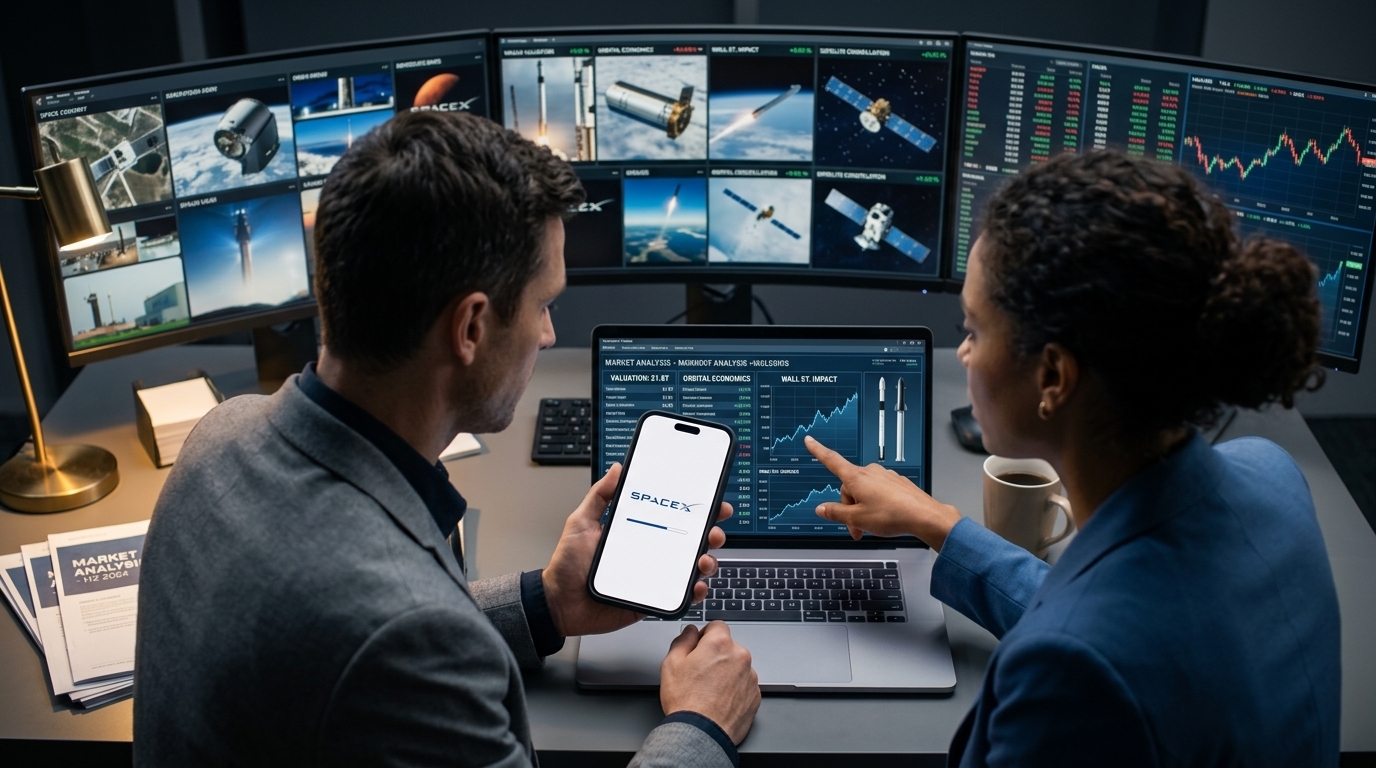
The story of SpaceX is no longer a tale of rockets that simply launch and land; it is a narrative of the complete realignment of the global economic and geopolitical map. According to recent reports shaking Wall Street, Elon Musk’s company has moved forward with a new tender offer, pricing shares at $135 each. This move catapults the company’s valuation to an unthinkable $1.8 trillion, placing it in the same elite tier as giants like Apple, Microsoft, and Nvidia.
The Liquidity Strategy and the 'Musk Model'
What makes the case of SpaceX unique is not just its size, but how it maintains dominance without resorting to traditional public markets. While most companies of this magnitude would have already launched an Initial Public Offering (IPO), SpaceX chooses to remain private, raising capital through secondary sales. This allows employees and early investors to liquidate their gains while leadership retains absolute control, free from the pressure of quarterly earnings reports that often stifle long-term innovation.
Raising $75 billion through this process demonstrates unprecedented confidence from institutional investors. They aren't just buying stakes in an aerospace company; they are betting on the infrastructure of the next century. Wall Street, which once viewed Musk with skepticism, is now forced to adapt to a model where value is measured not by current dividends, but by dominance in strategic sectors such as telecommunications and space access.
Starlink: The Cash-Generating Machine
If the Starship rocket is the vision for the future, Starlink is the cash machine of the present. The satellite internet service has evolved from an experimental project into a global powerhouse providing connectivity even to the most remote corners of the planet. With millions of subscribers and critical importance in conflict zones and disaster-stricken areas, Starlink provides SpaceX with the steady cash flow required to fund the colonization of Mars.
Analysts estimate that Starlink alone could be valued in the hundreds of billions if spun off as an independent entity. However, keeping it under the SpaceX umbrella creates an ecosystem where technological superiority in transport (rockets) fuels superiority in services (internet), creating a 'moat' that competitors like Jeff Bezos’s Blue Origin struggle to bridge.
Geopolitical Implications and the Role of States
SpaceX’s rise to $1.8 trillion is not just a financial event; it is a geopolitical shift. The company has become the de facto national carrier for the United States in space, taking over missions that were once the exclusive domain of NASA. This privatization of strategic infrastructure raises questions about the power concentrated in the hands of a single individual.
- Global control over satellite communications.
- Reduction in the cost of orbital access, allowing smaller nations to have a space presence.
- The U.S. military’s reliance on SpaceX technology for national security.
As the company continues to grow, its relationship with governments will become increasingly complex. SpaceX is no longer a startup seeking contracts, but a global player setting the terms of the game, forcing regulators to reconsider the framework within which private space enterprises operate.
The Future: From Orbit to Deep Space
With a valuation at $1.8 trillion, the question is no longer whether SpaceX will succeed, but what its ceiling is. The development of Starship, the largest rocket ever built, promises to reduce the cost of transporting cargo to space to levels that will make asteroid mining and permanent Moon bases economically viable. If these predictions hold true, today’s valuation might seem small a decade from now.
"We are not just seeing the rise of a company, but the birth of a new economic category: the space economy of scale," says a leading analyst at Morgan Stanley.
In conclusion, SpaceX has managed to turn science fiction into a highly profitable reality. Wall Street may be trying to price it using traditional tools, but the truth is that the company is moving on a trajectory that transcends our planet's boundaries, redefining what 'business' means in the 21st century.





