

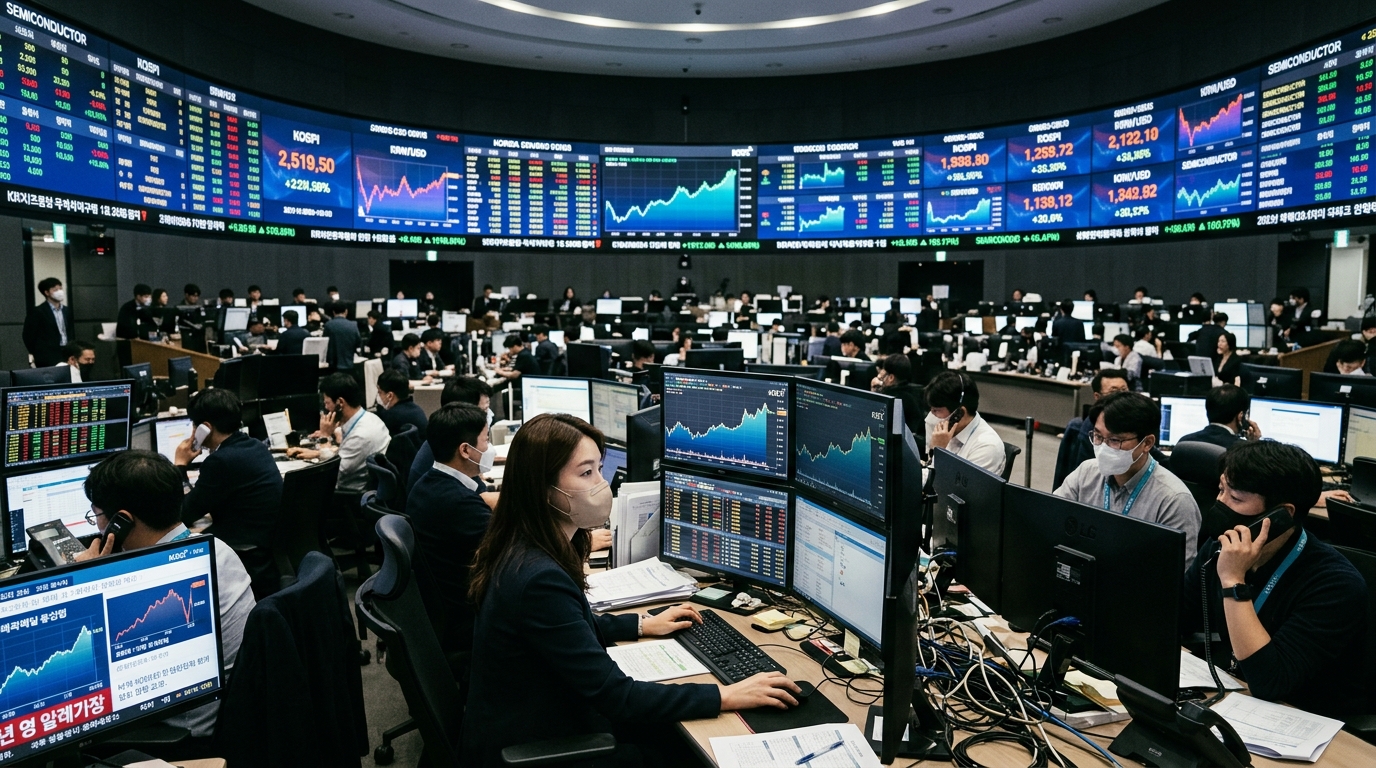
South Korea, the economy often described as the 'canary in the coal mine' for global trade, has once again proven its resilience. According to the latest data from the Bank of Korea (BoK), the current account surplus for March 2026 reached dizzying levels, fueled almost exclusively by the global market's insatiable thirst for high-tech semiconductors. However, behind the triumphant numbers lies a complex picture of economic contradiction and geopolitical risk.
The Semiconductor Hegemony in the AI Era
The export boom is no accident. As artificial intelligence (AI) becomes embedded in every facet of global industry, the need for High Bandwidth Memory (HBM) and cutting-edge processors has turned South Korea into an indispensable hub. Giants Samsung Electronics and SK Hynix are recording historic highs in their orders, with exports to the United States and emerging Asian markets more than offsetting slowdowns in other sectors.
- Semiconductor exports saw a year-on-year increase of over 35%.
- Demand for next-generation memory chips (DDR5 and HBM3E) accounts for 60% of new contracts.
- Trade flows to Southeast Asia strengthened as supply chains rearrange away from traditional reliance on China.
This 'monoculture' of chips, while extremely profitable, also creates a structural vulnerability. The Korean economy is now more dependent than ever on the AI technology lifecycle. If the AI 'bubble' shows signs of fatigue, the landing for Seoul will be rough.
The Capital Paradox: Trade vs. Investment
While cargo ships leave Busan's ports full, foreign investors seem to be taking the opposite path. Despite the record surplus, there was a sharp decline in holdings of Korean stocks by international portfolios. The cause? Escalating tensions in the Middle East and the uncertainty this causes in global energy markets.
"South Korea is in a peculiar position: it is commercially powerful but financially exposed to geopolitical winds," analysts in Seoul note.
The decline in stock values, despite corporate profitability, suggests that investors prefer the safety of the dollar or gold, fearing a generalized conflict that could disrupt energy transport routes, on which Korea fully depends to run its factories.
Geopolitical Chessboard and Supply Chains
The 'friend-shoring' strategy promoted by Washington seems to be bearing fruit for South Korea, as exports to the US continue to rise. However, managing the relationship with Beijing remains a diplomatic balancing act. China remains the largest trading partner in volume, but technological divergence is forcing Korean companies to choose sides.
Furthermore, domestic consumption in South Korea remains sluggish. High living costs and household debt mean that profits from the semiconductor trade are not 'trickling down' to the rest of society. This inequality creates pressure on the government for fiscal interventions, while the Central Bank tries to balance between inflation and the need for growth.
Conclusion: A Fragile Supremacy
The March record is an achievement that confirms South Korea's technological leadership. However, in a world where missiles in the Middle East can affect the stock price of a factory in Seoul, a surplus is not enough to provide peace of mind. Korea is called to fortify its economy beyond chips, investing in green energy and strengthening domestic demand if it wants to remain the global economic beacon it is today.





