

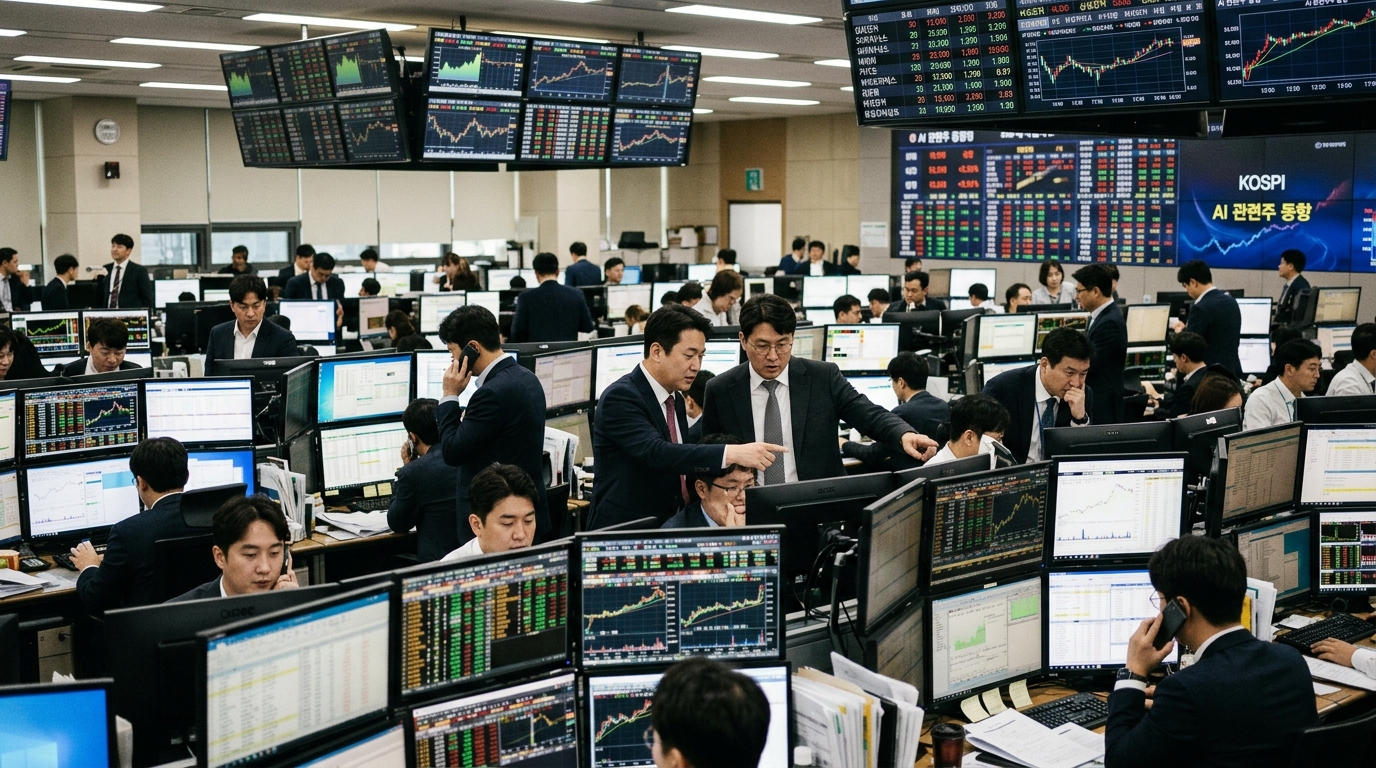
In an era where geopolitical power is measured in teraflops and semiconductors, South Korea has decided to play its boldest hand yet. The government in Seoul has announced a colossal investment program that is not merely a financial injection into the tech sector, but a comprehensive restructuring of the national economy centered on Artificial Intelligence (AI). The plan, described as the "New Digital Miracle on the Han River," aims to position the country among the top three global AI powers (AI G3) by the end of the decade.
The Semiconductor Strategy: Seoul's "Iron Bastion"
The heart of the South Korean strategy remains its dominance in semiconductors. The country, home to giants like Samsung Electronics and SK Hynix, understands that AI is not just software, but primarily hardware. The new plan envisions the creation of a massive "AI Semiconductor Mega Cluster" in Gyeonggi Province, an investment expected to exceed $470 billion over twenty years, with immediate state aid and tax incentives being activated in 2026.
Particular emphasis is placed on High Bandwidth Memory (HBM) chips, where SK Hynix already holds a leading global position, supplying Nvidia's systems. Seoul seeks to ensure that the next generation of AI chips—more energy-efficient and specialized for edge computing—will be designed and manufactured on Korean soil. This is not just an economic issue but one of national security, as reliance on global supply chains becomes increasingly precarious due to Sino-American tensions.
From Manufacturing to Innovation: Software and Ecosystems
However, South Korea knows that hardware alone is not enough. The new plan includes substantial funding for the development of domestic Large Language Models (LLMs) tailored to the Korean language and culture, as well as specialized sectors like medicine and heavy industry. The government plans to turn the state into a "living lab," integrating AI into public services, education, and defense.
- AI-Driven Public Administration: Automating bureaucratic processes and using predictive models for crisis management.
- Educational Reform: Introducing AI digital textbooks in schools for personalized learning.
- Startup Support: Creating special free trade zones for AI companies with zero taxation for the first five years.
The stakes are high, but Seoul is betting on its traditional ability to execute large-scale industrial plans with surgical precision. The collaboration between the "Chaebols" (large family-owned conglomerates) and the state, which once built the country's shipbuilding and automotive industries, is now being mobilized for the digital age.
Geopolitical Balances and Challenges
This move by South Korea comes at a time when the United States and China are in a head-on collision over technological supremacy. Seoul finds itself in a delicate balance. On one hand, it is a close ally of the US and a member of the "Chip 4" alliance. On the other, China remains one of its largest trading partners. Investing in AI is an attempt by the country to achieve "strategic autonomy."
"We cannot be mere spectators in a race that will define the future of humanity. South Korea will become the global hub that unites technological excellence with the ethical application of AI," the country's President stated during the plan's presentation.
Challenges, of course, are not lacking. A shortage of specialized labor, the high energy demands of data centers in a country with limited natural resources, and fierce competition from Taiwan and Japan are hurdles that Seoul must overcome. Furthermore, social acceptance of AI and concerns about job displacement in an already aging society are critical questions that the new plan must address.
Conclusion: The Digital Renaissance
South Korea's colossal investment plan is not just business news. It is a statement of intent. In a rapidly changing world, Seoul chooses not to follow developments but to shape them. If the gamble pays off, South Korea will no longer be just the manufacturer of the world's components, but the "brain" of the global digital economy. The success of this venture will determine whether the country remains at the forefront of progress or remains trapped in the laurels of its industrial past.





