

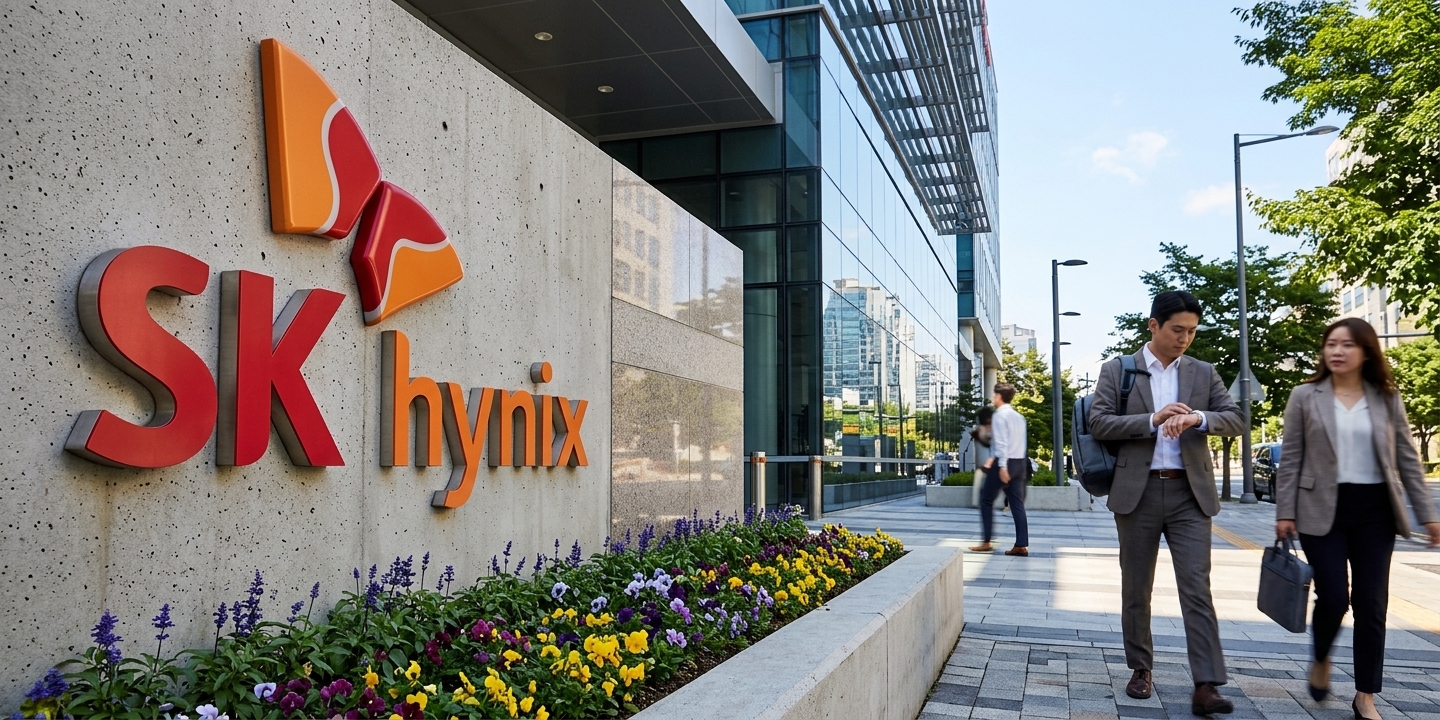
July 6, 2026, marks a pivotal moment in the global narrative of the artificial intelligence revolution. SK Hynix, the South Korean semiconductor titan that has become an indispensable cog in the AI machine, is preparing for its highly anticipated debut on the Nasdaq. After an astounding 800% rally on the Seoul exchange over the past few years, this move to Wall Street is far more than a routine corporate expansion; it is a high-stakes litmus test for the sustainability of the AI boom.
The Unchallenged Sovereign of HBM
To understand the gravity of this listing, one must understand SK Hynix’s role in the ecosystem. The company is the primary supplier of High Bandwidth Memory (HBM) for Nvidia. Without Hynix’s specialized chips, the high-performance GPUs that train and run Large Language Models (LLMs) would face catastrophic bottlenecks. By successfully outmaneuvering rivals like Samsung and Micron in the development of HBM3E and the upcoming HBM4 standards, SK Hynix has secured a near-monopoly at the core of AI infrastructure.
The decision to list on the Nasdaq comes as the global appetite for AI hardware remains insatiable, yet skepticism is beginning to brew. Investors are increasingly asking whether the current growth trajectory is sustainable or if we are witnessing the formation of a massive speculative bubble. SK Hynix is betting that direct access to U.S. capital markets will provide the liquidity and valuation premium necessary to fund the multi-billion dollar fabrication plants (fabs) required to maintain its technological edge.
Geopolitical Tightropes and Market Volatility
The U.S. listing is not without its perils. Trading on a major American exchange invites heightened regulatory scrutiny and exposes the company to the often-fickle sentiments of New York’s institutional investors. Furthermore, SK Hynix sits at the epicenter of a complex geopolitical triangle involving Washington, Beijing, and Seoul. As the U.S. continues to tighten export controls on advanced technology to China, Hynix must navigate a treacherous path—maintaining its existing manufacturing footprint in China while aligning with the security imperatives of its American partners.
- Nvidia Dependency: Over 50% of Hynix’s HBM revenue is directly tied to Nvidia’s product cycles.
- The Samsung Counter-Offensive: Samsung is pouring unprecedented resources into catching up, threatening Hynix’s market share.
- Cyclicality Risks: Historically, the memory chip market is notoriously cyclical, prone to sudden gluts and price collapses.
The Verdict on the AI Supercycle
Market analysts are viewing the SK Hynix Nasdaq debut as the ultimate "canary in the coal mine" for the AI sector. Should the stock falter post-listing, it could signal that the "easy money" phase of the AI trade has concluded, potentially triggering a broader market correction. Conversely, a strong performance would validate the thesis that the AI supercycle is still in its early innings, as global industries transition from generative AI pilot projects to full-scale enterprise integration.
"The question is no longer whether AI is transformative, but who controls the physical substrate it inhabits. SK Hynix is effectively the gatekeeper of that substrate," notes a senior analyst at a leading New York investment bank.
Ultimately, SK Hynix’s presence on the Nasdaq reshapes the investment landscape. Retail and institutional investors alike will now have direct access to one of the most critical players in the global economy at a time when technology and geopolitics are more intertwined than ever. Is this the peak of the mountain, or merely a plateau before the next ascent? The markets will provide the answer starting this Friday.





