

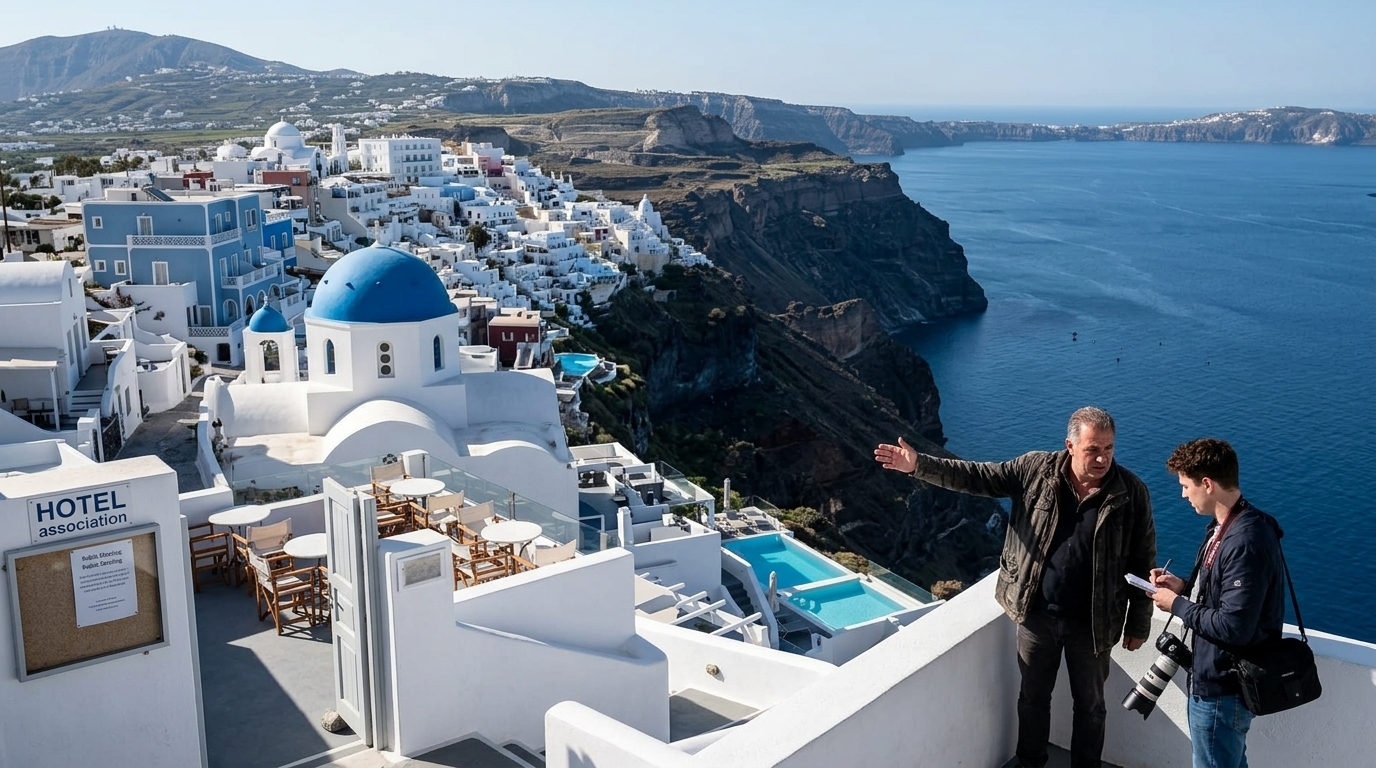
Santorini, the crown jewel of Greek tourism and one of the world's most iconic destinations, finds itself at the center of an unprecedented controversy. The Santorini Hotel Association has launched a fierce attack against the international hotel search platform Trivago, demanding the immediate withdrawal of promotional material and a public apology. The spark was ignited by a social media video that, according to local stakeholders, portrays the island in a way that damages its image and undermines its tourism value.
The Timeline of the Dispute and the 'Apple of Discord'
The conflict began when Trivago published a video on its official accounts aimed at promoting alternative or more affordable destinations. In this video, Santorini was depicted as an overcrowded destination with exorbitant prices and an atmosphere far removed from the idyllic image typically projected. This move by the platform was interpreted by the island's professionals as a direct assault on their "product," at a time when competition in the Mediterranean is fiercer than ever.
In a strongly worded letter, the Santorini Hotel Association speaks of "inappropriate and defamatory behavior." It accuses Trivago of using Santorini's name and global reputation to create content that, instead of assisting the traveler, discourages them from visiting the island by projecting stereotypes that do not reflect the full reality of the tourist experience on the island.
Digital Power of OTAs and Responsibility Towards Destinations
This clash brings to light a deeper issue: the relationship of dependence and conflict between local businesses and major Online Travel Agencies (OTAs). Platforms like Trivago, Booking, and Expedia have amassed immense power, controlling reservation flows and shaping public opinion through their algorithms.
- Hoteliers argue that the platform is "biting the hand that feeds it," as its revenue largely comes from commissions and advertising costs paid by the businesses themselves.
- There is intense dissatisfaction over the fact that Trivago's digital strategy appears to adopt the "destination dupes" trend, intentionally downgrading premier destinations to gain clicks.
- The Association emphasizes that such campaigns ignore the massive investments made on the island to upgrade services and protect the landscape.
"It is unacceptable for a platform that thrives on tourism to undermine one of the pillars of the global tourism map in such a way," members of the Association stated.
Overtourism: Reality or a Communication Weapon?
The issue of overtourism is Santorini's "Achilles' heel." While local authorities and businesses struggle to manage visitor flows, especially from cruise ships, the projection of this image by an international platform has a magnifying effect. Hoteliers claim that Trivago selectively focused on the island's most challenging moments, ignoring the periods and areas where Santorini offers high-quality, tranquil vacations.
This dispute is expected to take on legal dimensions if the platform does not respond to the request for public redress. The matter has already reached the Ministry of Tourism and the Greek National Tourism Organization (GNTO), with stakeholders calling for a stricter stance against practices that could harm the national tourism product. Santorini is not just a destination; it is a brand name that influences the image of Greece as a whole.
The Future of Relationships Between Hoteliers and Platforms
This case serves as a wake-up call for the industry. As marketing increasingly shifts to short, viral videos (TikTok, Instagram Reels), the fine line between "clever promotion" and "defamation" becomes blurred. Santorini's hoteliers declare their determination to protect their reputation, while calling for a dialogue on how platforms must respect the destinations from which they earn millions of euros annually.
Trivago, for its part, has not yet issued an official detailed statement, but the pressure is mounting. The outcome of this dispute will largely determine whether local communities can have a say in how their homelands are "packaged" and sold digitally.





