

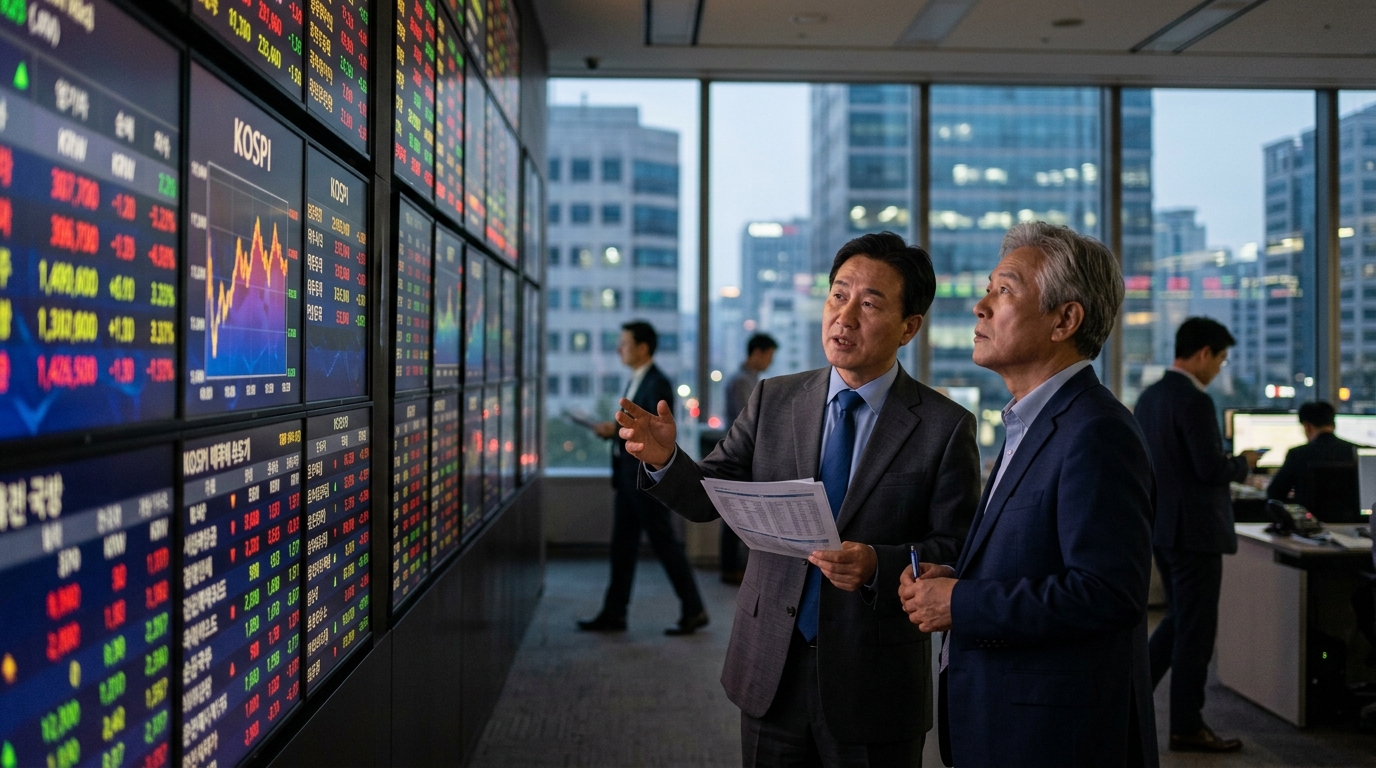
In a move that redefines the concept of industrial scale, Samsung Electronics and SK Group have announced a titanic investment program exceeding $3 trillion (over a two-decade horizon), aiming to establish South Korea as the undisputed global leader in semiconductors and Artificial Intelligence (AI). The news, which has reverberated through international financial networks, is not merely a corporate strategy but a matter of national survival in a world where computing power is the new oil.
The Gyeonggi Mega Cluster: The New Silicon Valley
The heart of this investment beats in Gyeonggi Province, where the world's largest semiconductor "mega cluster" is being created. The plan involves the establishment of dozens of new fabrication plants (fabs) and hundreds of supporting businesses, creating an ecosystem that covers everything from chip design to final packaging and distribution. Samsung, the world's largest memory chip maker, is leading the charge, aiming not only to maintain its dominance in DRAM and NAND memory but also to expand into the foundry sector, traditionally dominated by Taiwan's TSMC.
This strategy is staunchly supported by President Yoon Suk Yeol's administration, which offers generous tax incentives and infrastructure support, recognizing that the semiconductor industry accounts for 20% of the country's total exports. The scale of the investment is dizzying; the $3 trillion figure (including long-term projections and ancillary R&D spending) exceeds the GDP of many developed nations.
HBM and the AI Arms Race
The real catalyst behind this massive mobilization of capital is the explosion of Artificial Intelligence. High Bandwidth Memory (HBM) chips have become the most sought-after product in the market, as they are essential for powering the Graphics Processing Units (GPUs) from Nvidia that run large language models like GPT-4. SK Hynix, a member of the SK Group, currently holds a significant lead in HBM technology, being the primary supplier to Nvidia.
However, Samsung is striking back with its own innovations, investing billions into the development of the next-generation HBM4. The battle for dominance in AI memory is not just a matter of profitability but also of prestige. Whoever controls the flow of data within AI processors essentially controls the speed of global technological progress. Analysts point out that demand for AI chips will continue to grow exponentially, making current investments necessary to avoid future shortages in the global supply chain.
Geopolitics and the "Silicon Shield"
Beyond the financial figures, South Korea's move has deep geopolitical implications. At a time when the US and China are clashing over technological supremacy, Seoul is attempting to maintain a delicate balance. On one hand, participation in the "Chip 4" alliance (USA, Japan, South Korea, Taiwan) is essential for access to American expertise and equipment. On the other hand, China remains a crucial trading partner and a market that cannot be ignored.
The creation of the "Mega Cluster" also functions as a form of "silicon shield." By making itself an irreplaceable link in global chip production, South Korea ensures that the international community has every reason to protect stability on the Korean Peninsula. Furthermore, reducing dependence on foreign supply chains is now seen as a matter of national security. With this investment, Samsung and SK are not just building factories; they are fortifying their country's economic sovereignty for the 21st century.
Challenges and the Future
Of course, an investment of this magnitude is not without risks. The massive energy consumption required by these plants poses an environmental challenge, with the government promising the use of nuclear power and renewable sources to meet the demand. Additionally, there is the risk of oversupply if the demand for AI does not follow analysts' predictions. However, at this stage, the message from Seoul is clear: South Korea is ready to spend whatever it takes not to be left behind in the digital revolution. The $3 trillion bet is the boldest statement of economic power we have seen in modern history.





