

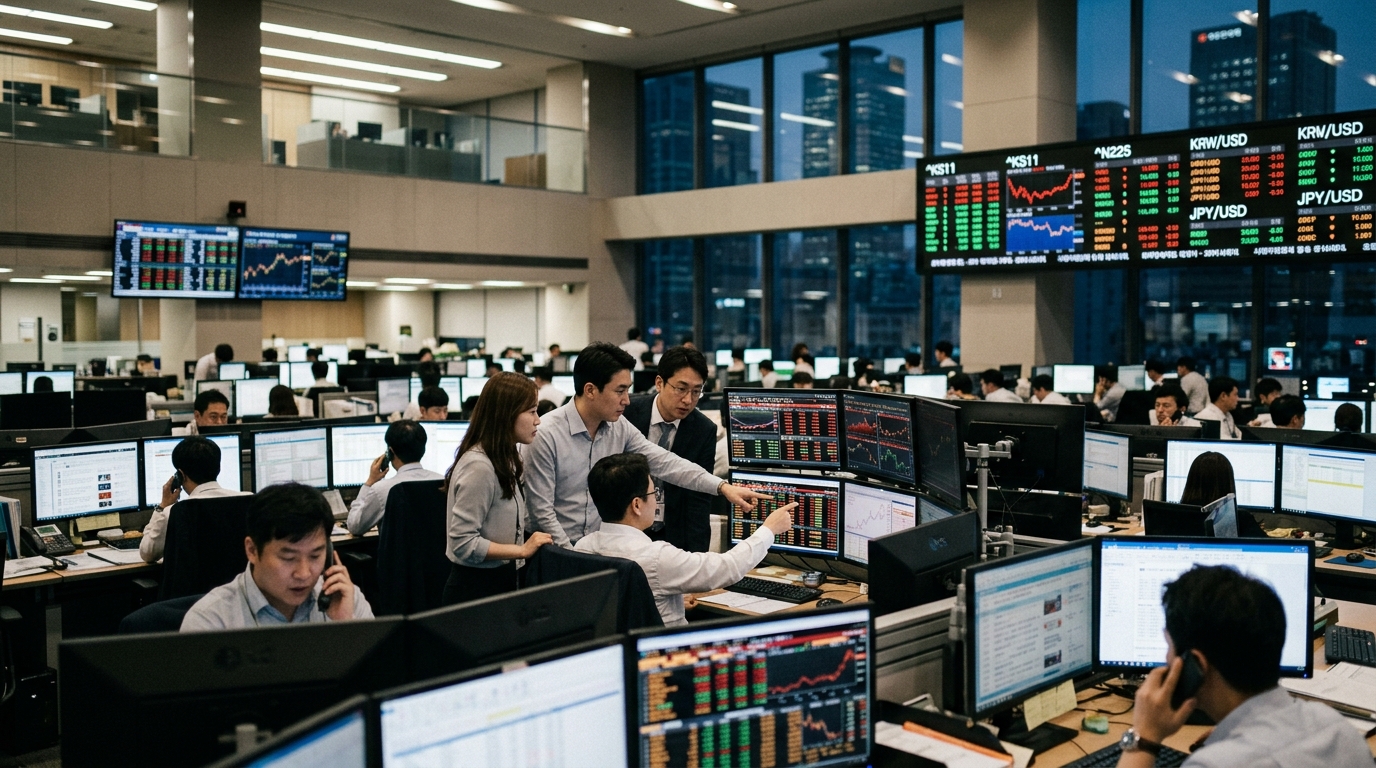
As we navigate the first half of 2026, the global discourse surrounding Artificial Intelligence (AI) has shifted from the ethereal promises of large language models to the raw reality of physical infrastructure. While investors long focused on chip architects like Nvidia, a new dynamic is emerging in the Far East. South Korea's electronic component giants, Samsung Electro-Mechanics (SEMCO) and LG Innotek, are at the heart of a financial renaissance, fueled by the insatiable need for the building blocks that allow AI to function.
The MLCC Revolution: The Silent Engine
Multi-Layer Ceramic Capacitors (MLCCs) are often referred to as the 'rice of the electronics industry.' Despite their microscopic size, their importance to AI servers is monumental. A typical AI server requires up to ten times more capacitors than a traditional server to ensure power stability and prevent signal interference. Samsung Electro-Mechanics, having invested billions in developing high-voltage and high-temperature MLCCs, is now reaping the rewards of this foresight.
The pivot toward industrial-grade MLCCs has fundamentally altered the company's profitability profile. Unlike the cyclical smartphone market, where profit margins are constantly squeezed, the data center sector offers stability and premium pricing. Analysts in Seoul estimate that SEMCO's revenue share from AI-related products will surpass 30% by the end of the year, marking a historic turning point for the group.
FC-BGA Substrates: The New Geopolitics of Packaging
Beyond capacitors, the battle for AI dominance is being fought in the realm of Flip Chip Ball Grid Array (FC-BGA) substrates. This is the critical interface that connects powerful processing chips to the system's main board. LG Innotek, traditionally known as the primary camera module supplier for Apple's iPhone, has executed an impressive strategic pivot toward high-value-added FC-BGA substrates.
LG Innotek's investment in new production lines in Gumi, South Korea, is paying off as Big Tech firms seek alternatives outside of China for their critical components. The company's ability to produce large-scale substrates with ultra-fine circuit paths makes it an indispensable partner for the next generation of AI accelerators. This strategy not only boosts profits but also reduces the company's reliance on smartphone upgrade cycles, creating a more resilient business model.
The Convergence of AI and Automotive
Another factor propelling both companies to new heights is the convergence of AI and the automotive industry. Autonomous vehicles are essentially 'data centers on wheels,' requiring the exact same cutting-edge technology found in Silicon Valley servers. Samsung Electro-Mechanics and LG Innotek have successfully transferred their expertise from consumer electronics to the automotive sector, where reliability specifications are far more stringent.
Orders from Electric Vehicle (EV) manufacturers for advanced driver-assistance systems (ADAS) and LiDAR sensors have skyrocketed. This creates a secondary wave of demand that complements the cloud server market. The ability of these firms to offer integrated solutions—from capacitors to optical recognition modules—gives them a competitive moat that is difficult for newcomers to replicate.
Challenges and Future Outlook
Despite the current euphoria, the path forward is not without obstacles. Intense competition from Japanese firms like Murata Manufacturing and Taiyo Yuden remains a constant pressure. Furthermore, volatility in raw material prices, such as palladium and nickel, can impact margins. However, the overarching trend is clear: AI is no longer an abstract software concept but an industrial engine reshaping the global electronics manufacturing map.
In conclusion, the success of Samsung Electro-Mechanics and LG Innotek serves as a testament that the true winners of the AI revolution may not only be those who write the code, but those who build the physical vessels that house it. As the demand for computing power continues to grow exponentially, the importance of these 'invisible' giants will become increasingly apparent in global markets.





