

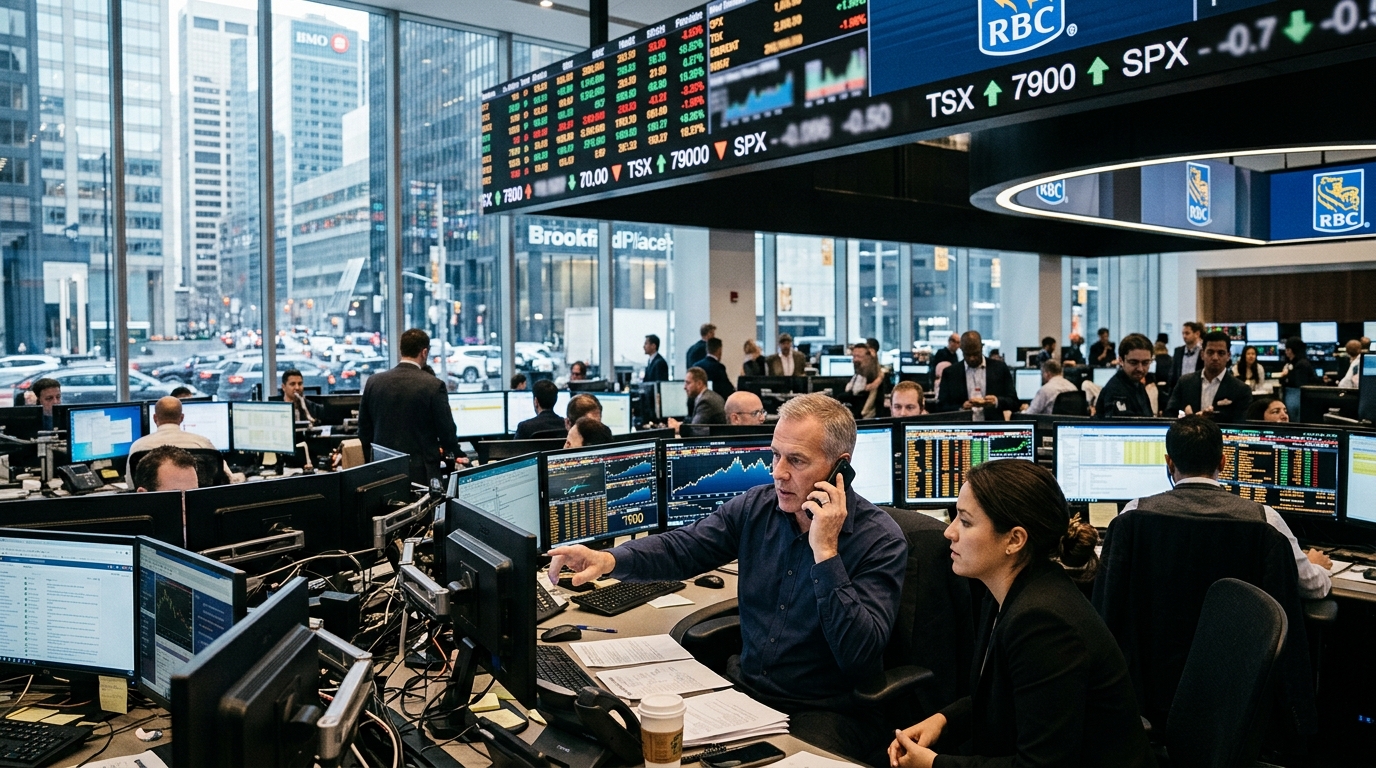
In a move that underscores the unwavering conviction of institutional investors in the potential of Artificial Intelligence, RBC Capital Markets has revised its year-end target for the S&P 500 index upward, placing it at 7,900 points. This decision is not merely a numerical adjustment but a resounding vote of confidence in how AI is reshaping the fundamentals of the global economy. As we move through May 2026, the market appears to be shifting away from fears of a "bubble" and entering a phase of structural transformation.
The Anatomy of Optimism: Why AI is Different This Time
RBC's analysis is based on the premise that Artificial Intelligence has moved from the stage of experimentation to full enterprise integration. The bank's analysts point out that the productivity gains observed in sectors beyond pure technology—such as financial services, healthcare, and manufacturing—justify higher valuations. The profitability of S&P 500 companies is no longer solely dependent on consumption but on the drastic reduction of operating costs through next-generation automation.
Furthermore, RBC emphasizes that the capital reserves of Big Tech giants continue to be channeled into AI infrastructure. This "supply chain" creates a multiplier effect on the economy. When Nvidia or Microsoft announce increased spending, this translates into revenue for semiconductor manufacturers, energy providers, and cybersecurity firms, boosting the index as a whole.
Concentration Risks and the Valuation Challenge
Despite the excitement, RBC's report does not ignore the risks. One of the main points of concern is extreme market concentration. A small number of companies still account for the bulk of the S&P 500's gains. While the 7,900 target assumes a broadening of the rally, the failure of mid-cap businesses to effectively adopt AI could create a "two-speed" market.
Critics of the forecast argue that price-to-earnings (P/E) ratios are at historical highs, reminiscent of the period before the dot-com crash. However, RBC counters that, unlike in 2000, today's market leaders possess massive cash reserves and actual profits. Today's "euphoria" is built on balance sheets, not just promises.
The Role of Monetary Policy
The path to 7,900 points is also inextricably linked to the moves of the Federal Reserve. With inflation showing signs of stabilization, the market is pricing in a more dovish stance from the U.S. central bank. Lower borrowing costs will act as an accelerator for technology investments, allowing more companies to fund their transition to the digital age. RBC believes the macroeconomic environment is now "risk-friendly," reinforcing the upside scenario.
- AI integration is boosting profit margins across the market spectrum.
- Demand for cloud infrastructure and semiconductors remains at record levels.
- The Fed is expected to maintain a balanced stance, favoring growth.
- Stock buybacks from tech companies are providing a floor for prices.
In conclusion, RBC's 7,900 forecast represents a milestone for Wall Street. If realized, it will confirm that Artificial Intelligence is not just a trend but the foundation of a new economic reality. Investors are now faced with the choice of riding the wave of optimism or remaining cautious in the face of a market that seems to defy traditional laws of gravity.





