

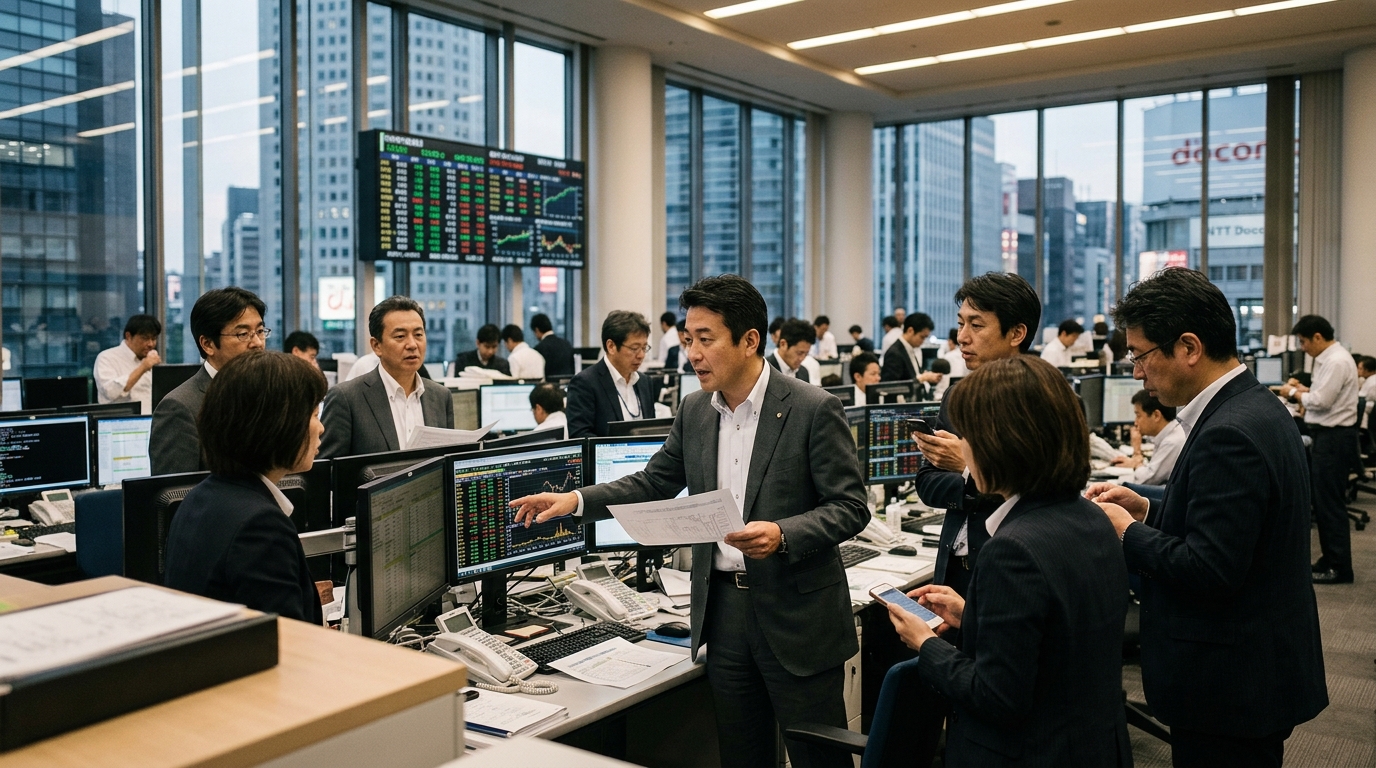
In a move that underscores the ongoing restructuring of the Japanese corporate landscape, NTT Docomo Inc., Japan's leading mobile carrier, has sold two prime plots of land in central Tokyo for approximately ¥59 billion ($371 million). This transaction, occurring during a period of intense activity in the Japanese real estate market, is not merely a liquidation move but a clear signal of the strategic direction the NTT Group is taking toward 2030.
The Strategic Unlocking of Capital
NTT Docomo’s decision to part with these assets fits into a broader framework of improving capital efficiency. For decades, Japanese companies were known for holding vast reserves of real estate and cross-shareholdings—practices often viewed as "dead capital" by foreign investors. However, under pressure from the Tokyo Stock Exchange (TSE) to improve price-to-book (P/B) ratios, companies like NTT are rethinking their balance sheet management.
The proceeds from the sale are expected to be channeled into high-growth sectors. NTT Docomo is no longer just a telecommunications company; it is transforming into a digital solutions provider, investing billions in artificial intelligence, 6G networks, and the Innovative Optical and Wireless Network (IOWN) infrastructure. Liquidating non-core assets is the fastest way to fund these expensive ventures without resorting to excessive debt.
Tokyo as an Investment Magnet
Tokyo’s real estate market remains one of the most resilient and attractive globally, despite the headwinds facing other major metropolises. The weakness of the Yen has made Japanese property a bargain for international investors, while low interest rates—despite recent slight hikes by the Bank of Japan—continue to favor large-scale deals. The sale of Docomo’s plots attracted interest from both domestic construction giants and international funds, confirming that demand for land in central locations remains sky-high.
Market analysts suggest that central Tokyo is experiencing a renaissance, with new residential and commercial complexes replacing aging office infrastructure. NTT Docomo is capitalizing on this timing to maximize its profit, selling at a market peak before Japan’s monetary policy potentially tightens further in the future.
From Real Estate to Data Centers
There is an interesting irony in how NTT manages its land. While selling central city plots, the NTT Group is aggressively expanding its footprint in other locations for the construction of data centers. The need for computing power driven by the AI explosion requires vast tracts of land and access to energy. In this sense, NTT is not moving away from real estate but changing its nature: from passive land ownership to active infrastructure that supports the digital economy.
- Balance Sheet Optimization: The sale boosts cash reserves and improves Return on Equity (ROE).
- Focus on Innovation: Funds will support the development of the IOWN network and AI applications.
- Market Confidence: This move reassures shareholders that management is committed to value creation.
In conclusion, the $371 million sale is a small but telling piece of a much larger puzzle. Japan is changing, and its pillar companies like NTT Docomo are leading this charge, converting old capital into fuel for future technological dominance. The shift from physical land to digital infrastructure marks the next chapter in the evolution of the Japanese economy.





