

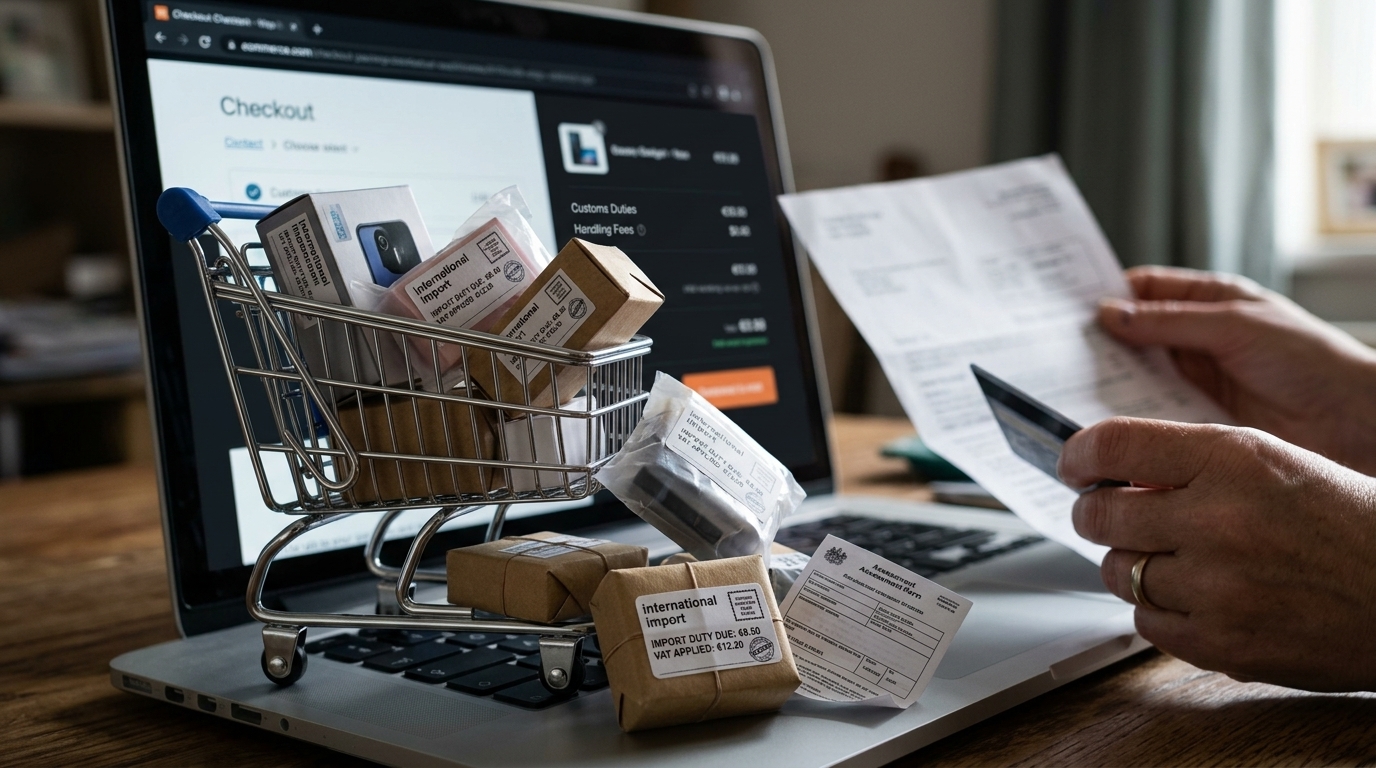
The era of carefree and hyper-cheap online consumption is coming to an end for European citizens. For years, consumers have been accustomed to ordering small items, clothing, and electronics from China at prices that often seemed surreal, taking advantage of a specific legal loophole: the customs duty exemption for parcels valued under €150. However, the European Commission, under pressure from domestic retailers and growing safety concerns, has decided to close this door for good.
This new reality translates into what many are calling a "hidden surcharge" on prices. A package that currently costs €10 could soon be burdened with an additional €9 in taxes and clearance fees, nearly doubling the cost for the final buyer. This change is not merely a tax adjustment; it is a strategic move by the EU to stem the flood of 2 billion small parcels entering its territory annually, many of which are deliberately undervalued to evade scrutiny.
Closing the €150 Loophole
Until recently, the system was straightforward: if your order from outside the EU was under €150, you only paid VAT (which, since 2021, is usually collected at the point of sale via the IOSS system). Customs duties, however, were zero. This created a massive incentive for platforms like Temu and Shein to ship millions of individual parcels directly to consumers rather than sending bulk shipments to warehouses within the EU.
The abolition of this threshold means that every single parcel, regardless of value, will now be subject to customs duties. The EU is proposing a simplified bucket system with rates ranging from 5% to 17%, depending on the product category. But the real problem for the consumer isn't just the duty itself. The heaviest burden comes from the "customs clearance fees" imposed by courier companies and national postal services. These administrative fees are often flat rates, meaning a €5 phone case could be charged an extra €5-10 just for the processing of the declaration.
The Geopolitical and Economic Rationale
There are three main pillars behind this decision: fair competition, safety, and public revenue. European retailers have long complained that it is impossible to compete with prices that exclude duties and often bypass environmental standards. The EU estimates that removing the exemption will generate an additional €750 million in revenue annually for member states.
Furthermore, authorities have identified that the lack of rigorous checks on small parcels allows products that do not meet European safety standards to enter the market. From toys containing hazardous chemicals to electronics that pose a fire risk, the sheer volume of parcels made 100% inspection practically impossible. Under the new legislation, platforms will be treated as "deemed importers," assuming responsibility for duty payments and product compliance.
Calculating the Cost: Why Your €10 Order Just Got Expensive
Let's look at a practical example to understand the scale of the impact. A consumer buys a gadget worth €10 from a Chinese platform.
1. VAT: €2.40 (assuming a 24% rate like in Greece), usually prepaid.
2. New Customs Duty: If the product falls into a 5% or 12% category, about €0.50 - €1.20 is added.
3. Clearance Fee: This is the "trap." Shipping companies charge a fixed fee for processing the parcel through customs. In many EU countries, this fee ranges from €5 to €15 for basic procedures.
In total, that €10 product could easily cost the consumer €19 or €20 at the time of delivery. This fundamentally changes the psychology of the market, as the "bargain" effectively disappears. Consumers will now have to be much more careful and calculate the total landed cost before hitting the buy button.
Strategic Shifts for Temu, Shein, and AliExpress
How will giants like Temu and Shein react? Analysts expect them to either absorb part of the cost or shift their logistics models. We are already seeing the establishment of warehouses within Europe (e.g., in Poland or Hungary), allowing products to be imported in bulk, cleared through customs once, and then moved freely within the single market. However, this model increases operational costs and reduces the vast variety they currently offer.
For local markets, this development may provide a "breather" for domestic e-commerce businesses, as the price gap narrows. On the other hand, the consumer, already facing inflationary pressures, loses a popular outlet for cheap goods. What is certain is that the "fast-everything" model from across the globe is being seriously challenged, as the EU prioritizes the protection of its internal market over the absolute freedom of global trade.





