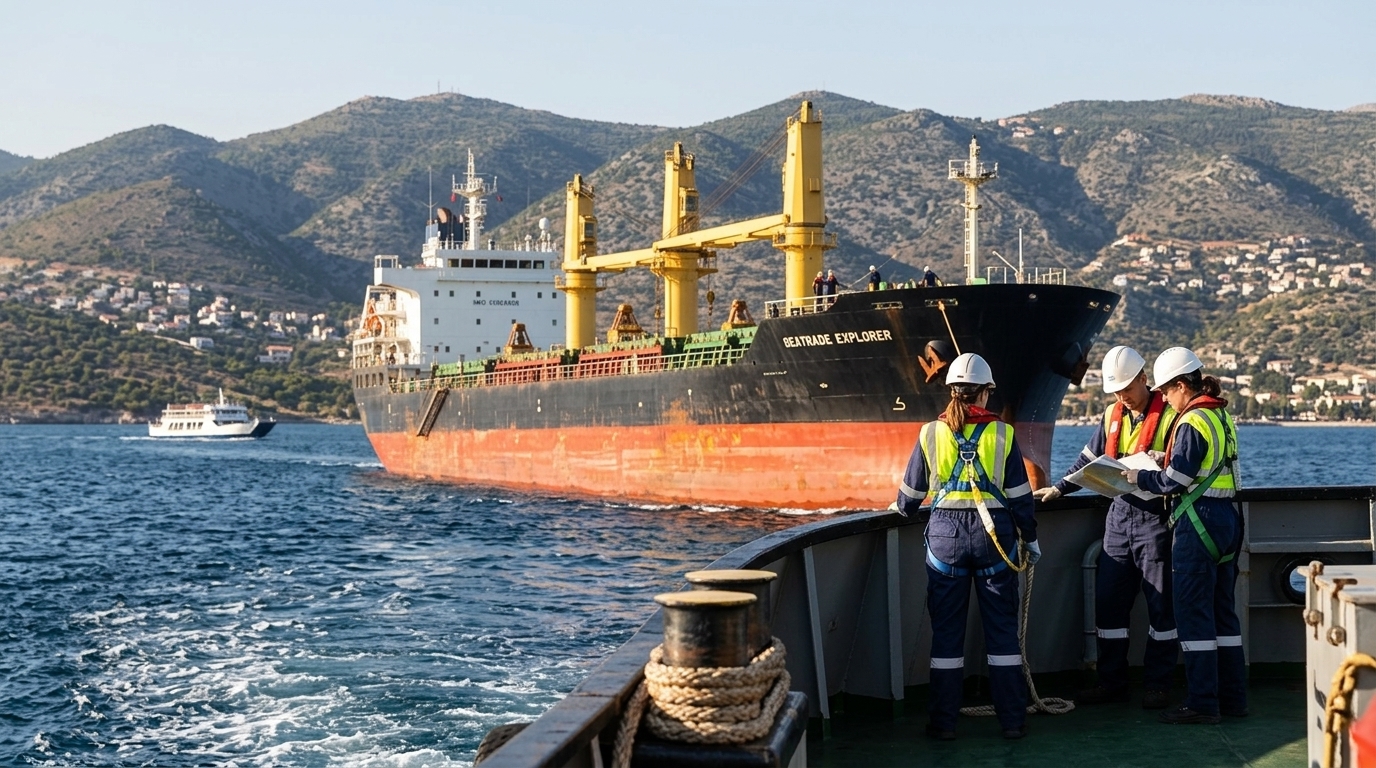
Greek merchant shipping, the traditional pillar of the national economy, is undergoing a period of profound transformation. This evolution is not limited to the technological upgrading of vessels but extends to the very composition of its workforce. According to official data from the Seamen's Pension Fund (NAT) for the year 2025, registered maritime employment in Greece recorded a steady increase, with the most striking element being the explosive 77% surge in female participation.
The Female Revolution in Greek Seas
For decades, the bridge and the engine room were considered "male strongholds." However, 2025 marks a historic turning point. The 77% increase in female employment is not accidental; it is the result of a coordinated effort combining shifts in corporate culture with the modern demands of the global market. Major shipping companies, under the pressure of ESG (Environmental, Social, and Governance) criteria, have invested in inclusion, recognizing that the talent pool cannot be restricted to a single gender.
Furthermore, the digitalization of shipboard operations has made maritime work less dependent on physical strength and more oriented towards systems management and decision-making. Greek female seafarers are now occupying positions not only in support roles on coastal ferries but also as officers on ocean-going tankers and container ships, practically demonstrating their ability to excel in the most demanding conditions.
NAT Modernization and Digital Recording
One of the primary reasons the 2025 data is so clear and encouraging is the full digital transformation of NAT. With the implementation of new employment monitoring systems and integration with the "Ergani" labor system, the registration of seafarers has become more accurate than ever. The reduction in bureaucracy allowed for faster enrollment of new members, while incentives provided for seafarers' insurance led to a decrease in undeclared work within the sector.
NAT's leadership emphasizes that the rise in employment is directly linked to the resurgence of the Greek flag. More vessels are choosing the Greek registry, which automatically creates new jobs for Greek officers and crews. The stability of the seafarers' social security system is now a guarantee for those choosing the profession, enhancing the sector's attractiveness at a time when unemployment in other industries remains a challenge.
Challenges and the Need for New Skills
Despite the positive trajectory, the industry faces significant challenges. The "green transition" of shipping requires seafarers with entirely new skill sets. The use of alternative fuels, such as ammonia and hydrogen, as well as the management of low-emission systems, makes retraining imperative. In 2025, we saw a shift in maritime academies toward "blue education," incorporating courses on environmental management and cybersecurity.
- Strengthening lifelong learning programs for active seafarers.
- Cooperation between the state and shipowners to upgrade Public Merchant Marine Academies.
- Promotion of maritime careers in schools across mainland Greece, beyond the traditional maritime islands.
Geopolitical instability also remains a risk factor. Crises in the Red Sea and other strategic passages affect routes and crew safety. However, Greek shipping has historically proven it possesses the necessary adaptability to navigate turbulent waters, maintaining its leadership position on the global map.
Conclusion: A Promising Future
The rise in maritime employment in 2025, and especially the impressive entry of women into the profession, constitutes a vote of confidence in the future of Greek seamanship. The sea is ceasing to be a space of exclusion and is becoming a field of equal opportunities and economic growth. With NAT now operating as a modern insurance organization and the Greek flag being strengthened, the prospects for 2026 and beyond appear exceptionally positive, provided that investment in human capital—the true "engine" of our shipping—continues.