

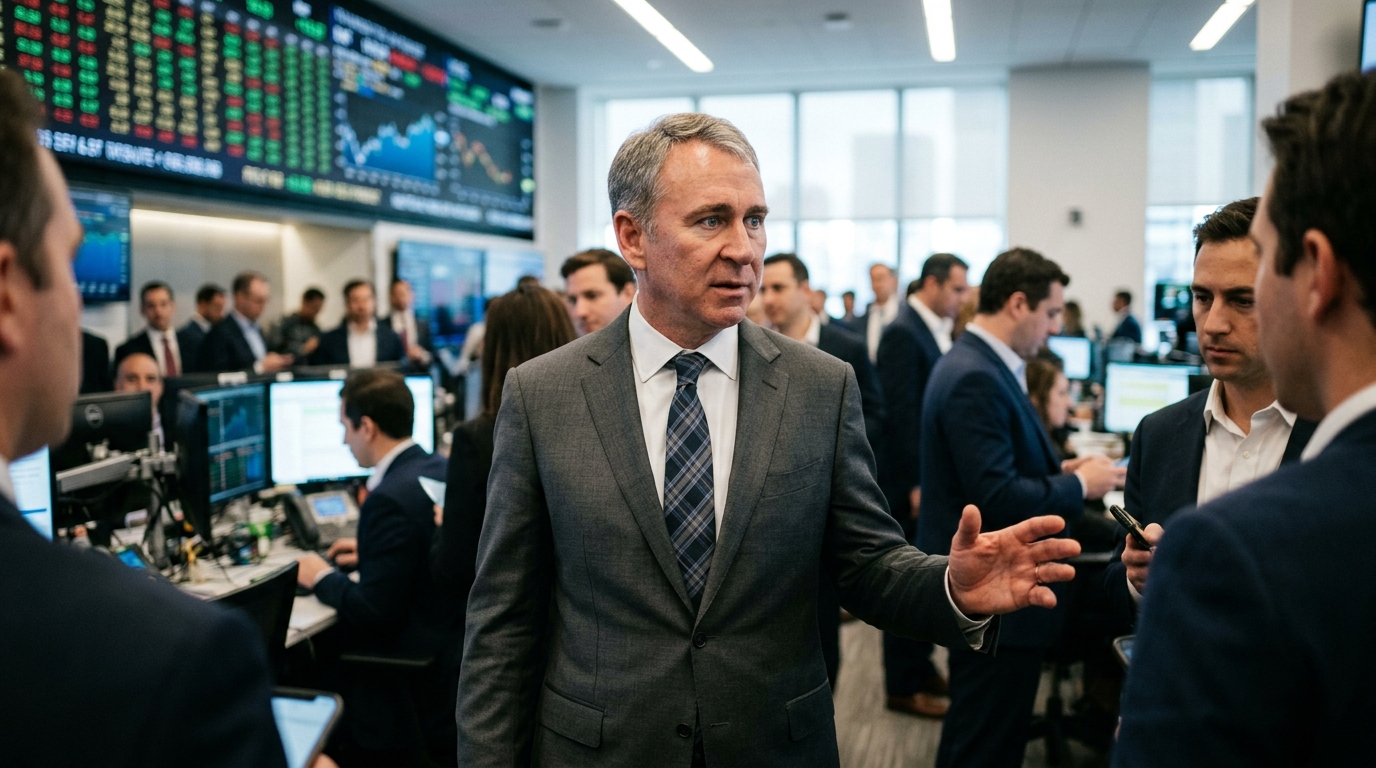
In the volatile landscape of global artificial intelligence, few figures have commanded as much attention recently as Liang Wenfeng. The founder of DeepSeek—the Chinese AI lab that stunned Silicon Valley by delivering high-performance models at a fraction of the traditional cost—is now doubling down. Following a massive capital injection of 50 billion yuan (approximately $7 billion USD), Liang is pivoting the company’s entire weight toward a monumental infrastructure build-out.
From Algorithmic Efficiency to Brute Scale
DeepSeek has never been a conventional AI startup. Emerging from High-Flyer Quant, one of China’s premier quantitative hedge funds, the company possesses a DNA rooted in mathematical optimization and extreme computational efficiency. Until now, DeepSeek’s claim to fame was its ability to punch above its weight class; models like DeepSeek-V3 achieved benchmarks comparable to OpenAI’s GPT-4o while spending significantly less on training compute.
However, Liang Wenfeng appears to have reached a strategic conclusion: architectural elegance can only take you so far. To compete for the title of General Artificial Intelligence (AGI) supremacy, one needs the industrial capacity to process data at a scale previously reserved for nation-states or trillion-dollar tech titans. The 50 billion yuan investment represents a shift from being a nimble disruptor to becoming an infrastructure heavyweight.
Navigating the Chip Embargo
The context for this infrastructure push is inextricably linked to the ongoing US-China tech rivalry. With Washington tightening export controls on high-end GPUs like NVIDIA’s Blackwell and Hopper architectures, Chinese firms face a "compute ceiling." Liang’s strategy involves building massive clusters that utilize sophisticated software-hardware co-design to extract maximum performance from available domestic silicon and older international chips.
By investing heavily in the physical layer—data centers, power management, and proprietary high-speed interconnects—DeepSeek is building a fortress. This isn't just about buying chips; it’s about creating a unified computing environment that can sustain the training of models with tens of trillions of parameters. Analysts suggest that Liang is betting on "system-level innovation" to bypass the limitations of individual component performance.
The Economics of Intelligence
This move signals the end of the "lean AI" era for DeepSeek. The capital intensity of the field is now undeniable. While 50 billion yuan is a staggering sum, in the world of high-performance computing, it is a necessary table stake. The risk, however, is significant. Maintaining such infrastructure requires immense operational expenditure, particularly in energy consumption.
- Strategic deployment of data centers in Chinese provinces with surplus renewable energy.
- Vertical integration of the AI stack, from low-level kernels to high-level reasoning agents.
- A focus on "Sovereign AI" that caters to the specific regulatory and linguistic needs of the Chinese market.
"Infrastructure is destiny. In the AI era, the entity that owns the compute owns the future of thought," a source close to the company noted regarding Liang's vision.
DeepSeek’s aggressive expansion has already triggered a deflationary trend in the AI market. By offering high-quality API access at rock-bottom prices, they have forced incumbents like Alibaba, Tencent, and Baidu into a defensive posture. With this new infrastructure, Liang Wenfeng is not just looking to build a better model; he is looking to redefine the cost of intelligence itself, potentially turning AI into a ubiquitous, low-cost utility that powers the next industrial revolution in the East.





