

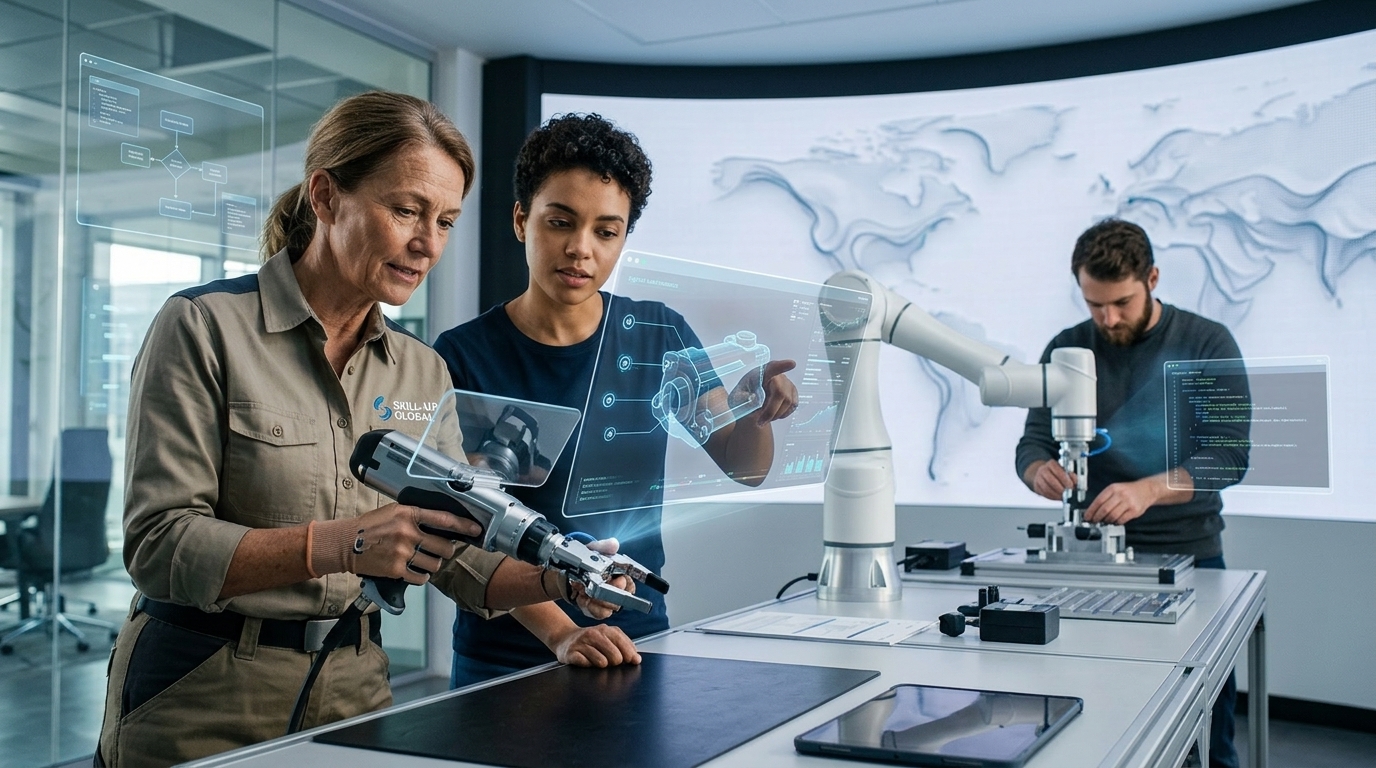
The discourse surrounding Artificial Intelligence (AI) and the future of work often devolves into dystopian narratives of mass unemployment. However, data from 2026 is beginning to tell a different, more nuanced story. According to a recent, in-depth analysis by Draup, which examined 2.85 million job postings globally, AI is not acting as a "job killer" but as a catalyst for a violent transformation of required skills. Labor demand remains robust, but the profile of the ideal candidate has shifted irreversibly.
From Execution to Strategic Oversight
The Draup study highlights a critical shift: jobs traditionally based on data processing, basic content creation, or routine programming are not disappearing. Instead, they are evolving into roles that require the ability to manage AI tools. What we are witnessing is the emergence of the "Augmented Worker." For instance, a data analyst today no longer needs to spend 80% of their time cleaning datasets—that task is handled by algorithms. The market now demands that this analyst be able to ask the right questions of the model and interpret the results with business acumen.
In the global market, this trend is most palpable in the services and technology sectors. Companies are no longer looking for mere specialists; they are looking for orchestrators. The ability to collaborate with Generative AI is now considered the new baseline qualification on a CV, much like "office suite proficiency" was two decades ago.
The Revenge of Soft Skills
Perhaps the most intriguing finding of the analysis is the increased value of so-called "soft skills." As AI takes over the technical and repetitive portions of work, human judgment, empathy, ethical decision-making, and critical thinking become more valuable than ever. In the 2.85 million ads analyzed, there was a 35% increase in mentions of skills such as "complex problem solving" and "team management in uncertain environments."
"AI will not replace you. But a human using AI will," is a mantra frequently cited by industry leaders, confirming that demand is shifting toward those who can bridge the gap between technological power and human strategy.
This creates a new challenge for educational systems and HR departments. The question is no longer "how many jobs will be lost," but "how will we retrain the existing workforce." Reskilling and upskilling are no longer options; they are survival requirements for every worker and business in 2026.
Economic Implications and the Future of Salaried Work
From an economic perspective, steady labor demand despite automation suggests that the productivity gains from AI are being reinvested into creating new services and products, which in turn require human oversight. However, a significant risk remains: the skills gap. If the supply of workers with these new skills does not keep pace with demand, we will see a wage surge for the "chosen few" and stagnation for the rest, exacerbating social inequalities.
In conclusion, Draup's analysis shows us that work is not dying; it is being transformed. The challenge for modern economies is to ensure that this transition is inclusive, providing the tools for the new digital reality to all segments of the labor market. The "end of work" has been postponed indefinitely, replaced by the "evolution of work."





