

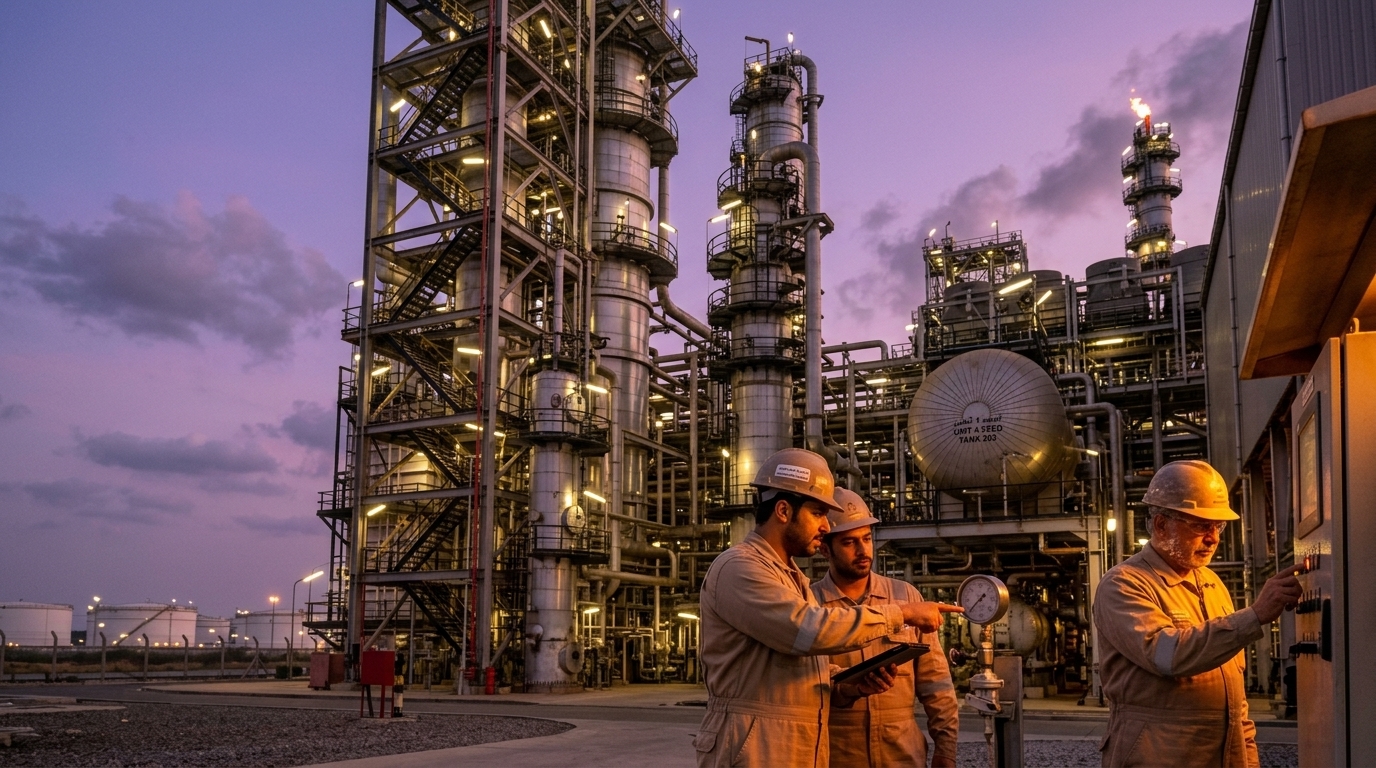
In a historic turning point for the global energy market, Kuwait, one of the traditional pillars of OPEC, recorded zero crude oil exports during the month of April. This is an event that has not occurred since 1991, a time when the country's oil wells were ablaze following the withdrawal of Iraqi forces at the end of the Gulf War. However, unlike 1991, today's "silence" in crude exports is not the result of destruction or production failure, but rather the culmination of an ambitious and long-term economic strategy.
The Strategic Shift: From Raw Crude to Refined Excellence
The primary reason behind this striking development lies in the full operational capacity of the Al-Zour refinery, one of the largest and most sophisticated refining complexes in the world. Kuwait has made a strategic decision to stop acting merely as a "pump" for crude oil to the international market and to transform itself into a global hub for high-value-added products, such as low-sulfur diesel, kerosene, and jet fuel.
The economic logic is undeniable: the profit margin from selling refined products is significantly higher than that of raw crude. By internally processing its entire production, Kuwait maximizes revenue per barrel while simultaneously shielding its economy from the volatile price swings of the crude market. The Al-Zour refinery, with a capacity of 615,000 barrels per day, now absorbs the majority of domestic extraction, transforming Kuwait from a raw material exporter into an industrial powerhouse.
The Role of OPEC+ and Geopolitical Dynamics
This move cannot be analyzed without considering Kuwait's commitments to OPEC+. The alliance of oil-producing nations has imposed strict production quotas to maintain stable price levels. Kuwait, adhering to its commitments, chose to channel its permitted production quota exclusively into its domestic refining industry.
- Quota Management: Domestic refining allows Kuwait to stay within OPEC+ limits while increasing its GDP through industrial activity.
- European Energy Security: With the exclusion of Russian petroleum products, Europe is hungry for diesel and jet fuel. Kuwait is positioning itself as the Old Continent's key supplier, gaining geopolitical leverage.
- Gulf Competition: This move is a direct response to investments by Saudi Arabia and the UAE, which are also pivoting toward refining and petrochemicals.
Toward the "Kuwait 2035" Vision
This development is a central pillar of the "Vision 2035" (New Kuwait) program, which aims to transform the country into a regional financial and commercial hub. Reducing dependence on crude oil exports is seen as the first and most critical step toward economic diversification. The growth of the domestic refining industry creates high-skilled jobs for young Kuwaitis and attracts technological expertise.
"We are not seeing the end of oil, but the end of dependence on raw oil. The future belongs to those who can process their resources," regional analysts note.
In conclusion, the zero crude exports in April are not a sign of decline but a statement of power. Kuwait is demonstrating that it possesses the strategic maturity to evolve from a rentier state into a modern industrial economy. The coming months will show if this trend becomes permanent, but the message to international markets is clear: Kuwait's "black gold" will no longer leave the country without first acquiring the maximum possible value.





