

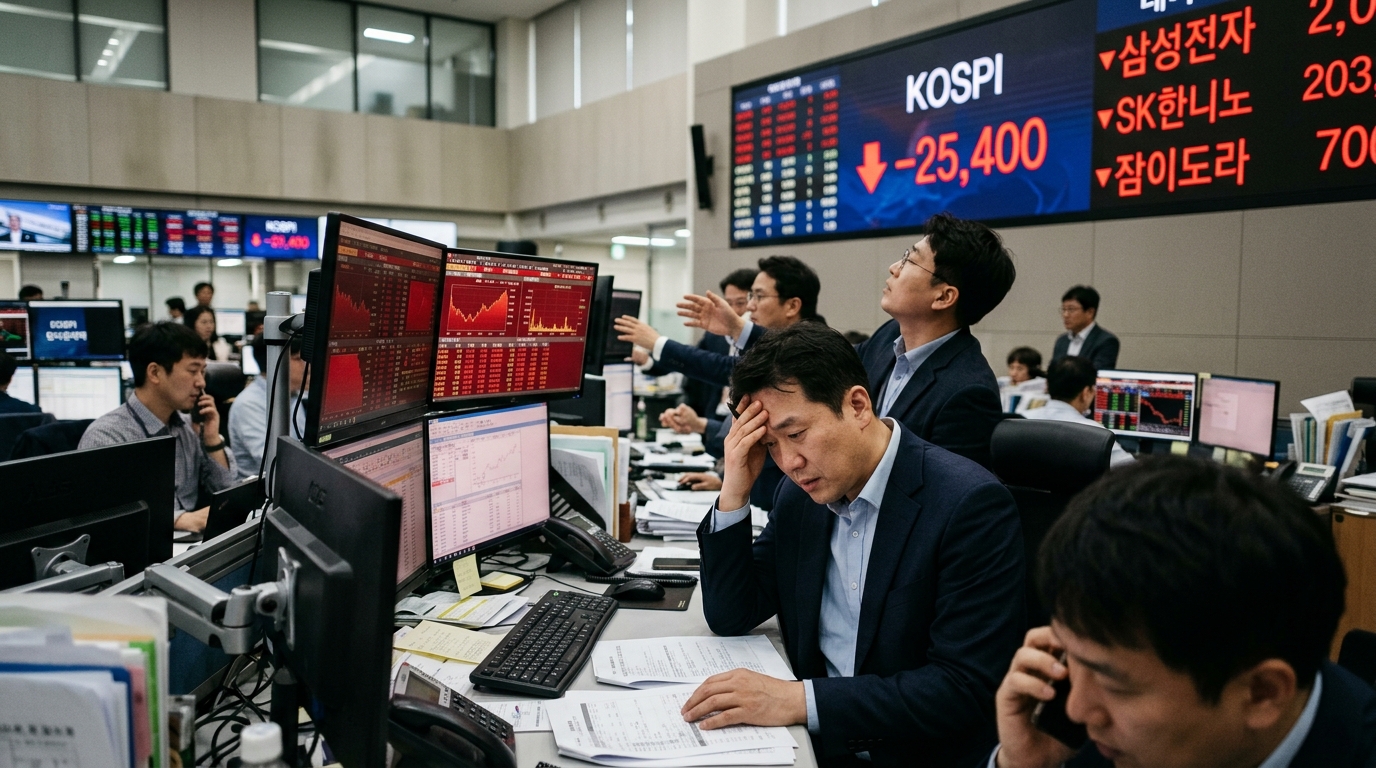
July 2, 2026, may well be remembered by market analysts as the day when "AI fatigue" transitioned from a theoretical concern to a market reality. The Kospi index in Seoul recorded significant losses today, dragging Asian sentiment down as an aggressive selloff in semiconductor stocks spread rapidly. This decline is more than just a number on a screen; it is a reflection of a deeper anxiety that the AI-driven rally, which has powered markets for the last three years, might have finally reached its ceiling.
South Korea: The Canary in the Tech Coal Mine
South Korea is traditionally viewed as a global bellwether for the health of the technology sector. With giants like Samsung Electronics and SK Hynix dominating the production of High Bandwidth Memory (HBM) — the essential nutrient for Nvidia’s high-performance processors — any tremor in Seoul causes an earthquake in Silicon Valley. Today’s downturn, as reported by Bloomberg’s Anthony Stephens, suggests that investors are no longer satisfied with promises of a distant future; they are demanding tangible results and sustainable margins today.
Analysts point out that SK Hynix, which has been the primary beneficiary of the 2024-2025 boom due to its exclusive ties with Nvidia, saw its shares face the heaviest pressure. This is interpreted as a strategic profit-taking move by institutional portfolios who fear that the demand for AI infrastructure might cool in the second half of 2026, as major cloud providers (Hyperscalers) complete their initial massive capital expenditure cycles.
The Bubble Narrative and Macroeconomic Headwinds
The question looming over trading floors all morning was clear: Are we witnessing the bursting of a bubble akin to the dot-com era? While the fundamental value of semiconductor companies today is arguably much stronger than that of the "pets.com" era, the sheer velocity of the ascent has created unsustainable price-to-earnings multiples. The market appears to be entering a phase of "expectation deleveraging."
- Infrastructure Saturation: Many enterprises have already secured their initial hardware requirements and are now pivoting toward software implementation, leading to a temporary lull in new chip orders.
- Interest Rates and Inflation: Despite hopes for aggressive rate cuts, persistent inflation in certain Western economies is keeping borrowing costs elevated, directly impacting the capital expenditure budgets of tech firms.
- Geopolitical Friction: Ongoing export restrictions toward China are depriving Korean manufacturers of one of their largest markets, leading to an oversupply of legacy-generation chips.
Samsung Electronics, in an attempt to soothe investor nerves, stated that demand for specialized AI chips remains "robust." However, the market reacted with skepticism. The Kospi’s drop of nearly 2% within hours indicates that investor psychology has shifted from Fear Of Missing Out (FOMO) to a fear of being trapped in overvalued positions.
The Road Ahead: Correction or Collapse?
Despite the somber mood of the day, many strategists argue that this correction is healthy. A market that only moves upward tends to ignore risk. The current selloff is forcing tech leadership to focus on efficiency and the actual utility of the AI tools they are developing.
"We aren't seeing the end of Artificial Intelligence, but the end of blind faith in it,"remarked a Seoul-based senior analyst.
In a broader context, the Kospi’s fall serves as a warning for the Nasdaq and European indices. If South Korea, the "kitchen" of the semiconductor world, starts to cool down, the meal being served on Wall Street will soon follow suit. The coming weeks will be pivotal, as Q2 earnings reports will reveal whether this selloff was a passing summer storm or the beginning of a long winter for the technology sector.





