

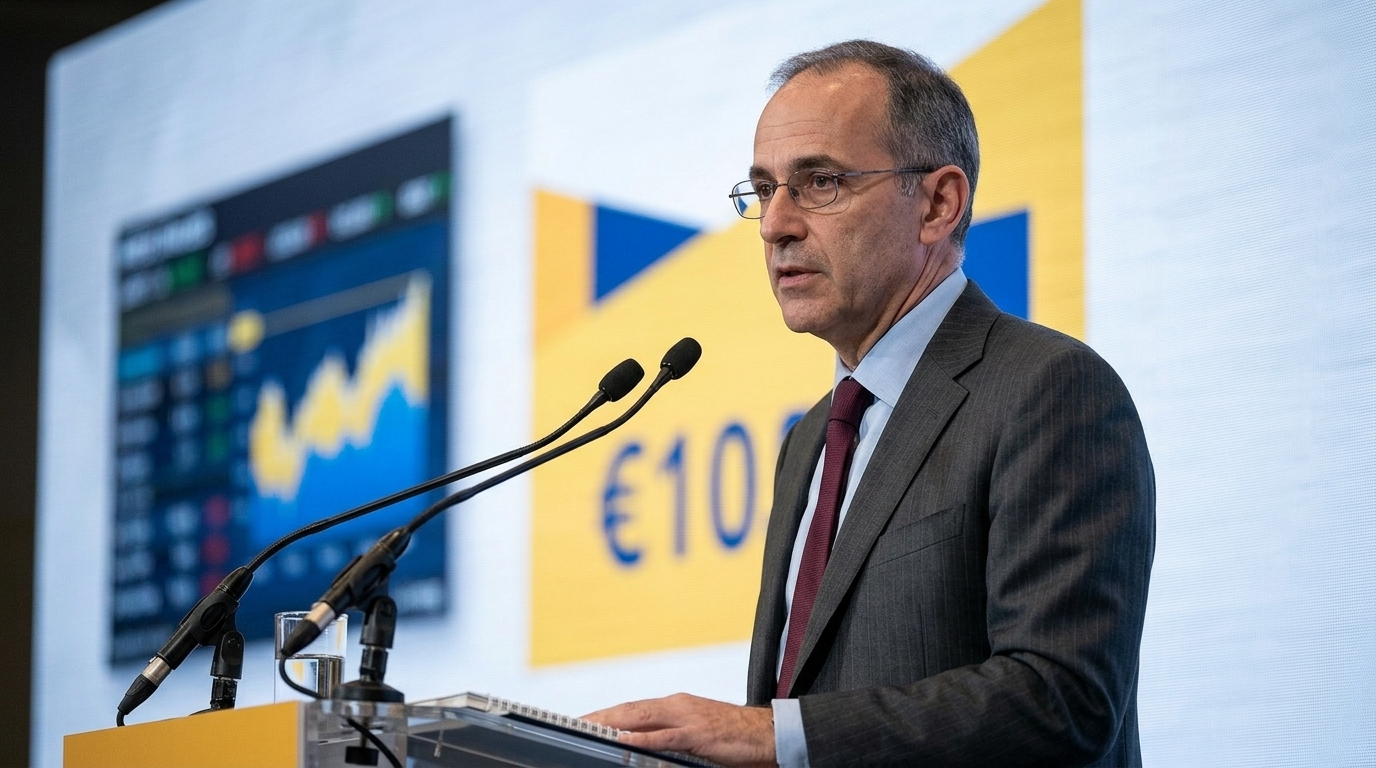
The dawn of the second quarter of 2026 finds the Greek banking system in a state of maturity that few could have predicted five years ago. Piraeus Bank, a protagonist of this transformation, presented first-quarter results that leave no room for doubt regarding its momentum. With net profits of €281 million and an impressive 32% increase in fee income, the bank appears to be 'locking in' profitability at levels that exceed analyst expectations.
The Jefferies Analysis: Why €10.30 is Attainable
Investment house Jefferies, in an extensive report published immediately after the results announcement, reiterated its 'Buy' recommendation for Piraeus stock, setting the target price at €10.30. This translates to an upside of approximately 26% from current levels, an estimate based on solid fundamentals. According to Jefferies, Piraeus demonstrates a rare balance between maintaining high net interest margins and rapid growth in organic revenue.
Particular emphasis is placed on the Return on Tangible Equity (RoTE), which for the first quarter stood at levels that place it among the top banks in the Eurozone. The management's ability, under Christos Megalou, to transform the bank's operating model by reducing costs and increasing digital penetration, is the central pillar of this assessment. Jefferies notes that Piraeus is no longer a 'recovery story' but a 'growth story'.
The Shift to Fees and Decoupling from Interest Rates
One of the most encouraging elements of the results is the 32% year-on-year increase in fee income. In an environment where the European Central Bank has begun to normalize its monetary policy, a bank's ability to generate income beyond Net Interest Income (NII) is vital. Piraeus seems to be capitalizing on high demand for investment products, bancassurance, and wealth management.
- Strengthening revenue from Asset Management and Bancassurance.
- Increase in transaction fees through digital channels.
- Stabilization of funding costs despite pressures on deposits.
This revenue diversification reduces the bank's risk profile and allows analysts to forecast future dividend policy with greater confidence. Jefferies estimates that excess capital adequacy will allow Piraeus to increase its payout ratio in the coming years, making the stock attractive to institutional investors seeking income.
The Macro Context and the Greek Economy
Piraeus' trajectory cannot be detached from the broader picture of the Greek economy in 2026. With Greece maintaining its investment grade and showing growth rates higher than the EU average, banks act as the main driver for financing major infrastructure projects and the green transition. The absorption of Recovery and Resilience Fund (RRF) resources continues to fuel credit expansion, with Piraeus holding a leading market share in corporate disbursements.
"Piraeus has managed to turn past challenges into competitive advantages, now possessing one of the cleanest balance sheets in the region," the Jefferies report characteristically states.
Despite the positive outlook, challenges remain. Competition from fintechs and the need for continuous investment in cybersecurity require vigilance. However, the capital shield, with the CET1 ratio further strengthening, provides the necessary cushion to deal with any external shocks. For investors, the Jefferies recommendation is a vote of confidence not only in Piraeus but also in the resilience of the Greek financial sector in the modern European environment.





