

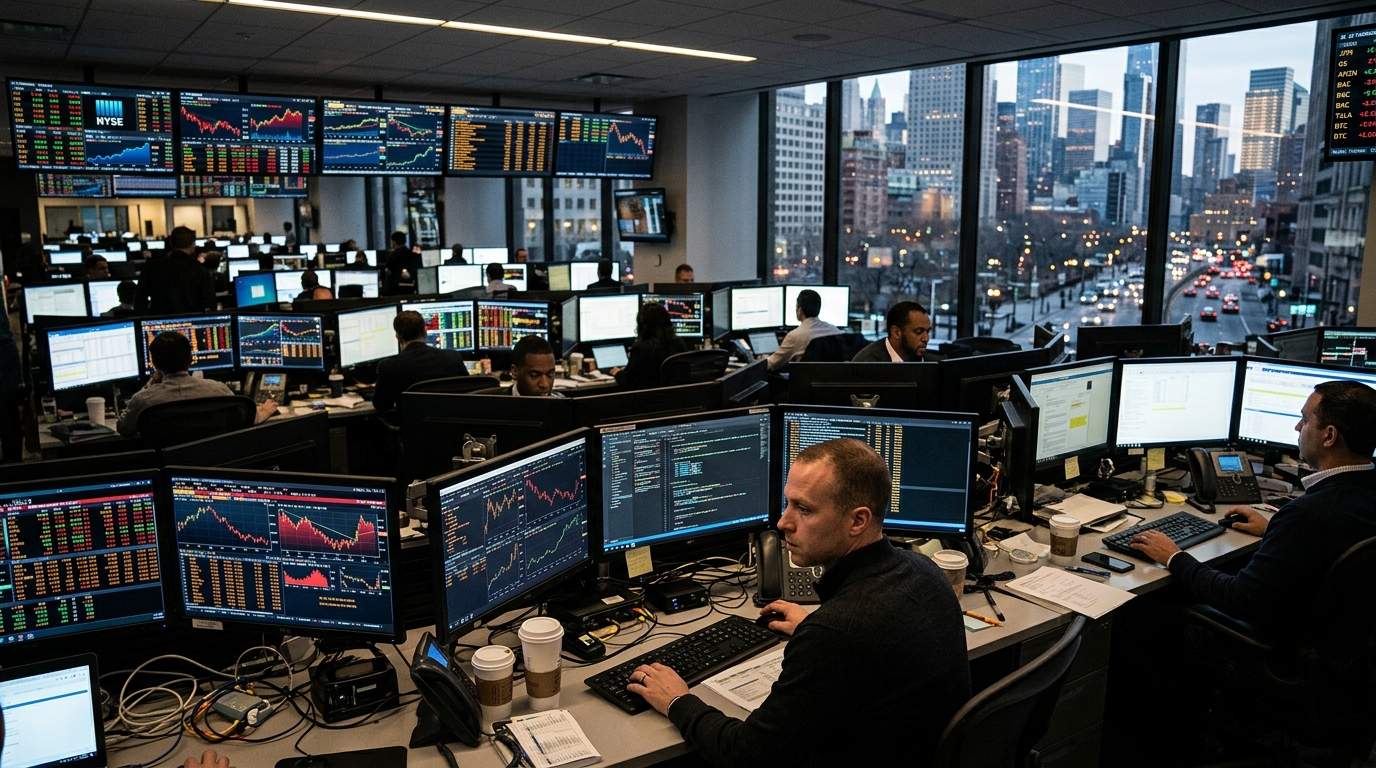
In the heart of Manhattan, far from the spotlight that traditionally shines on titans like Goldman Sachs or JPMorgan, a quiet revolution is reordering the hierarchy of money. Jane Street Group, a firm that operated under the radar for decades, has emerged as the ultimate sovereign of modern Wall Street. This is not just another investment bank; it is a technological empire that leverages data science and advanced algorithms to control the flow of global capital.
The Rise of the Mathematical Minds
Jane Street’s story began in 2000, but its true dominance was cemented over the last decade as markets transformed from arenas of human negotiation into digital ecosystems. The firm doesn’t hire the classic "finance bros" with expensive suits and social connections. Instead, it hunts for top Math Olympiad winners, theoretical physics PhDs, and programmers specializing in rare functional languages like OCaml. This commitment to academic excellence and computational power has allowed it to build a trading model that is both lightning-fast and incredibly precise.
The use of OCaml, a functional programming language, is one of the firm's "holy grails." While most banks rely on legacy systems or C++, Jane Street chose a language that allows for rapid code development with minimal bugs—critical when billions are at stake in fractions of a second. This technological choice reflects their core philosophy: the market is a complex mathematical problem waiting to be solved.
The King of ETFs and Liquidity
If you wonder where Jane Street’s true power lies, the answer is hidden in Exchange-Traded Funds (ETFs). The firm has become the world's largest market maker in this sector. Every time an investor buys or sells an ETF, there is a high probability that Jane Street is on the other side of the trade, ensuring the market remains liquid. In 2023 and 2024, its profits surpassed those of many traditional banks, reaching staggering levels despite employing only a fraction of their staff.
- ETF Dominance: It handles over 10% of global trades in certain asset classes.
- High Profitability: Net income per employee is among the highest in the financial industry.
- Quiet Expansion: Beyond stocks and bonds, it is now aggressively expanding into cryptocurrencies and commodity derivatives.
Their ability to price risk in real-time is legendary. During periods of high volatility, such as the COVID-19 crisis or the geopolitical upheavals of 2025, Jane Street didn’t just survive; it thrived, acting as the "guarantor" of liquidity when everyone else was retreating.
The Shadow of Secrecy and Risks
However, this concentration of power in a firm that shuns publicity raises serious questions. Jane Street is known for its extremely strict Non-Disclosure Agreements (NDAs). Recent legal battles with former executives who left for competitors like Millennium shed light on their inner workings, revealing a culture bordering on obsession regarding the protection of their algorithmic secrets.
"In Jane Street’s world, code is capital and secrecy is the shield. If the rest of the world understood how they operate, their edge would vanish overnight."
Furthermore, the firm’s connection to the FTX scandal—as Sam Bankman-Fried was a former Jane Street employee—left a shadow over the company, even though it was never accused of any wrongdoing. Critics focus on whether such High-Frequency Trading (HFT) firms provide real value to the economy or if they simply extract profits from the system through technological superiority, while creating risks for a "flash crash" that could destabilize global markets.
The Future of Wall Street
Jane Street’s dominance signals the end of Wall Street as we knew it. The era of charismatic bankers relying on intuition is fading. In their place come the "quant" empires, where decisions are made in milliseconds by machines. As artificial intelligence and quantum computing begin to integrate into trading, Jane Street seems to already have the lead. The question remaining for regulators and investors is whether this new, algorithmic financial system is more resilient or if it merely hides risks that the human mind cannot yet conceive.





