

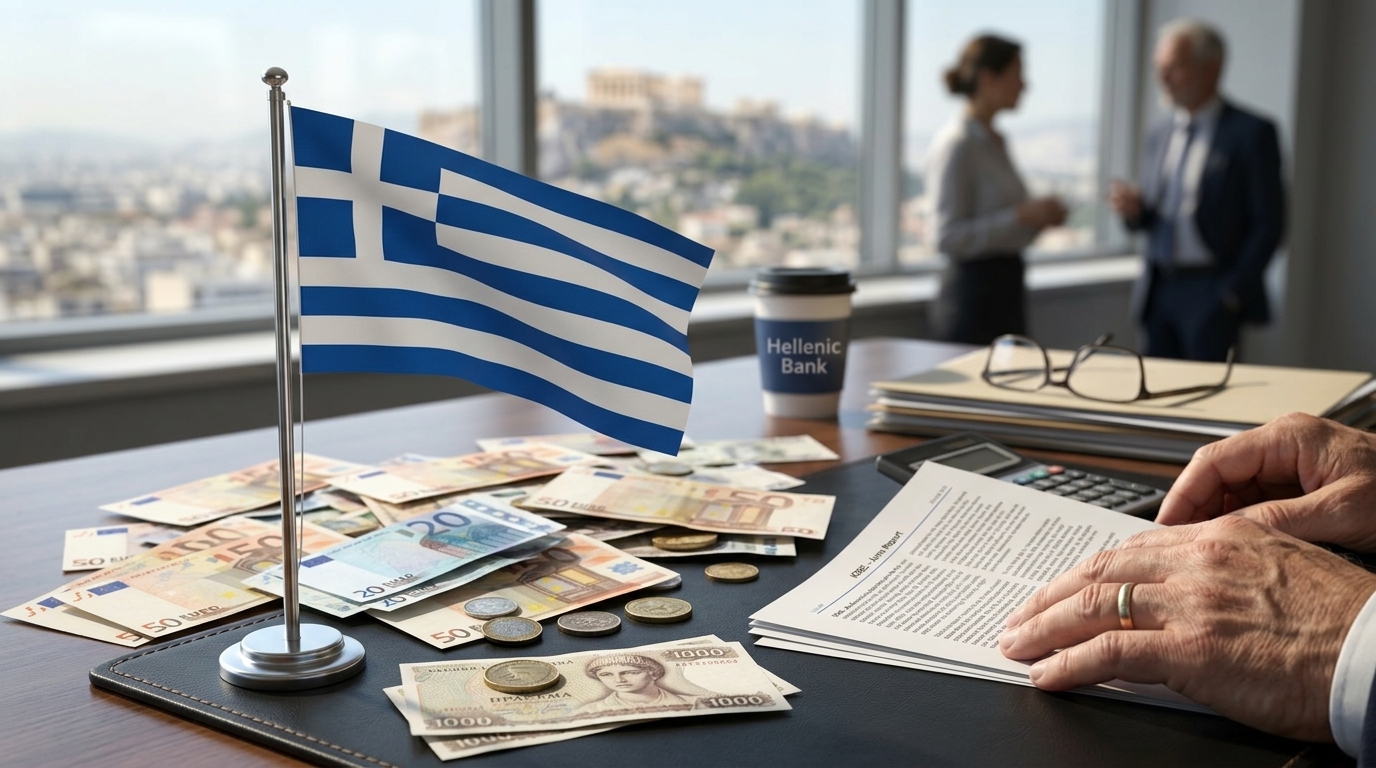
In an environment of intense uncertainty and shifting international conditions, the Greek economy continues to demonstrate a remarkable, albeit marginal, resilience. According to the latest report by the Foundation for Economic and Industrial Research (IOBE) for June 2026, the Economic Sentiment Indicator showed a slight improvement, remaining at levels that suggest stability, but also significant concern for specific key sectors.
Anatomy of the Indicator: Stagnation or Stability?
The marginal rise in the economic sentiment indicator is not just a number, but a reflection of the opposing forces acting within the Greek market. On one hand, the strengthening of confidence in retail trade and services, fueled by high expectations for the tourist season, acts as a buffer. On the other hand, industry remains in a state of anticipation, affected by high energy costs and slowing demand in major European markets.
IOBE's analysis highlights that consumer confidence remains the "weak link" in the equation. Despite the reduction in inflation compared to previous years, the purchasing power of households has not fully recovered, leading to cautious and often defensive consumer behavior. Citizens appear hesitant to proceed with major purchases, preferring to save or cover basic needs.
The Brake on Construction: The End of an Upward Trend?
Perhaps the most concerning finding of the report concerns the construction sector. After a long period of continuous growth, the index in this specific sector declined in June. This drop is mainly attributed to private construction, which seems to be "taking a breath" or being squeezed by increased borrowing costs and high material prices.
- The cost of building materials remains at levels that deter new investments from small and medium-sized players.
- High ECB interest rates continue to affect mortgage lending, limiting demand for new properties.
- The shortage of skilled labor creates delays and increases the cost of existing projects.
In contrast, public works, supported by Recovery Fund resources, continue to provide support to the sector, preventing a total collapse. However, the dependence on state funds underscores the need for more autonomous and sustainable private construction activity.
The Importance of Digitalization and AI
In the context of The AI Chronicle, we cannot ignore the role that technology plays in shaping these indicators. The adoption of AI tools in supply chain management and demand forecasting helps retail businesses remain profitable despite climate fluctuations. Big Data analysis now allows IOBE and other organizations to have a more direct and accurate picture of the market, reducing the time gap between economic reality and its recording.
"The Greek economy is at a crossroads. June's marginal rise is a positive signal, but challenges in the construction sector show that growth cannot be taken for granted without structural reforms."
In conclusion, the IOBE report for June 2026 serves as a reminder that economic stability is a continuous effort. Supporting domestic production, addressing housing costs, and further integrating new technologies will be the determining factors for whether the sentiment will remain positive in the coming months.





