

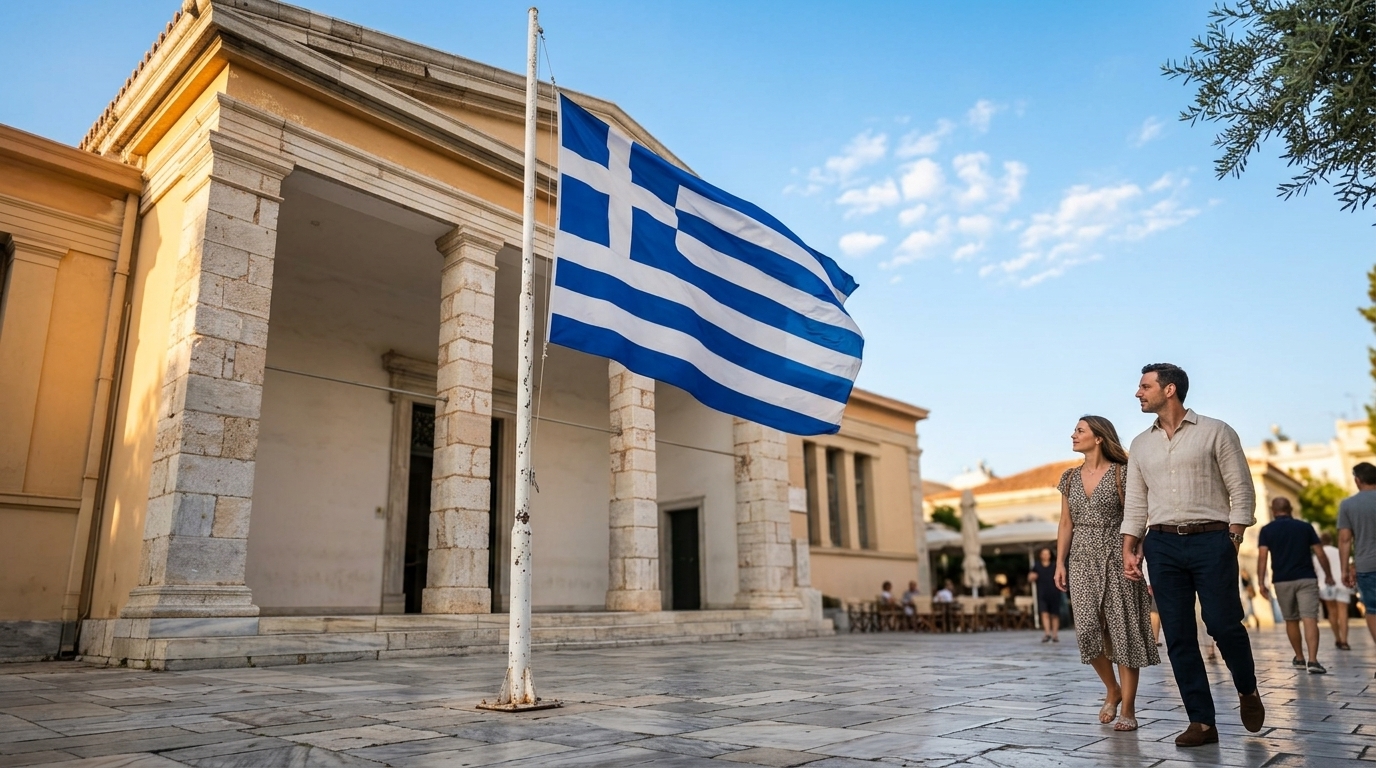
The Greek economy, which stood at the edge of the abyss and faced the threat of exiting the Eurozone in the previous decade, has today been transformed into one of the International Monetary Fund's (IMF) most compelling case studies. As we move through May 2026, Greece is no longer viewed as the "sick man of Europe," but as a model of fiscal discipline and digital transformation. In its latest analysis, the IMF describes this journey as a chronicle of economic renaissance, focusing on three fundamental stages that allowed the country to regain its credibility in international markets.
Stage One: The Painful Fiscal Adjustment
The first stage of the Greek recovery was undoubtedly the most difficult and socially painful. According to the IMF, the memorandum era—despite its flaws and initial miscalculations regarding austerity multipliers—laid the groundwork for correcting macroeconomic imbalances. The drastic reduction of deficits and the achievement of primary surpluses were the necessary "purgatory" required to stop the economy's hemorrhaging.
The Fund emphasizes that Greece achieved something few countries have accomplished in peacetime: a massive fiscal adjustment exceeding 15% of GDP over a decade. This stage was characterized by harsh reforms in the pension system, the labor market, and public administration. Although the social cost was heavy, the creation of a stable fiscal framework was the "key" that unlocked the trust of institutional investors.
Stage Two: Digital Transformation and Tax Compliance
If the first stage was about survival, the second stage—which peaked between 2021 and 2025—was about modernization. The IMF places particular emphasis on the revolution that took place in tax administration through digitalization. The interconnection of POS terminals with cash registers, the universal implementation of electronic invoicing (myDATA), and the use of Artificial Intelligence to detect tax evasion radically changed the landscape.
- Broadening the tax base allowed for a gradual reduction in tax rates for compliant taxpayers.
- The digitalization of the state reduced bureaucracy, facilitating foreign direct investment.
- The fight against the shadow economy led to increased public revenue without the imposition of new taxes.
This period is regarded by the IMF as the "Greek miracle of efficiency." The ability of the Independent Authority for Public Revenue (AADE) to collect revenue with greater accuracy and speed provided the government with the necessary fiscal space to support society during the energy crisis and the pandemic without derailing the budget.
Stage Three: Investment Grade and Sustainable Growth
The third and final stage, in which the country finds itself today in 2026, is the consolidation of Greece as a high-quality investment destination. Regaining investment grade status was not merely a symbolic goal but the springboard for reducing borrowing costs for both the state and businesses. The IMF notes that the proper utilization of the Recovery and Resilience Facility (RRF) funds played a catalytic role in changing the country's productive model.
"Greece no longer relies solely on tourism and consumption. We are seeing a shift towards exports, green energy, and technology," the Fund's report states.
The challenge now shifts to maintaining these growth rates in an environment of global uncertainty. The IMF warns that reform momentum must not stall, as public debt remains high as a percentage of GDP, despite its spectacular decline in recent years. The sustainability of growth depends on the continuation of structural changes in justice and education—sectors that remain "thorns" in the side of full convergence with the European average.
Conclusions and Lessons for the Future
The Greek experience teaches that fiscal discipline and structural reforms can bear fruit, provided there is political will and social resilience. The IMF now uses Greece as an example to avoid past mistakes and as a guide for other countries in similar positions. The "chronicle of renaissance" is a reminder that no economy is doomed, as long as it follows a coherent and long-term strategy.





