

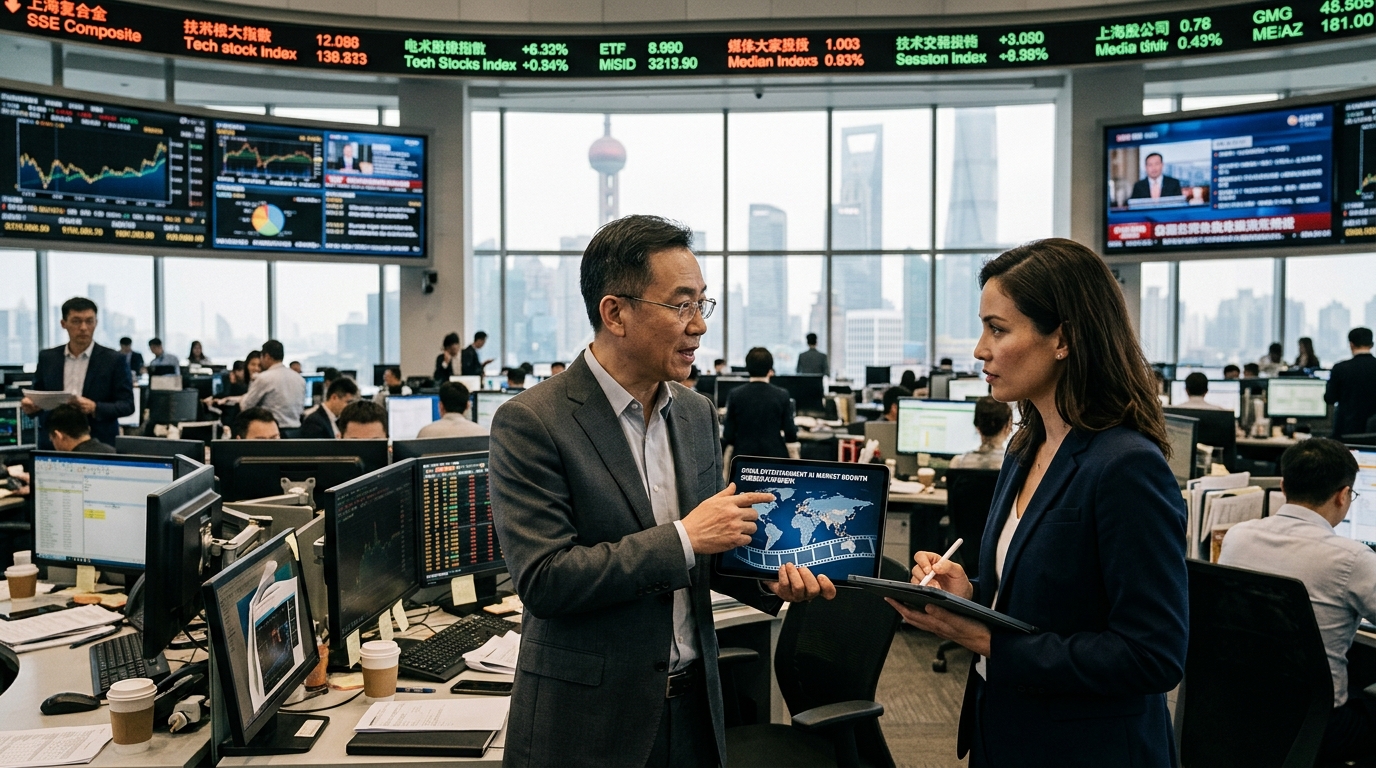
In the heart of Beijing and Shanghai, a quiet revolution is taking place, not on the streets, but on the screens of millions of users. China, the world's second-largest economy, is not just using Artificial Intelligence (AI) to improve productivity; it has made it the new backbone of its entertainment industry. A recent analysis by The New York Times highlights a reality where creativity meets automation at speeds that the West is struggling to match.
Dominance in Gaming and the Rise of NPCs
The video game sector is the brightest example of this transformation. Giants like Tencent and NetEase have integrated generative AI to create worlds that breathe. In NetEase's 'Justice Online,' players can chat freely with non-player characters (NPCs) using natural language. These characters no longer follow pre-set scripts but react based on their personality and history, creating an unprecedented sense of immersion.
This evolution is not only technical but also economic. The production of assets – from landscapes to complex 3D models – which once required months of work from hundreds of artists, is now completed in fractions of the time. AI can produce thousands of variations of an object, allowing developers to focus on strategy and gameplay instead of repetitive tasks.
Virtual Influencers and the New Cinematic Reality
In China, the line between reality and digital construction is becoming increasingly blurred. Virtual influencers, digitally created characters that look perfectly human, dominate social media platforms like Douyin (the Chinese TikTok). These characters do not get tired, do not get involved in scandals, and can promote products 24/7. The market for these digital stars is expected to reach billions of dollars in the coming years.
In film and television, AI is used to restore old movies, create high-quality special effects at a low cost, and adapt dubbing. Deepfake technology allows actors to "speak" foreign languages fluently while keeping their lip movements synchronized, facilitating the export of Chinese content to international markets. However, this convenience brings with it ethical dilemmas regarding copyright and the authenticity of art.
The Dark Side: Labor Displacement and State Control
Despite the technological euphoria, the transition is not bloodless. Illustrators and designers in China are already experiencing the consequences. Many freelancers report that orders have dropped dramatically as companies prefer to use tools like Midjourney or Stable Diffusion. "What once took a week to design is now done in seconds," industry professionals state, expressing fears for the future of the profession.
"Artificial Intelligence is not just a tool; it is a new way of producing culture that requires us to redefine what it means to be a creator."
Furthermore, the Chinese government is closely monitoring these developments. AI regulations in China are among the strictest in the world, requiring algorithms to "reflect socialist values." This means that AI in entertainment is not just a means of expression but also a tool that must comply with state censorship standards, creating a unique dynamic between innovation and control.
Conclusion
The transformation of the Chinese entertainment industry through AI serves as a roadmap for what is to follow globally. The reduction in costs and the increase in production speed are tempting, but the price in human labor and the challenge of maintaining artistic integrity remain open questions. As China continues to experiment, the rest of the world watches, realizing that the future of entertainment will be digital, automated, and deeply influenced by algorithms.





