

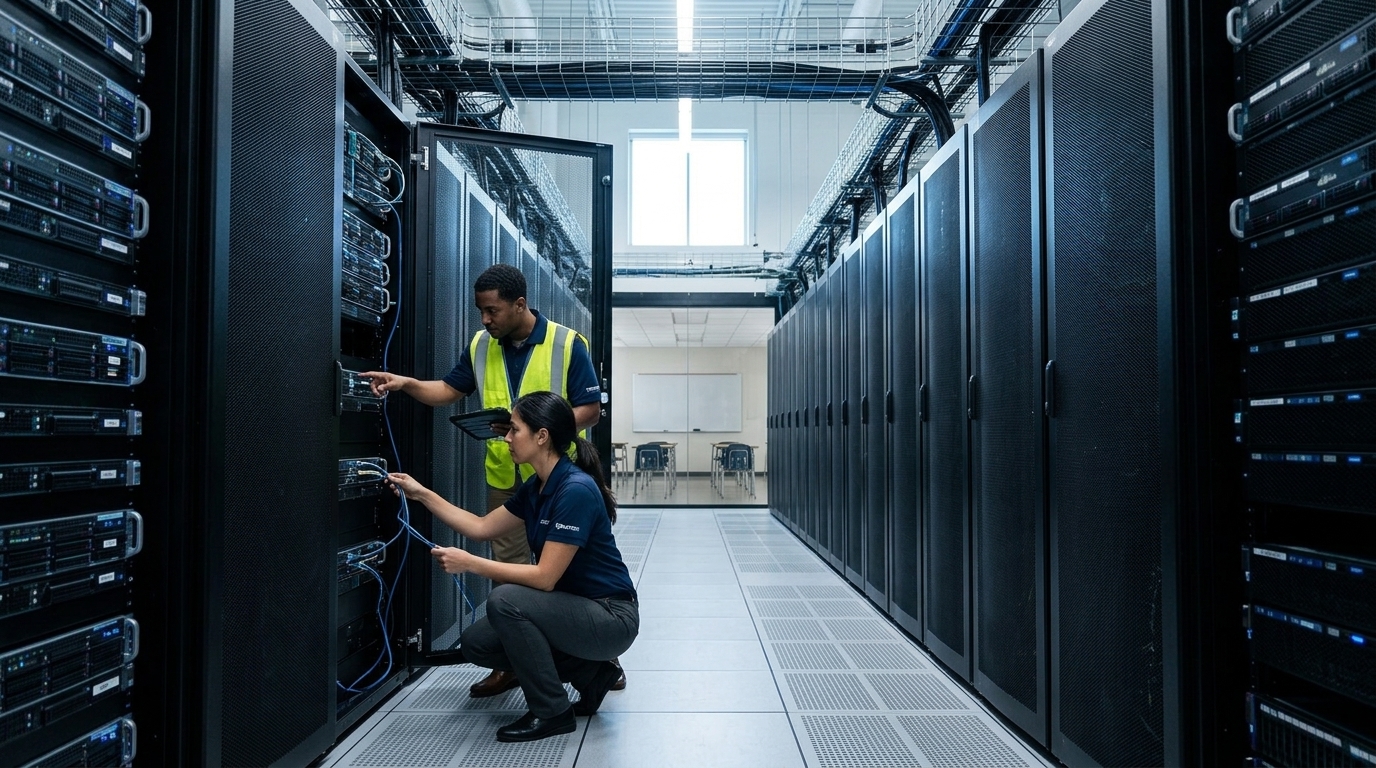
The scene is almost dystopian: in one of the wealthiest nations on Earth, students are asked to remain in semi-darkness and without air conditioning, while just a few miles away, massive, windowless buildings consume gigawatts of power to fuel "the cloud." Henrico County, Virginia, a region transformed into a global data hub, is facing a harsh reality. With 37 active data centers and another 17 in the pipeline, the local power grid is buckling under the weight of demand and extreme temperatures.
The Digital Thirst and Infrastructure Collapse
Virginia is no accidental location. It hosts the world’s largest concentration of data centers, famously known as "Data Center Alley." Its strategic position, tax incentives, and proximity to major internet trunk lines attracted giants like Amazon, Google, and Meta. However, the rapid rise of Artificial Intelligence (AI) has shifted the paradigm. AI models require several times more energy for training and inference compared to traditional web searches or cloud storage.
When heatwaves strike the region, demand for cooling—for both humans and machines—skyrockets. Dominion Energy, the primary utility provider, is struggling to keep up. The result? Local government officials are urging public services and schools to curtail power usage. The irony is palpable: the education of the next generation is being deprioritized to ensure the uninterrupted operation of algorithms and server farms.
The Economic Paradox: Revenue vs. Sustainability
From an economic standpoint, data centers are a "cash cow" for Henrico County. Tax revenues from the high-value equipment inside these centers fund roads, parks, and—paradoxically—the very schools now asked to turn off their lights. Yet, this growth model is hitting its limits. The cost of grid upgrades is often passed down to ordinary consumers, while the environmental impact of the massive water consumption needed to cool these servers has sparked intense local opposition.
- Energy consumption from data centers in Virginia is projected to double by 2030.
- Local communities are increasingly protesting the noise and visual pollution of these sprawling facilities.
- The need for new high-voltage transmission lines threatens protected lands and private property values.
"We cannot build the future of technology at the expense of our citizens' daily lives," says a local community organizer, reflecting the growing public resentment.
Ethical Dilemmas in the Age of AI
The issue is not merely technical or economic; it is deeply political and ethical. Who takes precedence during a crisis? A multinational corporation with billion-dollar contracts or a public school? Henrico's case is a harbinger of what is to come in many other parts of the world as AI expands. The energy transition toward renewables is not moving at the pace required by the technological explosion, forcing societies to make painful trade-offs.
The solution is not straightforward. Banning data centers would mean economic suicide for the county, but their unchecked expansion leads to a degraded quality of life. A new social contract is needed, where tech giants invest directly in energy production and municipal infrastructure rather than merely draining existing resources.
Conclusion: A Wake-up Call for the Global Community
Virginia is the laboratory for a new kind of global crisis. Our digital life is not ethereal; it requires land, water, and electricity. As long as we continue to feed our insatiable thirst for data without upgrading our physical infrastructure, we will increasingly see the lights go out where we need them most: in schools, hospitals, and residential neighborhoods. Progress that requires children to sit in the dark is not true progress; it is a poorly designed digital bubble threatening to burst over the heads of ordinary citizens.





