

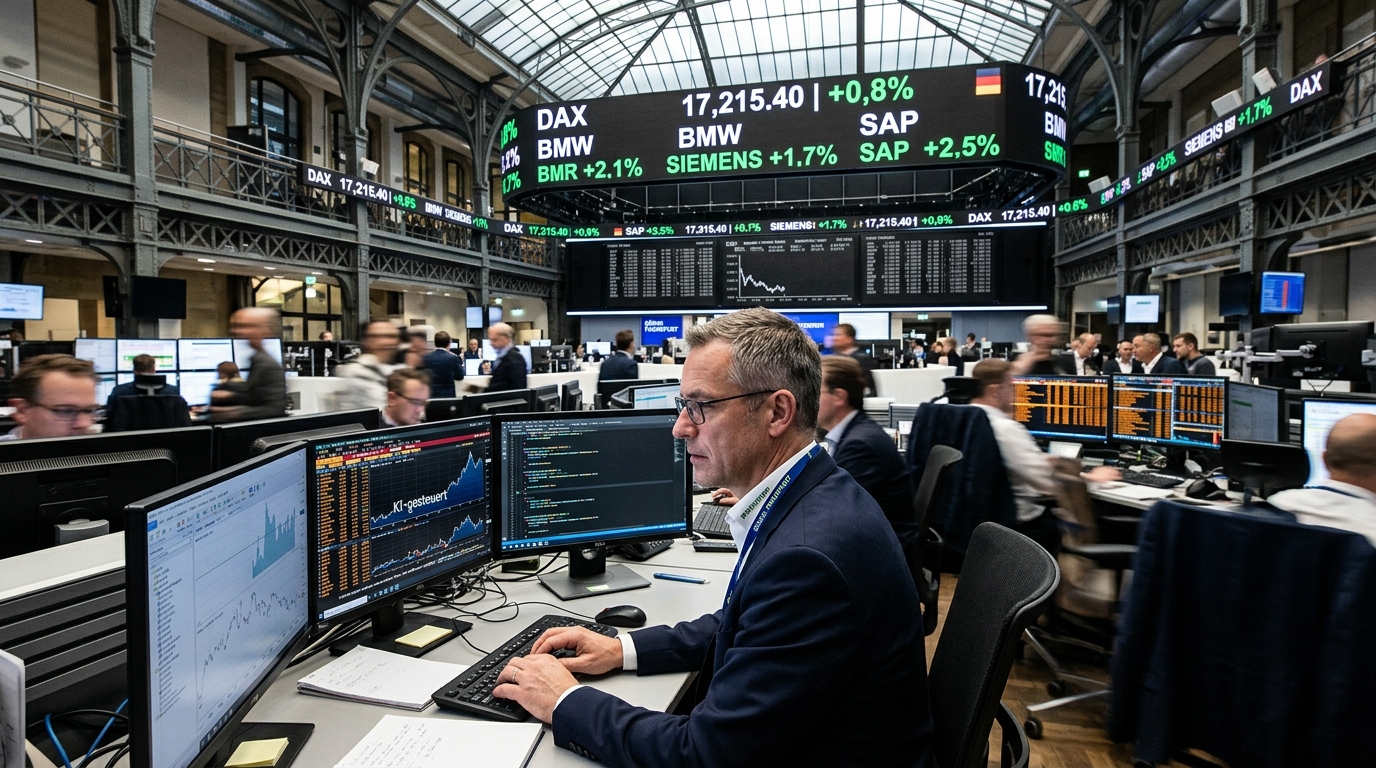
Germany, the traditional engine of the Eurozone, stands at a critical crossroads. Following a period of economic stagnation and intense pressure from energy costs and global competition, Berlin is turning its gaze toward Artificial Intelligence (AI) as the singular tool capable of reversing the trend of declining productivity. According to recent analyses and data highlighted by Moneyreview.gr, the integration of AI is no longer an option for German enterprises; it is an existential necessity.
Productivity as the Antidote to the Demographic Crisis
The most significant challenge facing the German economy in 2026 is the dramatic labor shortage. With the 'baby boomer' generation permanently exiting the workforce, the gap in skilled personnel threatens to paralyze entire sectors. This is precisely where Artificial Intelligence steps in. The automation of administrative processes and the use of predictive models in heavy industry allow companies to maintain or even increase their output with fewer staff members.
The German government, through the Ministry of Economics, has invested billions in supporting the 'Mittelstand'—the small and medium-sized enterprises that form the country's backbone. The challenge lies in persuading these traditional firms, often characterized by conservatism, to adopt cutting-edge technologies. Initial signs are encouraging, as the use of generative AI in design and customer service has already begun to bear fruit, reducing operational costs by up to 20% in certain cases.
Strategic Autonomy and Competition with the US and China
Germany does not merely seek to use AI; it seeks to control it. The emergence of European champions, such as Aleph Alpha, is a central goal of German industrial policy. Concerns regarding dependence on American giants like Microsoft and Google have led to a pivot toward 'Sovereign AI,' where data remains within European borders and complies with the stringent rules of the EU AI Act.
- Investment in data centers powered by renewable energy sources.
- Strengthening research in German universities for AI in robotics.
- Creating ecosystems where major automakers collaborate with AI startups.
The automotive industry, Germany's symbolic sector, is at the forefront. Using AI to optimize supply chains and develop autonomous driving systems is seen as the 'key' to competing with the Chinese onslaught in the electric vehicle market. AI enables the simulation of millions of test scenarios in digital twins, accelerating the development time of new models by 30%.
Ethics and Regulatory Framework: Obstacle or Advantage?
One of the most debated topics in Berlin is whether strict EU legislation on AI acts as a brake on innovation. While many entrepreneurs complain about bureaucracy, the German government argues that 'Trustworthy AI' will become the global quality standard. In an era of misinformation and data privacy concerns, the 'Made in Germany' label in AI could signify security and transparency.
"Artificial Intelligence is not just a technological upgrade; it is the new language of the global economy. If Germany does not speak it fluently, it risks being relegated to the sidelines of history," notes a leading analyst from Deutsche Bank.
In conclusion, Germany is betting everything on the digital transition. The success of this endeavor will determine not only the prosperity of German citizens but also Europe's position on the new geopolitical map shaped by algorithms. The transition from 'fax' to 'LLM' is difficult, but the cost of inaction is now prohibitive.





