

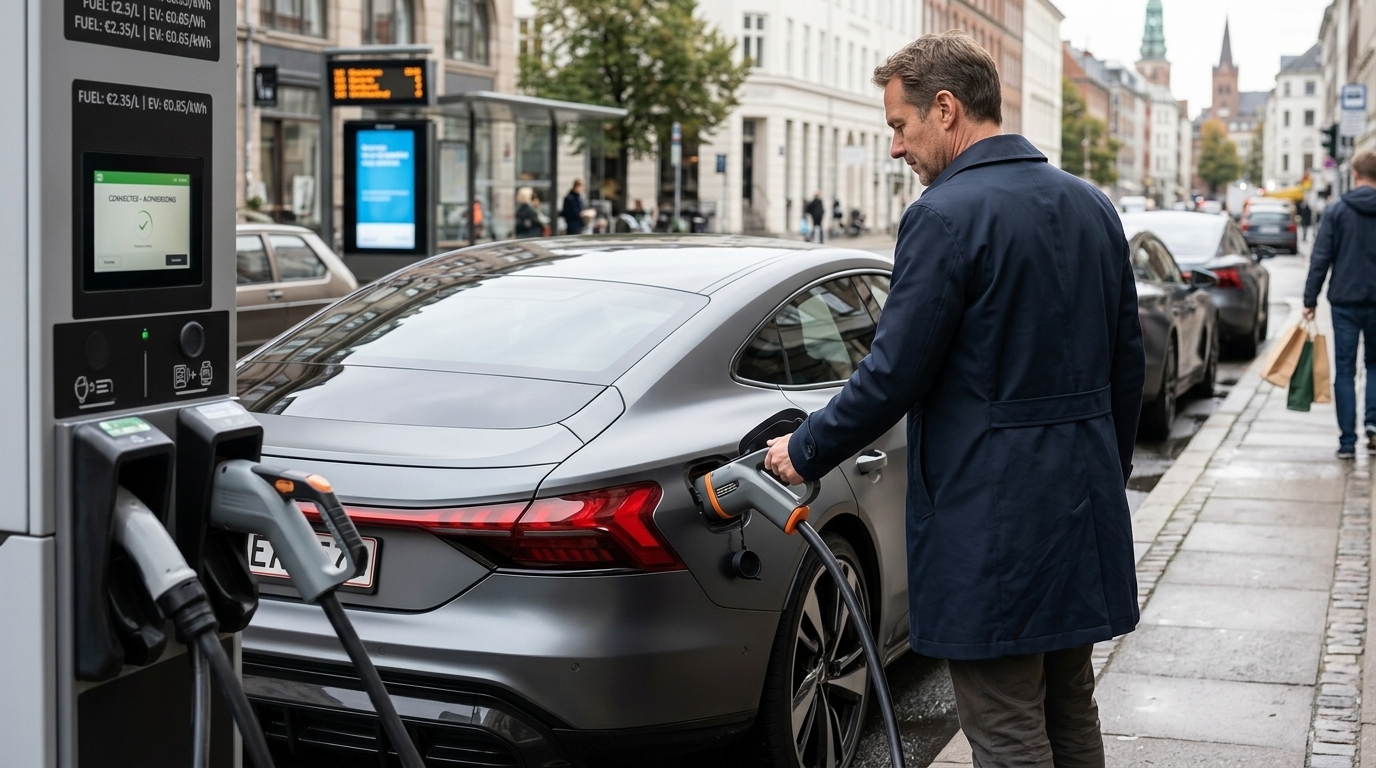
The history of the global economy has repeatedly proven that major technological transitions rarely occur solely due to ideological commitment. More often than not, the real accelerator is economic necessity. Today, as we navigate the second quarter of 2026, Europe faces such a pivotal moment. Ongoing turmoil in the Middle East has driven crude oil prices to levels that make operating conventional internal combustion engine (ICE) vehicles prohibitive for the average household, creating a wave of "forced" electric vehicle (EV) adoption.
Geopolitical Pressure and the End of Complacent Consumption
The recent escalation in oil-producing regions has not only affected stock market indices but has directly hit the pockets of European citizens. With gasoline and diesel prices recording increases of up to 25% within a few months, the argument for the "green transition" has ceased to be an abstract environmental obligation and has become a matter of family budget survival. According to the latest data, EV orders in Germany, France, and Scandinavia have seen a vertical surge as consumers rush to decouple themselves from fossil fuel volatility.
However, this shift is not without its hurdles. While demand is rising, supply continues to struggle with raw material costs for batteries. Europe is trying to balance the need for affordable EVs with the desire to protect its domestic automotive industry from Chinese competition. China, having secured lithium and cobalt supply chains years ago, now offers models that are directly competitive with, if not cheaper than, their gasoline counterparts.
The European Market at a Turning Point
In major markets like the UK and Italy, the narrative is shifting from "range anxiety" to "cost anxiety." The total cost of ownership (TCO) for an EV is now significantly lower than that of a traditional car when factoring in the current pump prices. Governments are responding by doubling down on subsidies, though some fiscal experts warn that the loss of fuel tax revenue will eventually need to be offset by new forms of road pricing.
- 40% increase in battery electric vehicle (BEV) registrations in the last six months.
- Corporate leasing fleets acting as the primary vehicle for EV market entry.
- A significant shift toward plug-in hybrids as a "bridge" for hesitant consumers.
Energy providers are now being called upon to accelerate investments in distribution grids. The increased demand for electricity from vehicles requires a "smart" grid capable of managing peak loads, especially during nighttime hours. Without this upgrade, the shift to electric mobility risks turning from a solution into a new problem for system stability.
Infrastructure Challenges and the Path Forward
The question is no longer "if" but "how fast." Automakers like Volkswagen and Stellantis are revising their plans, emphasizing more affordable electric models (under €25,000). The pressure from fuel prices acts as an informal carbon tax imposed by the markets, forcing the industry to innovate faster than regulatory mandates alone ever could.
"We are not just experiencing a change in engine technology, but a complete restructuring of the concept of mobility," says an industry analyst. "The car is ceasing to be an isolated tool and is becoming part of a broader energy ecosystem."
In conclusion, the fuel crisis of 2026 may go down in history as the point of no return for internal combustion in Europe. The need for energy independence, combined with price pressure, creates an environment where the electric car is no longer a luxury but the only logical economic choice for the future. As charging networks expand and battery technology matures, the roar of the engine is being replaced by the hum of the motor—not just for the sake of the planet, but for the sake of the wallet.





