

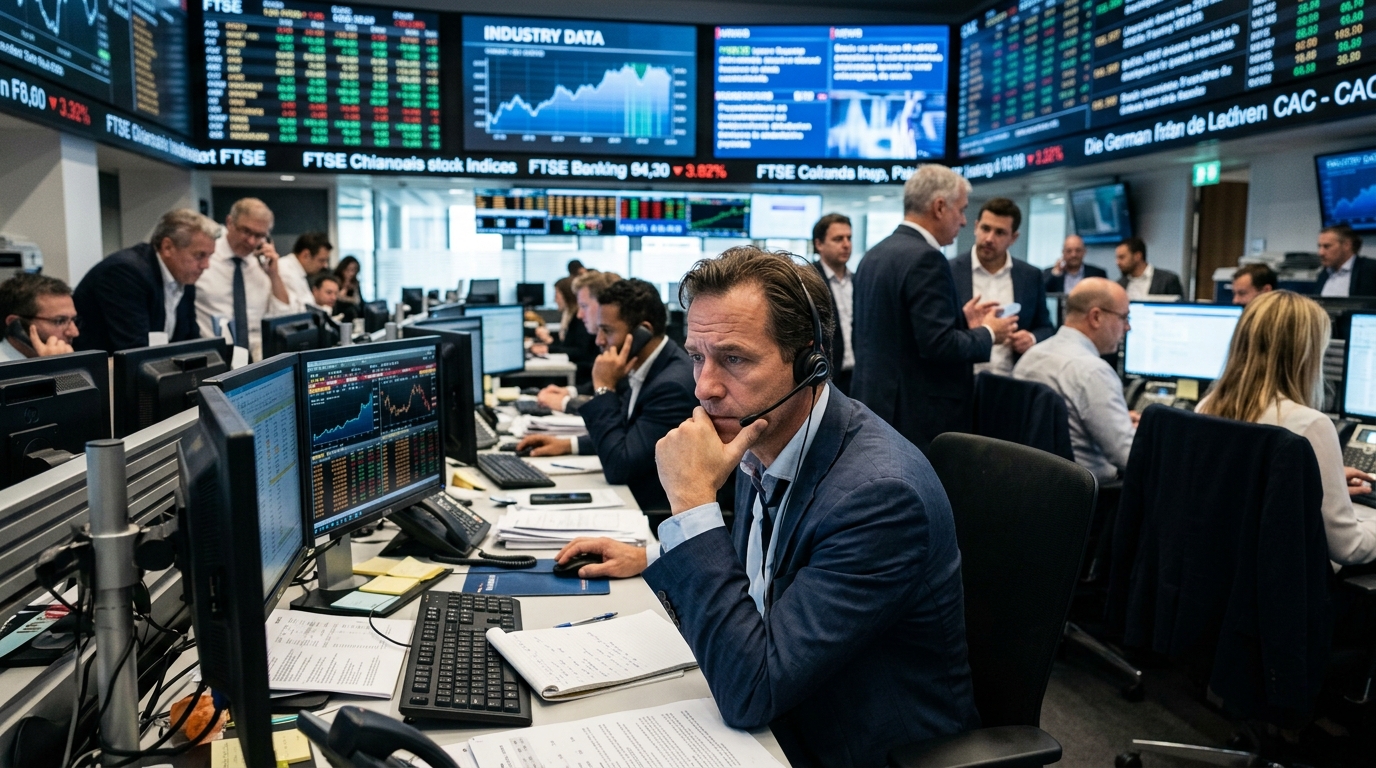
Europe stands today, in the spring of 2026, at one of the most critical crossroads in its modern history. The rise of Artificial Intelligence (AI) is no longer a future prediction but a daily industrial reality reshaping supply chains, production, and the very structure of employment. The question posed by Euronews and occupying Brussels is clear: Can European industry remain competitive, or will it turn into a mere consumer of technologies developed in Silicon Valley and Shenzhen?
The Draghi Warning and the Existential Gap
The debate over Europe's future took a new turn following Mario Draghi's landmark report on European competitiveness. The former ECB chief was categorical: Europe needs a "radical change" and investments of 800 billion euros annually to close the gap with the US. In the field of AI, the problem is structural. While Europe possesses world-class research institutions and talented scientists, it systematically fails to convert research into commercial giants.
Heavy industry, the backbone of the European economy, faces the double blow of high energy costs and digital lag. In Germany, the continent's traditional engine, carmakers are struggling to integrate AI not just into driver assistance systems, but into optimizing production lines. Without a unified Data Strategy, European companies are forced to rely on US-owned cloud infrastructure, effectively ceding control of their industrial secrets.
Regulation: Shield or Shackle?
The European Union led the way with the AI Act, the world's first comprehensive legal framework. However, criticism from the business world is intense. There is a fear that excessive regulation before the market even matures will stifle innovation. Proponents of regulation argue that "Ethical AI" can become Europe's trademark, attracting customers who prioritize data protection and transparency.
Yet, in practice, European startups like France's Mistral or Germany's Aleph Alpha face enormous difficulties in raising capital compared to OpenAI or Anthropic. The fragmented European market, with its different languages and national peculiarities, hinders the rapid scaling required by the AI era. Industry 4.0 requires a single digital market that, despite decades of promises, remains incomplete.
The Strategy of "Sovereign AI"
To keep its industry, Europe is now investing in the concept of "Sovereign AI." This means creating local supercomputing infrastructure and developing models trained on European industrial data. The EuroHPC JU initiative is a step in this direction, offering small and medium-sized enterprises access to computing power that was previously the privilege of giants only.
- Automation and Labor: AI can offset Europe's demographic aging by increasing the productivity of existing workers.
- Green Transition: Using AI to optimize energy consumption in factories is Europe's "hidden card" for achieving climate goals.
- Specialized Manufacturing: Europe excels in precision robotic systems, where AI integration can consolidate its dominance.
The conclusion is that Europe cannot beat the US at its own game of consumer applications (B2C). It can, however, dominate in "Industrial AI" (B2B), where deep knowledge of engineering and manufacturing meets algorithmic intelligence. The survival of European industry depends on whether political leaders dare to move towards real economic integration, leaving national egos behind.





