

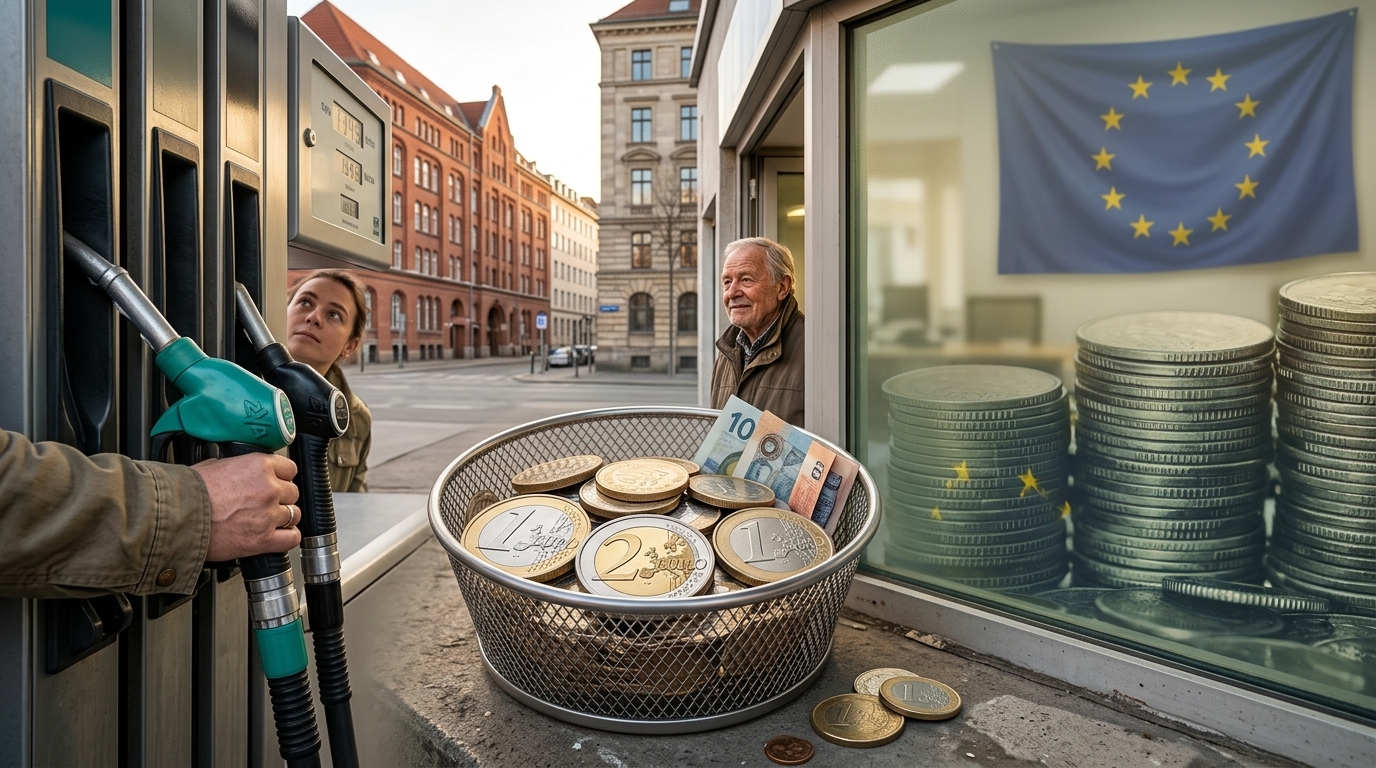
History seems to repeat itself with a troubling regularity for the European economy. As we move through the first half of 2026, geopolitical instability in the Middle East is no longer a distant diplomatic crisis but an immediate economic threat knocking on the doors of households and businesses across the Old Continent. The European Commission, recognizing the magnitude of this threat, is proceeding with a strategic overhaul of the state aid framework, providing member states with the tools to support the market's most vulnerable players.
The current crisis, triggered by ongoing conflicts and disruptions to supply routes through the Red Sea, has sent shipping costs and natural gas prices soaring. For Europe, still trying to heal the wounds of the 2022 energy crisis, this new challenge requires a delicate balance between fiscal discipline and social protection. The new framework established by the Commission is not merely an extension of old measures but a tailored response to the structural weaknesses highlighted by years of volatility.
The Architecture of the New Aid Measures
At the heart of Brussels' new initiative is the "Temporary Crisis and Transition Framework" (TCTF). The announced changes allow member states to subsidize energy costs for energy-intensive industries, such as steel, chemicals, and glass production, which form the backbone of European manufacturing. Without this support, the risk of deindustrialization—with companies moving production to regions with cheaper energy, such as the US or Asia—becomes existential.
However, the innovation of the current framework lies in its strict targeting. Unlike the horizontal subsidies of the past, the new aid is directly linked to green transition commitments. Companies receiving support are required to invest a percentage of the funds into low-carbon technologies or energy efficiency measures. In this way, the EU seeks to turn a crisis into an opportunity to accelerate decarbonization and end reliance on fossil fuels.
Households: Protection Against Energy Poverty
For households, the Commission is giving the green light for targeted interventions in retail prices, especially for citizens living below the energy poverty line. In countries like Greece, where housing and energy costs absorb a disproportionately large share of family income, these regulations are vital. The new framework allows states to set price caps on specific consumption quantities, ensuring that basic needs are met without completely distorting market competition.
Brussels' analysis suggests that the impacts of the Middle East crisis could last for months, if not years. This means that support mechanisms must be sustainable. The Commission warns that the reckless use of state resources could lead to increased inflation, negating the benefits of subsidies. Therefore, "surgical" precision in identifying beneficiaries is key to the program's success.
The Risk of Single Market Fragmentation
One of the greatest concerns voiced in the corridors of the Berlaymont is the risk of creating a two-speed Europe. Countries with significant fiscal space, such as Germany and France, have the capacity to channel billions of euros into their own companies, creating an unfair advantage over the less robust economies of the South and Eastern Europe. Margrethe Vestager, in the final phase of her mandate, has repeatedly stressed that state aid must not become the weapon that dismantles the Single Market.
To mitigate this risk, the EU is considering the use of common financing instruments, such as the Strategic Technologies for Europe Platform (STEP), which could provide resources to member states that lack the necessary capital to compete with German subsidies. This debate is expected to dominate upcoming summits, as geopolitical pressure leaves no room for delay.
Conclusion: A Europe in Constant Readiness
The crisis in the Middle East serves as a reminder to Europe of its vulnerability. Aid to businesses and households is a necessary "painkiller," but the real cure remains energy autonomy and the diversification of supply sources. 2026 finds the EU more experienced in crisis management but also more aware of the costs of dependency. The success of the new state aid framework will be judged not only by whether it prevents an economic recession but by whether it succeeds in maintaining social cohesion in an era of great upheaval.





