

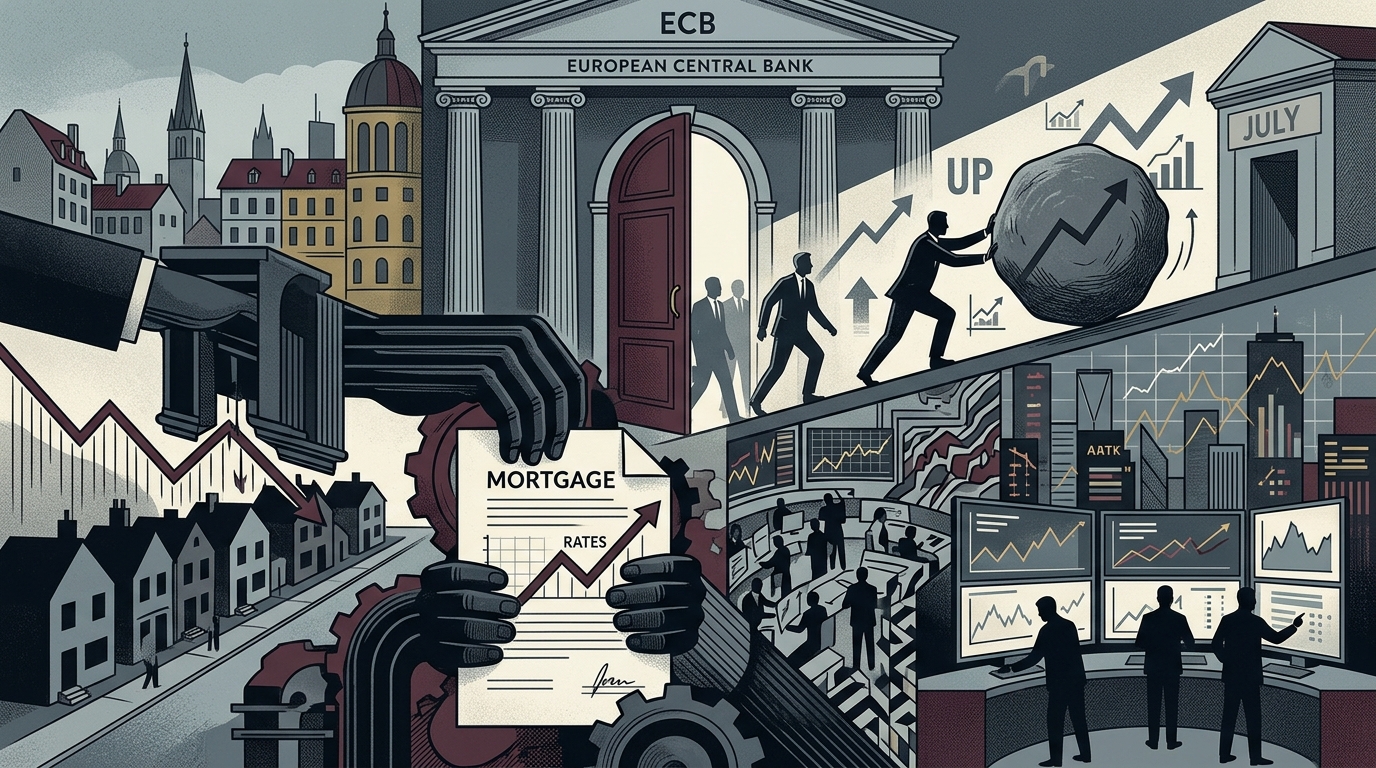
The European Central Bank (ECB) appears to be doubling down on its restrictive monetary policy, with markets now pricing in a 60% probability of a further 25 basis point rate hike at the July 2026 meeting. Despite signs of economic cooling in several member states, persistent core inflation remains the 'invisible enemy' forcing the Frankfurt-based Governing Council to keep its finger on the rate-hike trigger.
Persistent Inflation and the Frankfurt Strategy
Christine Lagarde, in her recent communications, has made it abundantly clear that the battle against inflation is far from over. While energy prices have stabilized compared to the critical years of the previous biennium, service sector inflation and wage increases continue to fuel inflationary expectations. The ECB fears that a premature loosening of policy could lead to a second wave of price spikes, which would be far more difficult to combat than the first.
The strategy of 'higher for longer' seems to be the new dogma. Analysts emphasize that the ECB is looking not just at the peak of the interest rates, but also at the duration they will remain at restrictive levels. This implies that even if the July hike is the last of the current cycle, a pivot toward rate cuts is not expected before the first half of 2027.
The 'Noose' on Mortgages and Households
For European homeowners, particularly in markets like Greece where floating rates are prevalent, this news serves as a stark warning. Most mortgages in these regions are tied to Euribor, meaning any ECB hike is almost immediately reflected in the monthly installment. A typical mortgage of €150,000 over 20 years has already seen its monthly cost rise significantly over the past year, and another hike could add an additional €30 to €50 per month.
- Rising Debt Servicing Costs: The cumulative burden since the start of the tightening cycle has reduced household disposable income by at least 15-20% in some demographics.
- Risk of New NPLs: Banks are voicing concerns about the creation of a new generation of Non-Performing Loans (NPLs) as many borrowers reach the limits of their financial endurance.
- Real Estate Market Stagnation: High borrowing costs are deterring new buyers, leading to a slowdown in transactions despite underlying demand.
The Role of Commercial Banks and State Intervention
In the current environment, the banking system is challenged to balance profitability with social responsibility. While net interest income has surged, pressure to reward depositors remains intense, as deposit rates lag significantly behind lending rates. Governments are closely monitoring the situation, weighing the possibility of extending support programs for vulnerable borrowers, although fiscal space remains tight under EU rules.
"Monetary policy is a blunt instrument that strikes everyone with the same force, but the impact is disproportionately felt by those with the smallest financial buffers," note financial circles in Athens.
In conclusion, July will be a watershed month. If the ECB proceeds with the hike, it will signal determination to the markets, but it will simultaneously test the limits of social cohesion within the Eurozone. The balance between price stability and the economic survival of citizens has never been more fragile.





