

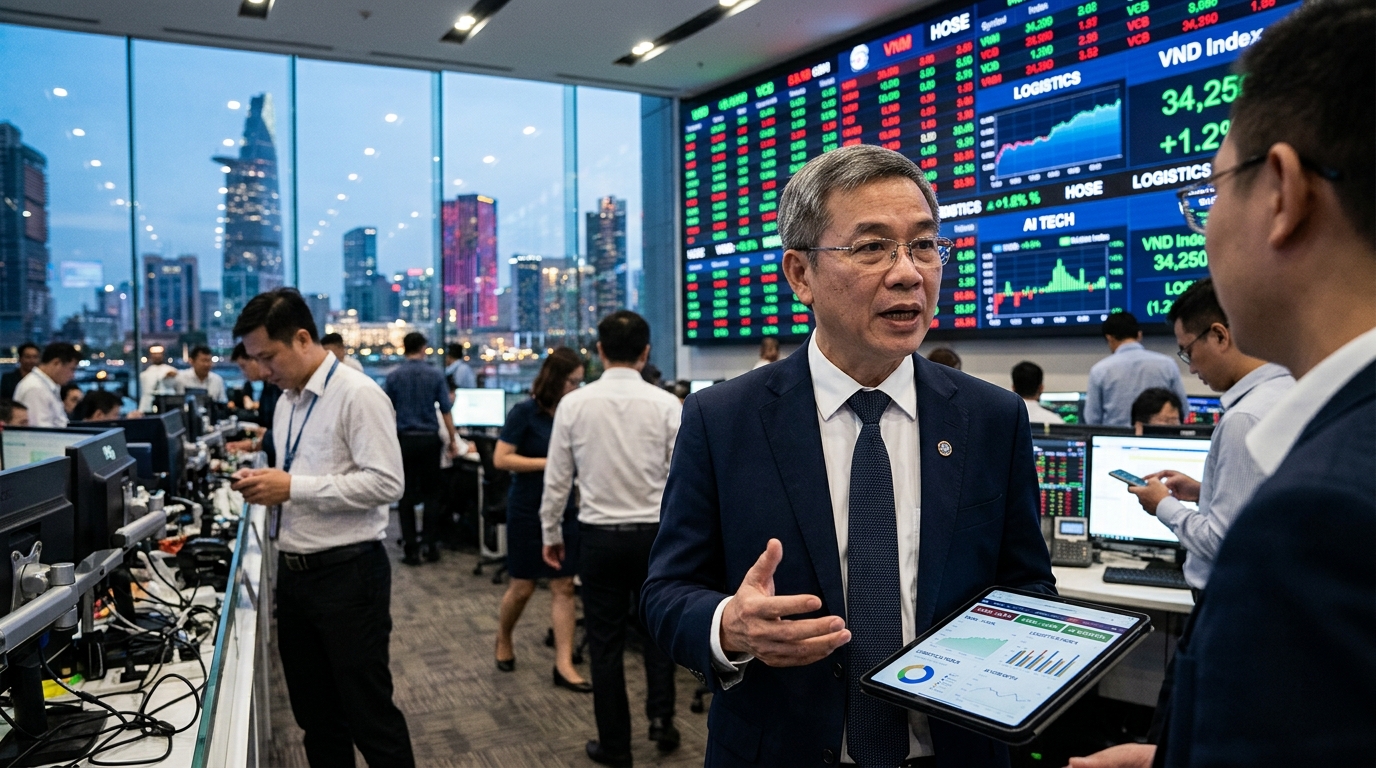
In an era where global supply chains are desperately seeking stability and speed, Vietnam is emerging as a critical hub. However, the nation's traditional infrastructure faces significant hurdles. Associate Professor Dr. Nguyen Thanh Chuong, a prominent voice in the transport and logistics sector, argues forcefully that Artificial Intelligence (AI) is not merely a luxury, but a prerequisite for the survival and growth of Vietnam's logistics industry.
Despite its rapid economic growth, Vietnam continues to struggle with high logistics costs, which represent a disproportionately large share of its GDP—approximately 16-20%. This figure is significantly higher than the global average, undermining the competitiveness of Vietnamese products on the international stage. According to Dr. Chuong, AI integration could be the "key" to releasing this economic pressure, transforming traditional warehouses into smart distribution centers and simple truck fleets into optimized transport networks.
The Digital Revolution in Warehousing and Distribution
Dr. Chuong’s analysis focuses on AI’s ability to process vast amounts of data in real-time. In the logistics sector, this translates to precise demand forecasting, allowing businesses to manage inventories with surgical precision. "AI doesn't just predict the future; it helps shape it," the professor notes. Using machine learning algorithms, companies can avoid overstocking or, conversely, shortages that lead to lost revenue.
Furthermore, warehouse automation through AI-guided robots reduces human error and accelerates the packing and shipping process. In the Vietnamese context, where labor is traditionally inexpensive but high-level expertise is scarce, the transition to automated systems offers a level of consistency that manual labor cannot always guarantee. Dr. Chuong emphasizes that using AI for route optimization can reduce fuel consumption and delivery times by up to 30%, directly impacting both profitability and the environmental footprint.
Challenges and the Need for Human Capital
Despite the immense potential, the road to full digital transformation is not without obstacles. Dr. Chuong points out that the greatest challenge is not the technology itself, but human capital. There is a significant "skills gap" in Vietnam. The market requires professionals who not only understand logistics but can also operate and maintain advanced AI systems. "Education must align with the needs of Industry 4.0," he asserts.
Moreover, data quality remains a thorny issue. AI is only as good as the data that feeds it. Many Vietnamese logistics firms still operate with fragmented systems or even manual records. Establishing a unified digital ecosystem, where data flows freely and securely among stakeholders, is essential for AI to yield its full benefits.
Vietnam as a Global Player
In the broader geopolitical context, upgrading Vietnam’s supply chain via AI holds immense significance. As many multinational corporations adopt the "China Plus One" strategy (diversifying production away from China), Vietnam is competing with nations like India and Thailand for investment. The adoption of advanced logistics technologies could be the deciding factor that tips the scales in Hanoi's favor.
In conclusion, Dr. Nguyen Thanh Chuong remains optimistic. He believes that with the right government support and public-private partnerships, Vietnam can transform its supply chain from a costly burden into a powerful engine of economic growth. Artificial Intelligence is no longer the future; it is the present that demands immediate action.





