

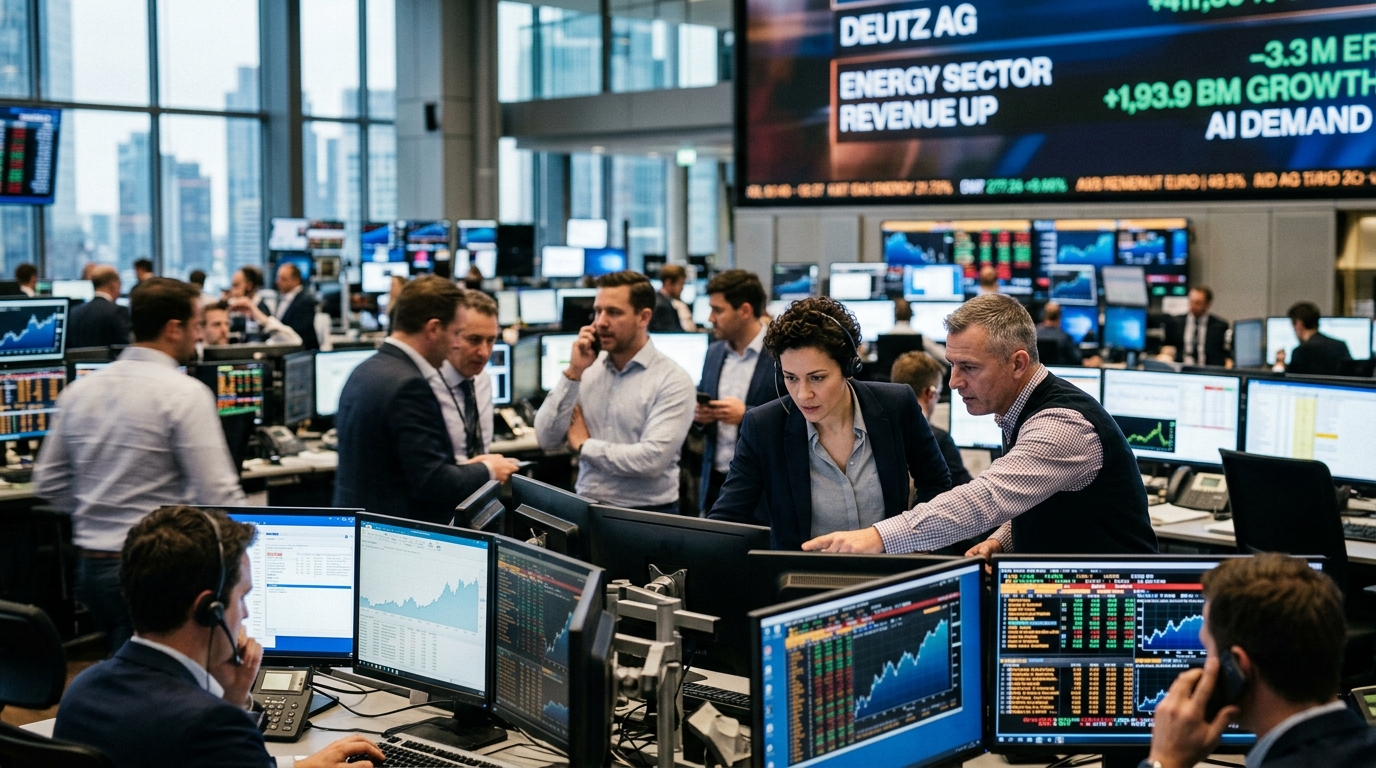
In the beating heart of the digital revolution, where Artificial Intelligence (AI) algorithms process billions of data points per second, lies an unexpected necessity: raw, unfailing industrial power. Deutz AG, one of the world’s oldest and most respected engine manufacturers, has announced a strategic pivot that places it at the forefront of technological infrastructure. The company forecasts that its revenues from the energy sector will triple in the coming years, reaching 500 million euros, as demand for generators and data center support systems skyrockets.
The Transformation of an Industrial Giant
For decades, the Deutz name was synonymous with internal combustion engines for agricultural machinery and construction equipment. However, management recognized early on that the future lies not just in wheels, but in servers. The shift toward the "Energy" segment is not merely a supplementary activity; it is a central pillar of survival and growth in the era of decarbonization. The need for power generation systems (gen-sets) that can guarantee a data center never goes offline has made Deutz’s expertise more valuable than ever.
This strategy was significantly bolstered by the acquisition of Blue Star Power Systems, an American company specializing in power generation systems. This move allowed Deutz to penetrate the critical US market, where the construction of massive data centers by giants like Microsoft, Google, and Amazon continues at an unrelenting pace. Integrating these operations is expected to create synergies that will drive profitability to new heights, partially decoupling the company’s fate from the cyclical fluctuations of traditional industry.
The AI Energy Paradox
There is a profound irony at the heart of AI: while the technology promises to optimize energy consumption and help mitigate the climate crisis, its own operation is incredibly energy-intensive. Latest-generation chips from NVIDIA and other manufacturers require vast amounts of electricity to run and cool. In many parts of the world, the public power grid is unable to meet these demand spikes or provide the necessary stability.
This is precisely where Deutz steps in. Its systems act as a "safety net." In the event of a voltage drop or power outage, generators must kick in within fractions of a second to prevent data loss or the collapse of critical services. The demand for such "prime power" and "standby power" solutions has created a backlog that extends many months, giving Deutz the leverage to select the most profitable projects.
Toward a Green Future: Hydrogen and Alternative Fuels
Despite the current reliance on diesel and natural gas, Deutz is not ignoring the pressure for sustainability. The company is investing heavily in hydrogen engines and battery energy storage systems. The goal is to offer "green" data centers, where backup power comes from clean sources.
- Development of hydrogen combustion engines for zero CO2 emissions.
- Hybrid systems combining renewable sources with traditional backup.
- Expansion of maintenance services and remote monitoring via IoT.
This transition is challenging, as customers prioritize reliability above all else. However, Deutz’s ability to marry heavy engineering with modern energy needs makes it one of the most interesting players on the European industrial stage in 2026. The forecast of tripling revenues is not just an optimistic target; it is a reflection of a new reality: AI cannot exist without the support of heavy industry.





