

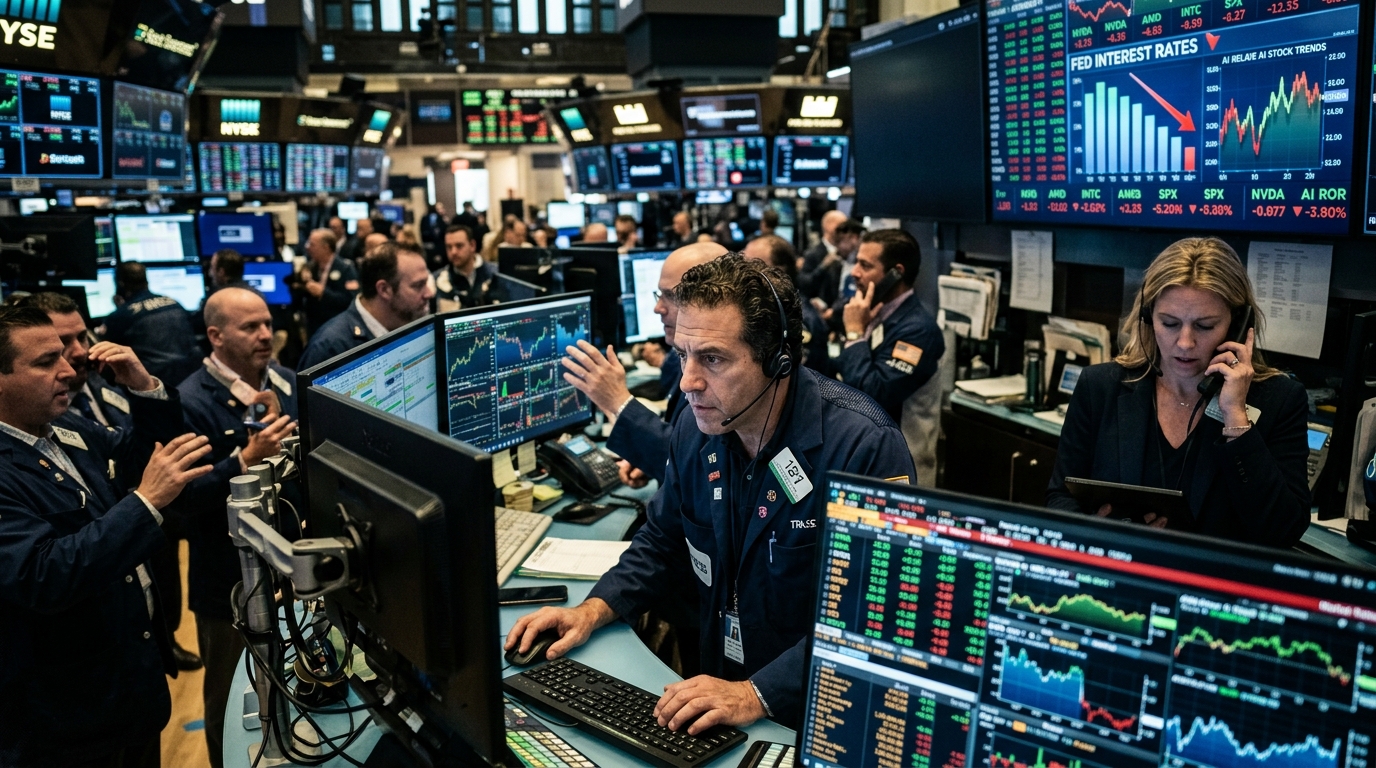
The global semiconductor market, now the "black gold" of the 21st century, stands at a critical crossroads. As we move through the summer of 2026, investors are watching with bated breath as shares of industry giants experience violent swings. From Nvidia and AMD to TSMC and ASML, the sentiment in international markets alternates between euphoria over the Artificial Intelligence (AI) revolution and deep concern regarding macroeconomic conditions in the United States.
The current volatility is not merely a technical phenomenon but a reflection of a broader struggle between two opposing forces: rapid technological progress and the harsh reality of monetary policy. While demand for computing power remains at historic highs, the cost of capital and inflationary pressures are creating an environment where even the most optimistic forecasts are being questioned.
The Trap of High Expectations
The core issue facing chip stocks today is what analysts call "pricing for perfection." Throughout 2024 and 2025, semiconductor valuations skyrocketed, built on the promise that AI would transform every facet of the economy. However, 2026 brings a more demanding approach. Investors are no longer satisfied with promises; they demand tangible evidence of return on investment (ROI) from the companies purchasing these expensive chips.
When a company like Nvidia announces earnings that beat expectations but its stock price falls, it is a clear signal: the market has already baked the best-case scenario into the price. Any slight hint of a slowdown in capital expenditures (CapEx) from major cloud providers (Microsoft, Google, Meta) triggers chain reactions, leading to massive sell-offs. This "show-me" phase of the AI cycle is proving to be much more volatile than the initial hype phase.
The Shadow of the Federal Reserve
Alongside the technological dynamics, the "elephant in the room" remains the Federal Reserve. US interest rate expectations act as an anchor on growth stocks. Semiconductors, being a capital-intensive industry, are particularly sensitive to borrowing costs. Recent statements from Fed officials suggesting that rates will remain "higher for longer" have spooked investors who were hoping for a pivot toward easing.
- Financing Costs: New manufacturing plants (fabs) now cost tens of billions of dollars. High interest rates increase the cost of building and operating these facilities.
- Discounting Future Cash Flows: In financial models, higher rates reduce the present value of future earnings, disproportionately hitting tech companies whose value is based on long-term growth.
- Consumer Demand: Interest rate pressure on households limits purchases of electronic goods, affecting segments of the chip market not directly related to AI, such as smartphones and PCs.
"The semiconductor market is no longer an isolated tech sector; it is the barometer of global liquidity," says a leading Wall Street strategist.
Geopolitics and Supply Chain Friction
One cannot analyze the trajectory of chip stocks without considering the geopolitical factor. Ongoing tensions between the US and China regarding export restrictions on cutting-edge technology add another layer of risk. Companies are being forced to redesign their supply chains, a process that is both costly and time-consuming.
The push for "re-shoring" or "friend-shoring" production through initiatives like the CHIPS Act in the US and the EU, while positive for long-term security, creates short-term pressure on profit margins. Investors worry that the fragmentation of the global market will lead to overcapacity in some regions and shortages in others, further fueling price volatility. The era of hyper-efficient, globalized supply chains is giving way to a more resilient but more expensive regionalized model.
Conclusion: A Test of Fortitude
The future of chip stocks in 2026 remains bright, but the path to the top is fraught with obstacles. Artificial intelligence is not a bubble, but its integration into the real economy takes time and massive amounts of capital. Investors who can distinguish the noise of interest rate fluctuations from the core substance of technological change will be the ones who prevail. However, for the immediate future, volatility will remain the rule rather than the exception as the market seeks a new equilibrium between digital utopia and monetary reality.





