

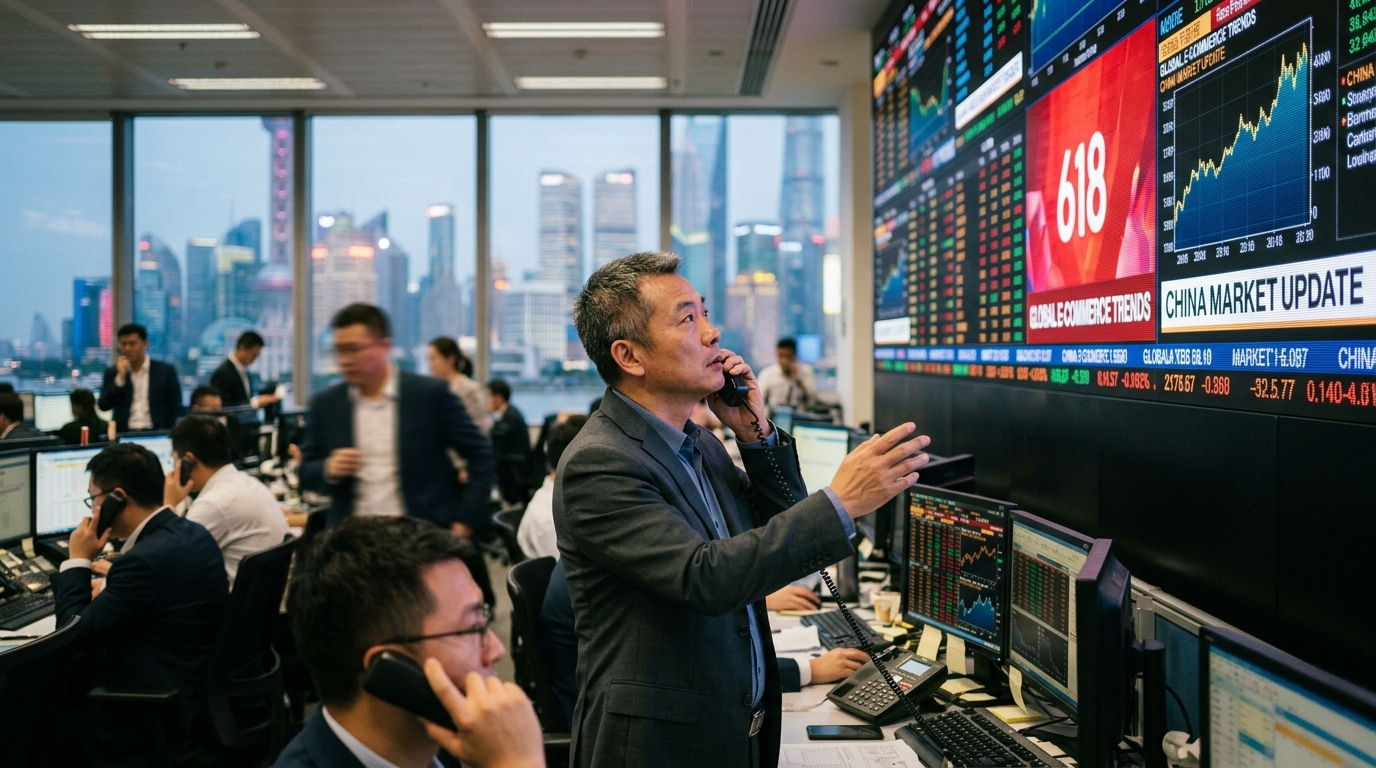
The 618 shopping festival in China this year is not merely a period of heavy discounting; it is a full-scale demonstration of next-generation technological prowess. As we move through June 2026, traditional marketing strategies are being superseded by the total dominance of Artificial Intelligence (AI). From Alibaba and JD.com to ByteDance, Chinese tech giants are no longer just competing on price, but on the ability of their algorithms to predict desires before consumers even voice them.
The 618 festival, originally started as the anniversary of JD.com's founding, has evolved into the world's second-largest e-commerce event after Singles' Day (11.11). This year, the shift is palpable: AI is not in the background but on the front lines, assuming roles ranging from customer service to live sales content creation.
The Revolution of Digital Hosts and Livestreaming
The most visible change in this year's 618 is the mass adoption of "digital humans" in livestreaming. While two years ago the top streamers were celebrities with millions of followers, today thousands of virtual presenters work 24/7. These AI avatars, moving and speaking with uncanny naturalness, can answer viewer questions in real-time, demonstrate products, and close deals without ever experiencing fatigue.
According to market analysts, the operating cost of an AI streamer is approximately 10% of the cost of a human presenter and their associated production team. This has allowed small and medium-sized enterprises (SMEs) to enter the livestreaming space—a sector that previously required significant capital. JD.com reported that over 5,000 brands used its proprietary AI hosts during the first days of the festival, noting sales increases that exceeded all expectations.
Democratizing Marketing via Generative AI
Beyond video, Generative AI has revolutionized content creation for merchants. Alibaba introduced a suite of tools that allows sellers to generate professional product photos, advertising copy, and short videos within seconds, using only a simple text description.
"AI is no longer a privilege of the big players. It is the tool that levels the playing field for the small merchant in Shenzhen or Guangzhou," states a senior executive at Taobao.
This "democratization" of technology means that the quality of a product's presentation no longer depends on the size of the marketing budget, but on creativity in using AI tools. Simultaneously, consumers enjoy a highly personalized experience, as Large Language Model (LLM) based systems act as personal shopping assistants, comparing prices, analyzing reviews, and suggesting solutions tailored exactly to their needs.
The Invisible Side: Supply Chain and Logistics
While the AI storefront is impressive, the real battle is won in the warehouses. The use of predictive algorithms has allowed companies to move goods to warehouses near end-consumers before an order is even placed. JD Logistics is utilizing a new autonomous routing system this year that reduces delivery times by 20% compared to last year.
Furthermore, AI manages the complexity of returns—one of e-commerce's largest costs. Through data analysis, systems can identify behavioral patterns suggesting a likely return and intervene by offering additional information or incentives to the customer, thereby reducing resource waste and the environmental footprint.
Challenges and the Future of Global Trade
Despite the success, the dominance of AI brings questions. The authenticity of interaction is being challenged, as consumers often do not know if they are speaking with a human or a machine. There are also concerns regarding data privacy, as AI requires vast amounts of information to function effectively.
However, the message from the 618 festival is clear: the future of retail is algorithmic. What is happening in China today serves as a roadmap for the West. Amazon and Walmart are closely monitoring these developments, as AI integration is no longer an option but a necessity for survival in a market moving at the speed of light.





