

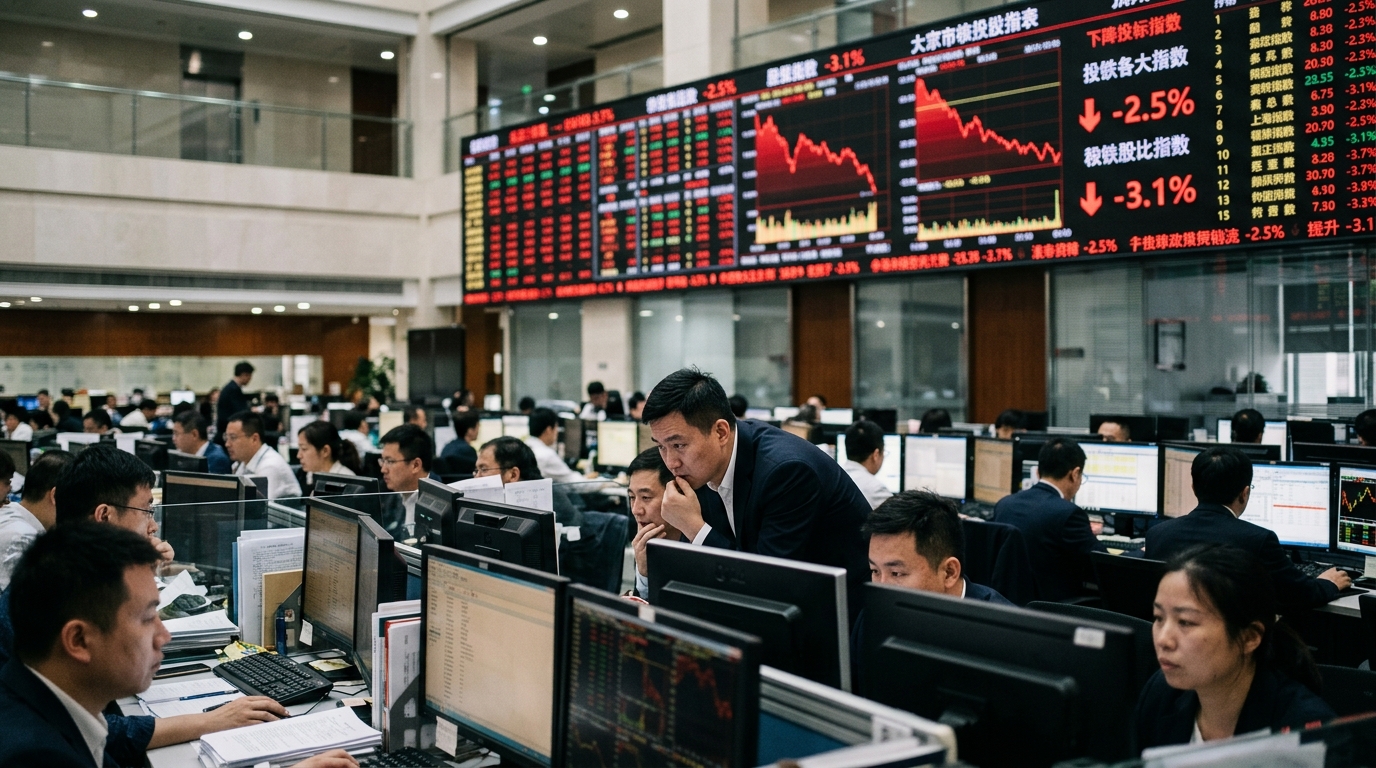
On June 18, 2026, global financial markets are witnessing a significant tremor centered in Asia. The Hang Seng Tech Index, a key barometer for Chinese innovation and growth, is on the verge of entering a technical bear market, defined by a 20% drop from its recent peak. This downward trajectory reflects more than just a passing volatility; it signals a profound structural reassessment of the world's second-largest economy.
The Weight of Regulation and Slowing Growth
Internet giants such as Tencent, Alibaba, and Meituan are seeing their market valuations erode daily. Despite Beijing’s attempts to soothe investor nerves following years of aggressive regulatory crackdowns, the market remains deeply skeptical. Uncertainty surrounding new AI governance frameworks and data security laws has created a stifling environment where innovation is secondary to state compliance.
Furthermore, domestic consumption in China has failed to ignite. Chinese consumers, bruised by a persistent real estate crisis and high youth unemployment, are tightening their belts. This shift is directly mirrored in the stock prices of e-commerce firms, which serve as the backbone of the tech index. When the domestic engine stalls, platforms stop growing, and global investors seek greener pastures elsewhere.
The Semiconductor War and Geopolitical Headwinds
External pressures are equally daunting. The ongoing tech war with the United States, particularly concerning high-end semiconductors, has erected a 'silicon curtain' that limits China's access to vital hardware. Export controls from the West are hampering the ability of Chinese firms to develop competitive Large Language Models (LLMs) at a time when Silicon Valley is accelerating at breakneck speed.
- Export restrictions on Nvidia and ASML technology are crippling Chinese AI infrastructure.
- Foreign capital flight toward Japan and India is accelerating as institutional investors rebalance.
- A lingering lack of transparency in Beijing’s economic stimulus plans fuels market distrust.
Analysts suggest that China is at a historical crossroads. Without a massive intervention from the People's Bank of China (PBOC) or a fundamental shift in government rhetoric, the slide could turn into a full-scale rout. Market sentiment has turned decidedly bearish, with every minor rally being met by sell orders from investors looking for an exit strategy.
The International Perspective: A Risk Premium
"China is no longer the default choice for growth. Investors now demand a risk premium that Chinese equities are struggling to justify,"notes a senior strategist at a major London-based investment bank. The movement of capital is stark. While China once commanded nearly 30% of emerging market portfolios in 2021, that figure has plummeted to below 15% by mid-2026.
In conclusion, the slide toward a bear market is a clarion call. Technological leadership requires not just capital and talent, but a free and predictable regulatory environment. As long as Beijing prioritizes political control over market dynamics, the stock market will remain the Achilles' heel of Chinese power. Today's weakness may not be a bottom, but rather the beginning of a prolonged period of stagnation, unless a radical pivot in economic policy is enacted.





