

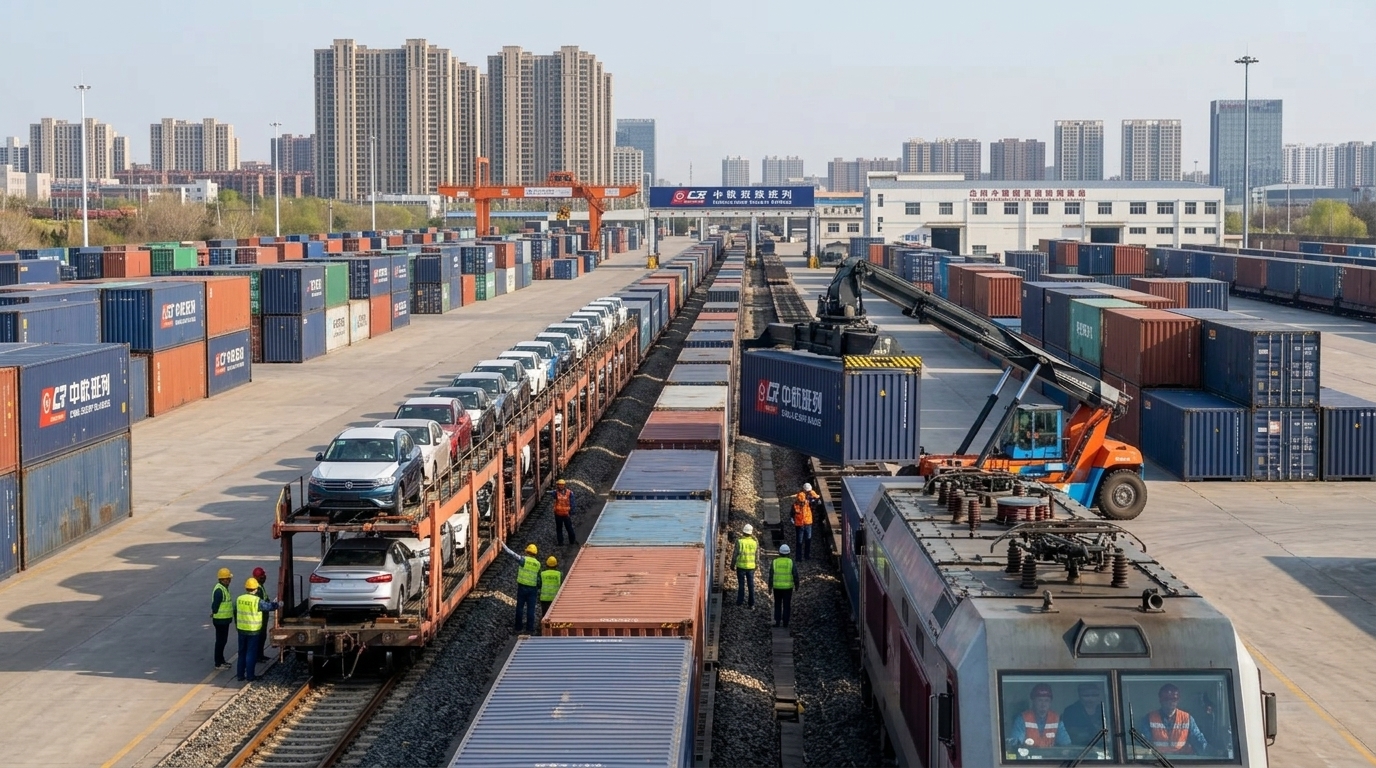
In the expansive heart of Eurasia, where the ancient Silk Road once thrived, the China-Europe Railway Express (CRE) has transitioned from a visionary project into a vital artery of global commerce. At the Alashankou Station, a critical gateway on the China-Kazakhstan border, the rhythmic pulse of trade is palpable. Trains laden with consumer goods from Duisburg, Germany, pass those carrying high-tech electronics and automotive parts from Chinese manufacturing hubs, showcasing a logistical symphony that operates 24/7 with increasing precision.
A Strategic Pivot: From Volume to Quality
For years, the narrative surrounding the CRE focused on the sheer number of trips. However, the current focus has shifted toward qualitative excellence. Under the stewardship of China Railway Urumqi Bureau Group Co., Ltd., significant investments have been channeled into automating container transfer processes. The necessity for swift border crossings has birthed "Smart Customs" initiatives, where Artificial Intelligence and Big Data are utilized to pre-clear cargo long before it arrives at the terminal. This digital leap has slashed waiting times from days to hours, positioning rail as a formidable competitor to maritime routes.
Furthermore, the network is diversifying. The emergence of the "Middle Corridor," which traverses the Caspian Sea, offers a strategic alternative to traditional routes. In an era of heightened geopolitical volatility in the Red Sea and the Middle East, this land-based connectivity provides a layer of supply chain resilience that global corporations are increasingly desperate to secure. Diversification ensures that the flow of goods remains insulated from localized conflicts or maritime bottlenecks.
Digitalization and the Green Logistics Frontier
Digitalization serves as the backbone of this modern logistical marvel. The integration of RFID tags and Internet of Things (IoT) sensors allows for real-time tracking of cargo—monitoring everything from precise location to the internal temperature of cold-chain containers. This level of transparency is indispensable for the transport of high-value, sensitive goods such as pharmaceuticals and perishable food items, sectors where the CRE is seeing exponential growth.
Environmental sustainability is also taking center stage. As the European Union tightens carbon footprint regulations, rail transport is being marketed as the "green" alternative. A freight train emits up to 90% less CO2 than an airplane and significantly less than a cargo ship when delivery speed is factored in. China’s investment in next-generation electric locomotives and renewable energy-powered logistics hubs aligns with global ESG (Environmental, Social, and Governance) mandates, making the rail link an attractive option for climate-conscious brands.
Economic Impact and Regional Revitalization
The CRE’s influence extends far beyond logistics; it is a catalyst for regional economic revitalization. Inland Chinese cities like Xi'an and Chengdu have been transformed into international trade hubs, bypassing the need for coastal ports. Similarly, in Europe, cities like Duisburg have solidified their status as premier inland ports, fostering thousands of jobs in logistics, warehousing, and distribution. This development promotes economic cohesion across the Eurasian landmass, offering landlocked nations in Central Asia a golden ticket to global market integration.
"The railway is no longer just a track between two points; it is a digital corridor that brings the markets of the East and West into a single, seamless ecosystem." — Senior Logistics Analyst
In conclusion, the China-Europe Railway Express represents a synthesis of economic diplomacy and technological innovation. In a world characterized by supply chain fragility, this rail network provides the stability and speed required for 21st-century commerce. By bridging the geographical divide, it is not just moving goods; it is forging a new era of Eurasian integration.





