

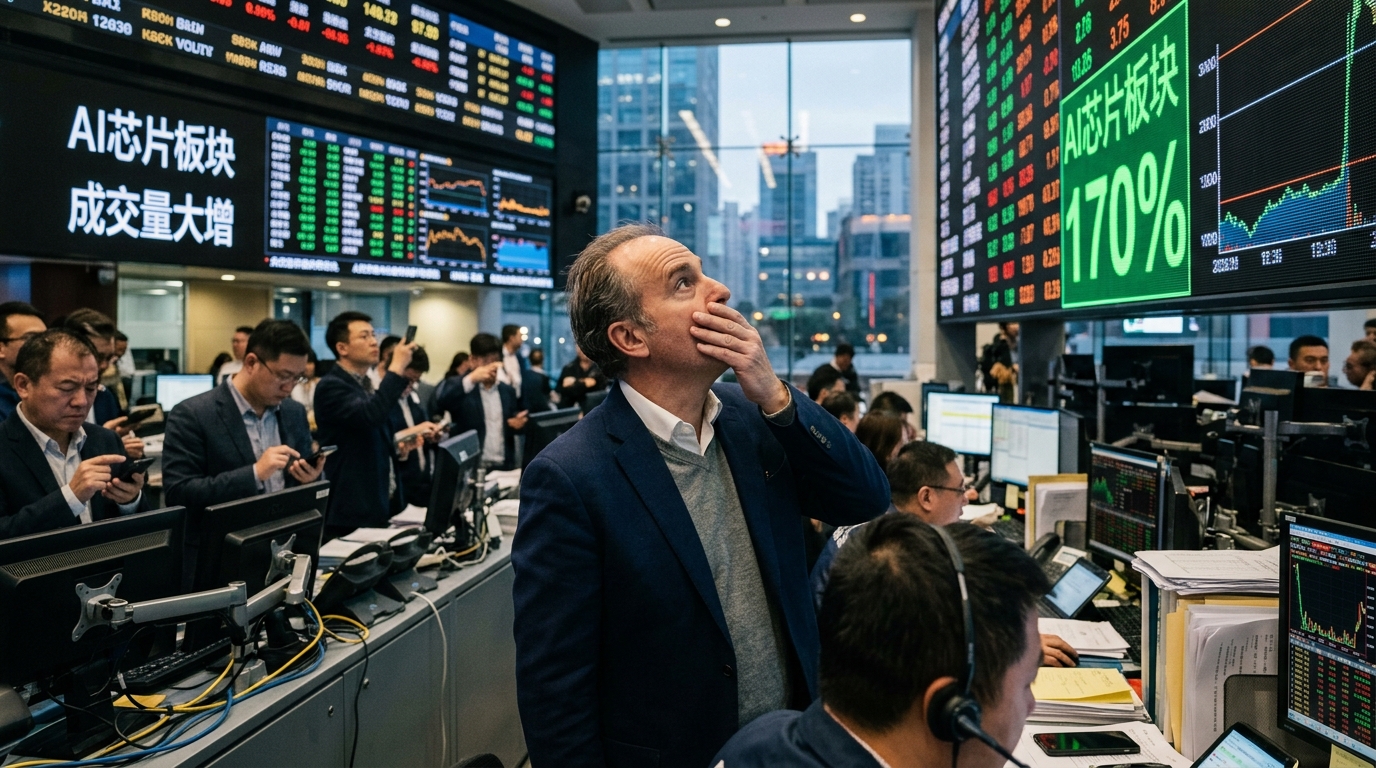
The era of indiscriminate enthusiasm for all things artificial intelligence in China is drawing to a close, replaced by a cold, calculated reality of picking winners and discarding laggards. According to the latest data from the Hong Kong and Shanghai stock exchanges, a staggering 170% surge in the shares of a leading AI lab—now widely regarded as the nation’s primary champion—has cemented a new investment paradigm: the AI pair trade.
The Shift from Hype to Commercial Viability
For over two years, Chinese investors poured capital into any entity promising to build a domestic rival to OpenAI’s models. However, as we cross the midpoint of 2026, the market has begun to distinguish between companies with genuine technological moats and those merely riding the wave of hype. The standout performer of this cycle, which has seen its valuation nearly triple, has succeeded by focusing on industrial-grade Generative AI and supply chain integration, proving that AI can generate tangible bottom-line results rather than just impressive benchmarks.
This 170% rally is more than just a figure; it represents institutional confidence that this specific lab has secured the necessary compute resources despite ongoing US export restrictions and has locked in strategic partnerships with state-owned enterprises. Conversely, its rivals—many of whom focused on general-purpose LLMs without a clear monetization path—are seeing their valuations crater as the cost of training models outpaces their revenue growth.
The Anatomy of the AI Pair Trade
A pair trade involves going long on a perceived leader while simultaneously shorting a laggard within the same sector. In the context of Chinese AI, fund managers are betting on a massive divergence. The logic is rooted in the reality of the Chinese market: in an environment shaped by state priorities and restricted access to high-end hardware like GPUs, there is simply no room for a dozen winners. There will likely be only one or two.
- Hardware Resilience: Winners are defined by their ability to stockpile chips or develop efficient domestic alternatives that bypass Western sanctions.
- Policy Alignment: In China, political favor translates directly into access to massive datasets and lucrative government contracts.
- Vertical Specialization: A pivot from "General AI" to "Vertical AI" tailored for specific industries like manufacturing or green energy.
This strategy allows investors to hedge against overall market volatility, focusing instead on the relative performance of the two companies. Analysts in Beijing note that the gap between the top tier and the rest of the field has widened so significantly that shorting the "loser" is now seen as a core component of a sophisticated AI portfolio, providing a buffer against macroeconomic headwinds.
The US Factor and Technological Self-Reliance
The rise of this AI powerhouse cannot be analyzed without considering the geopolitical backdrop. The lab in question is rumored to have pioneered a new neural network architecture that requires 40% less computational power for training, effectively mitigating the impact of US chip bans. This breakthrough is the "holy grail" for the Chinese tech scene, offering a path to high-performance AI using legacy or domestic hardware.
"The market is no longer buying promises; it is buying efficiency," says a senior strategist in Shanghai. "Whoever can deliver high-performance AI with domestic resources will capture the entire market share, leaving others to scramble for scraps."
This dynamic creates a vicious cycle for the laggards. Without a rising stock price, these companies struggle to attract top-tier talent and secure the massive funding required for R&D, leading to further obsolescence. The gap isn't just staying open; it's becoming an unbridgeable chasm.
Conclusion: The New Phase of the Digital Dragon
China is proving that it can cultivate an AI ecosystem that operates under its own unique constraints and rules. The emergence of the pair trade is a sign of a maturing market, moving away from the bubble-like behavior of previous years. For global investors, the takeaway is clear: selectivity is the only viable path forward. The days when "all boats rose with the AI tide" are over. In the China of 2026, only the most adaptable and technologically self-sufficient will thrive, while the rest will serve merely as the short leg in the strategies of sophisticated hedge funds.





