

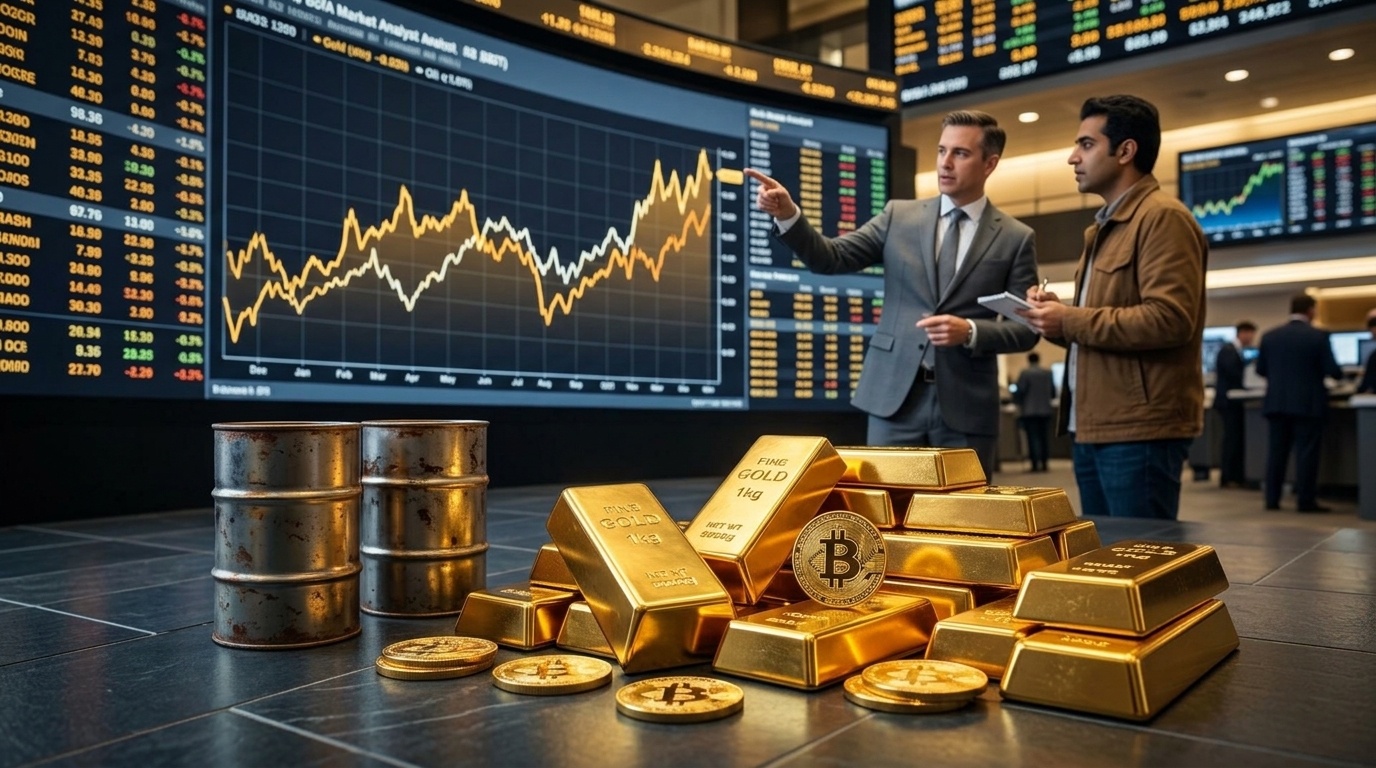
The global economic stage stands at a critical juncture as whispers of a diplomatic rapprochement between the United States and Iran begin to coalesce into concrete market expectations. In an extensive analysis, Bank of America (BofA) examines the implications of a potential deal that could lead to significant de-escalation in the Middle East. Such a development would not merely be a diplomatic victory but a catalyst that would reshape energy prices, demand for traditional safe havens, and the dynamics of digital assets.
Oil and the Return of Normalcy
The central pillar of any agreement between Washington and Tehran remains energy. BofA points out that the lifting or easing of sanctions on Iranian oil exports could add hundreds of thousands of barrels per day to the global supply. At a time when global demand is showing signs of fatigue due to high interest rates, additional supply would act as a powerful disinflationary factor. The bank's analysts estimate that the 'risk premium' currently baked into Brent and WTI prices could evaporate, driving prices lower to the benefit of major energy importers like Europe and China.
However, falling oil prices are not welcomed by everyone. OPEC+ nations would face a new challenge in maintaining production quotas, while US shale companies might see their profit margins tighten. BofA emphasizes that the deal would act as a 'pressure relief valve' for the global economy, reducing transport and production costs, which would give central banks more room to lower interest rates.
Gold: The End of 'Fear' or a New Equilibrium?
Gold, the traditional refuge in times of geopolitical instability, is expected to face pressure in the event of a deal. According to the analysis, a large part of the precious metal's recent rally is attributed to uncertainty in the Middle East. A peace process would remove the need for risk hedging, potentially leading to a price correction. Nevertheless, BofA notes that gold maintains its long-term value due to structural deficits in the US and ongoing demand from emerging market central banks.
- De-escalation reduces the demand for 'safe havens.'
- Falling energy-driven inflation may limit gold's attractiveness as an inflation hedge.
- Technical supports remain strong, but momentum could shift direction.
Bitcoin: Digital Gold or Risk-On Asset?
BofA's stance on Bitcoin in this scenario is particularly intriguing. While many crypto proponents view it as 'digital gold,' the bank observes that its behavior tends to align more with risk-on assets. A US-Iran deal could boost investor confidence in global prospects, leading to increased liquidity flowing toward tech stocks and cryptocurrencies. If Bitcoin sheds the stigma of 'crisis funding' and is adopted as part of broader economic growth, its price could benefit from general market euphoria, despite a potential drop in traditional safe havens.
"Geopolitical stability is the ultimate catalyst for the return of liquidity to risk markets," the report states.
The Big Winners and the Challenges
In summary, the big winners from such a development would be consumers in Western economies, airlines, and industries dependent on fuel costs. At the same time, non-oil-producing emerging markets would see their current account deficits improve. On the other hand, BofA warns that a deal is not guaranteed and that internal political pressures in both the US and Iran remain high. 'Normalization' may be a slow process, but the market's discounting of it has already begun, creating new investment opportunities in an environment hungry for stability.





