

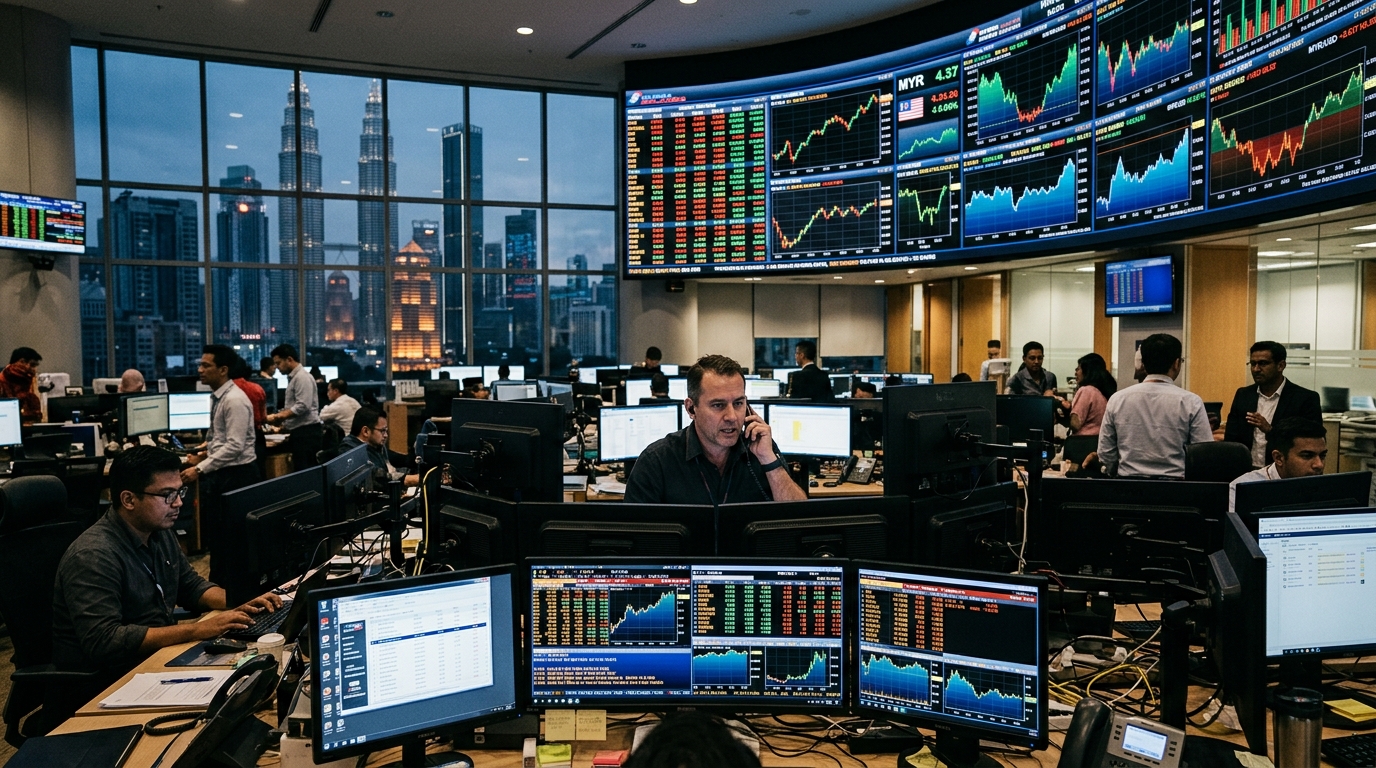
The global race for Artificial Intelligence (AI) supremacy is being fought not just in the coding labs of Silicon Valley, but on the muddy grounds of construction sites across Southeast Asia. AirTrunk, the data center giant owned by Blackstone Inc., is in advanced talks to secure a $2.3 billion loan (approximately 10 billion Malaysian ringgit). The goal is to fund its rapid expansion in Malaysia, a country that is fast becoming a regional hub for digital infrastructure.
This move is part of a broader trend of tech-linked financings in the region, as US and global investment firms recognize that the "fuel" of AI—data and processing power—requires physical infrastructure of unprecedented scale. Malaysia, with its competitive energy costs and strategic location adjacent to Singapore, is emerging as a major winner in this new geopolitics of data.
The Digital Transformation of Malaysia
Why Malaysia? The answer lies in a combination of geography and policy. Singapore, the region’s traditional leader, has imposed strict moratoriums and limitations on new data center developments due to land scarcity and energy consumption concerns. This created a massive opportunity for the neighboring Malaysian state of Johor, which now hosts some of the largest projects by AirTrunk and other tech titans like Microsoft and Google.
The new $2.3 billion loan is expected to be primarily directed toward the development of the JHB1 campus in Johor. This is a "hyperscale" facility designed to serve the needs of the world’s largest cloud providers. Blackstone’s strategy is clear: owning the physical "pipes" and "warehouses" of the internet is as profitable—and perhaps safer—than investing in individual software companies.
Blackstone’s Strategy and the Rise of AirTrunk
Blackstone acquired AirTrunk in 2024 in a deal that valued the company at over $15 billion, marking one of the largest investments in the history of digital data infrastructure. This acquisition was no accident. Blackstone President Jon Gray has repeatedly stated that data centers are an asset class presenting "once-in-a-generation opportunities."
- Scale: AirTrunk already boasts a network spanning from Australia and Japan to Hong Kong and Singapore.
- Clientele: It partners with "Big Tech" players, securing long-term contracts that guarantee stable cash flows.
- Expertise: The company’s ability to build quickly and with energy efficiency is critical in a market where time-to-market is everything.
The loan currently being sought is expected to be structured as a "green loan" or a "sustainability-linked loan," reflecting the need for sustainable growth. Data centers are notorious for their massive consumption of electricity and water for cooling, and Malaysia is pushing for greener solutions to meet its own climate goals.
Challenges and Geopolitical Risks
Despite the optimism, the path is not without obstacles. The rapid growth of data centers in Malaysia has raised concerns about the strain on the national power grid. The Malaysian government is trying to balance attracting foreign investment with ensuring its citizens do not face energy shortages or price hikes.
"Malaysia is becoming a central nervous system for AI in Asia, but the challenge is ensuring this infrastructure is powered by renewables rather than coal," says an energy market analyst in Kuala Lumpur.
Furthermore, there is the issue of competition. Other countries in the region, such as Vietnam and Thailand, are beginning to offer similar incentives to attract Blackstone and its competitors. However, Malaysia’s proximity to the Singapore ecosystem gives it an advantage that is difficult to overturn in the short term.
Conclusion: Infrastructure as the New Oil
AirTrunk’s investment in Malaysia highlights a fundamental truth of the digital age: Artificial Intelligence is not something "ethereal" living in the cloud. It is a capital-intensive industry that requires billions in concrete, copper, and electricity. Blackstone, through AirTrunk, is positioning itself as the "landlord" of the digital future, betting that the demand for processing power will continue to grow exponentially in the coming years. For Malaysia, this $2.3 billion loan is a vote of confidence that could define its economic trajectory for the next decade.





