

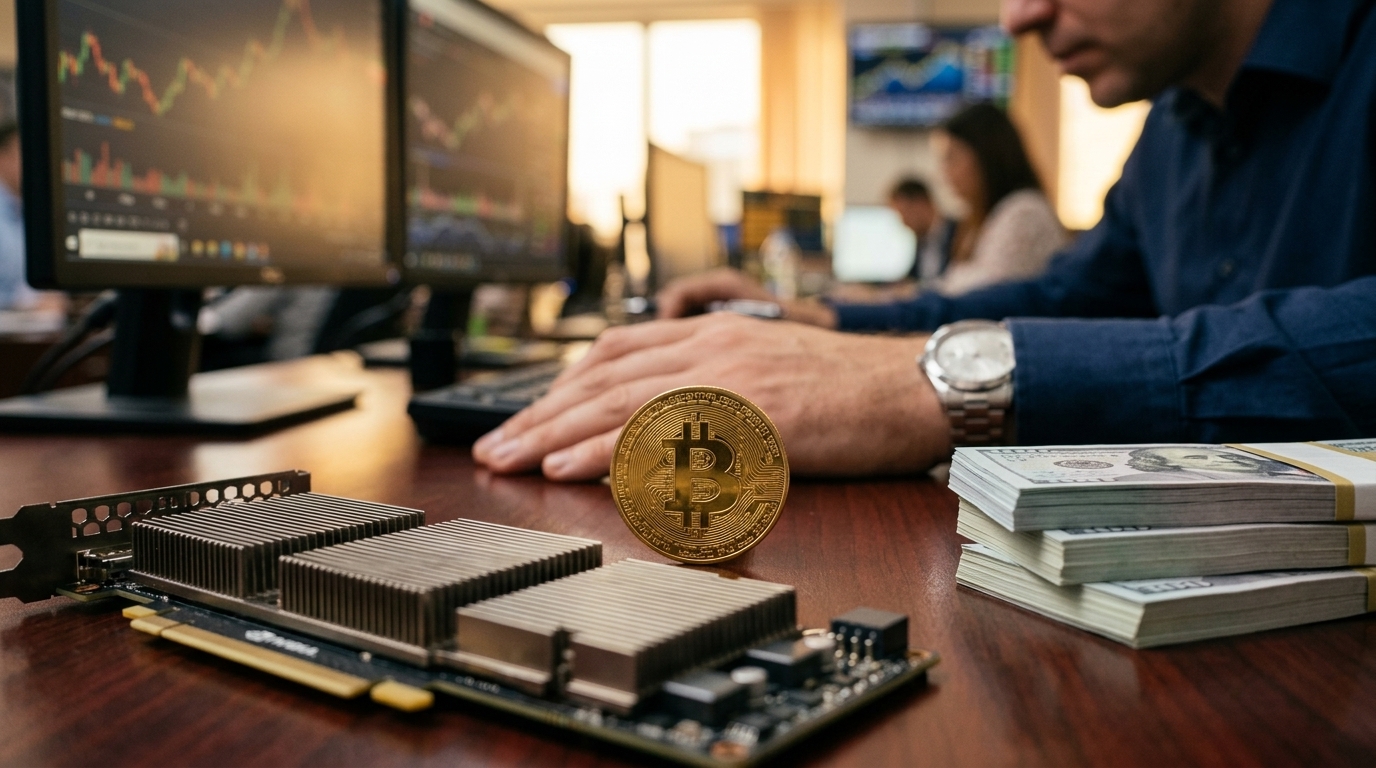
The cryptocurrency market is experiencing yet another moment of intense volatility, but this time with a distinctly bullish undertone. Bitcoin, the world's premier digital asset, has once again managed to breach the critical psychological and technical barrier of $60,000, triggering a wave of optimism among global investors. This surge is not a random occurrence; it is the result of a complex interplay between U.S. monetary policy, the maturation of the Artificial Intelligence (AI) ecosystem, and the search for alternative hedges against persistent inflation.
The Fed Factor and Kevin Warsh’s Influence
Central to the recent price action are the statements made by Kevin Warsh, a former governor of the Federal Reserve. Warsh, whose name is frequently mentioned for top economic policy positions, has expressed significant concerns regarding the trajectory of inflation and the central bank's ability to contain it without inducing a recession. Markets interpreted his remarks as a signal that interest rates might remain "higher for longer," a scenario that traditionally favors assets with a fixed supply, such as Bitcoin.
Bitcoin is often referred to as "digital gold," and the recent price movement solidifies this reputation. When confidence in the traditional monetary system is shaken by fears of currency debasement, institutional investors increasingly turn to cryptocurrencies as a means of value preservation. The steady inflow of liquidity into Bitcoin Spot ETFs (Exchange Traded Funds) indicates that mainstream adoption is no longer a future hypothetical but a present-day reality for Wall Street.
The Great Liquidity Rotation: From AI to Crypto
One of the most compelling narratives emerging in recent weeks is the correlation between AI stocks and the crypto market. Following a prolonged rally led by tech giants like Nvidia, Microsoft, and Alphabet, we are witnessing a natural correction and profit-taking phase. This capital, seeking fresh high-beta opportunities, appears to be rotating back into the digital asset space.
Analysts suggest that the perceived "overheating" in the AI sector is prompting fund managers to diversify their portfolios. While AI remains the dominant technological trend of the decade, Bitcoin offers a different kind of value proposition: it is a decentralized network independent of corporate earnings reports or quarterly guidance. Furthermore, the convergence of AI and Blockchain—where AI is utilized for network security or automated trading—is creating a synergistic narrative that bolsters both sectors.
Solana, Ether, and the Altcoin Resurgence
While Bitcoin takes the spotlight, major altcoins are also showing signs of renewed life. Ethereum (Ether) continues to benefit from its network upgrades and the anticipation of broader ETF integration into retail investment platforms. Maintaining its position above $2,500 is seen by technical analysts as a vital sign for the broader market's health.
Solana, on the other hand, is emerging as the champion of speed and low transaction costs. With an ecosystem rapidly expanding in the realms of NFTs and decentralized applications (dApps), Solana is attracting developers who are migrating away from slower, more expensive chains. Even Dogecoin, which originated as a meme, demonstrates surprising resilience. Supported by a loyal community and occasional endorsements from figures like Elon Musk, it remains a high-volatility favorite for retail speculators.
Challenges and the Road Ahead
Despite the climb back above $60,000, the path forward is fraught with challenges. Regulatory bodies in the U.S. and Europe (notably through the MiCA framework) are ramping up pressure for transparency and consumer protection. Additionally, geopolitical instability can trigger "risk-off" sentiment at any moment, potentially driving investors away from speculative digital assets.
Nevertheless, a structural shift is undeniable. Bitcoin is no longer viewed as a fringe experiment for hackers, but as an integral component of the global financial landscape. Its ability to rebound after every significant drawdown and reclaim high price levels suggests a deep-seated demand that transcends mere speculation. The question is no longer whether Bitcoin has inherent value, but rather where its next ceiling lies in a world grappling with fiscal instability and a relentless technological revolution.





