

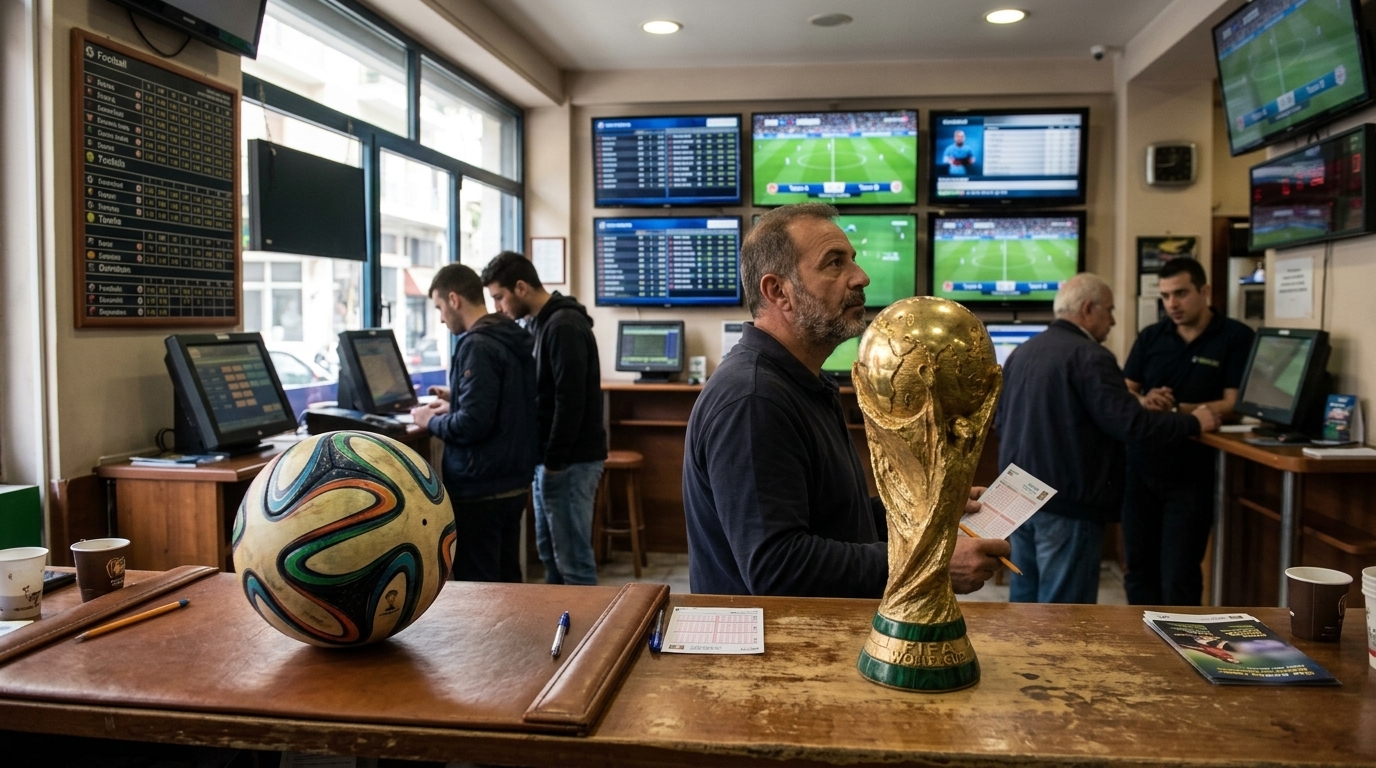
As the 2026 World Cup unfolds across the stadiums of North America, a quiet but colossal shift is taking place in the global economy. It is no longer about traditional betting, where a punter plays against a bookmaker. We have entered the era of prediction markets, where information is treated as a commodity and every future event—from match results to inflation rates or elections—is transformed into a liquid financial contract.
The New Architecture of Prediction
The rise of platforms like Polymarket, Kalshi, and recently Robinhood, has fundamentally altered the landscape. Unlike traditional sportsbooks, these platforms operate as exchanges. Users don't just buy an odd; they buy and sell shares in outcomes. If you believe Brazil will win the trophy, you buy a contract that will be worth $1 if they succeed and $0 if they fail. The price of this contract at any given moment reflects the probability the market assigns to the event, creating a live forecasting mechanism that often proves more accurate than pollsters or analysts.
Kalshi, having won significant legal battles in the US against the CFTC, paved the way for the legalization of 'event contracts.' This allowed institutional investors to enter a market once considered fringe. Robinhood’s entry, with its massive retail user base, has turned betting into a form of 'social investing,' where the line between trading and gambling is becoming increasingly blurred.
The World Cup as an Accelerator
This year's World Cup serves as the ultimate stress test for these platforms. With billions of dollars flowing into contracts covering not just the winner, but also individual player performances, card counts, or even weather conditions during matches, prediction markets are recording trading volumes that rival traditional stock exchanges. Polymarket, operating on blockchain technology, offers global, borderless access, allowing traders from London to Tokyo to bet into the same liquidity pool.
The difference lies in efficiency. In prediction markets, the price adjusts instantly to every new piece of information. A training ground injury translates into an immediate drop in the team's contract price. This 'wisdom of the crowd' turns platforms into powerful predictive tools for businesses and policymakers, who monitor contract prices as leading indicators for what is to come.
Risks and Ethical Dilemmas
However, the 'casinification' of everything does not come without a cost. Criticism focuses on two axes: manipulation and addiction. When massive sums are wagered on an outcome, the incentive to interfere with reality increases. Furthermore, the ease of access via mobile apps, using gamification techniques, may lead to a new crisis of gambling addiction disguised as financial activity.
"We are not just seeing the evolution of betting, but the complete liquidation of human expectation," notes a Wall Street analyst.
In Europe and Greece, the debate over regulating these platforms remains in its infancy, as gambling laws often clash with financial market rules. The question is whether these platforms are truly hedging tools or just a more sophisticated casino operating 24/7 in our pockets.
Conclusion: The Future of Information
Betting as we knew it is dying. In its place, a new economy is being born where prediction is the ultimate currency. Whether it is the World Cup or the next central bank decisions, prediction markets are here to stay, reshaping how we perceive uncertainty and the value of information in the 21st century.





