

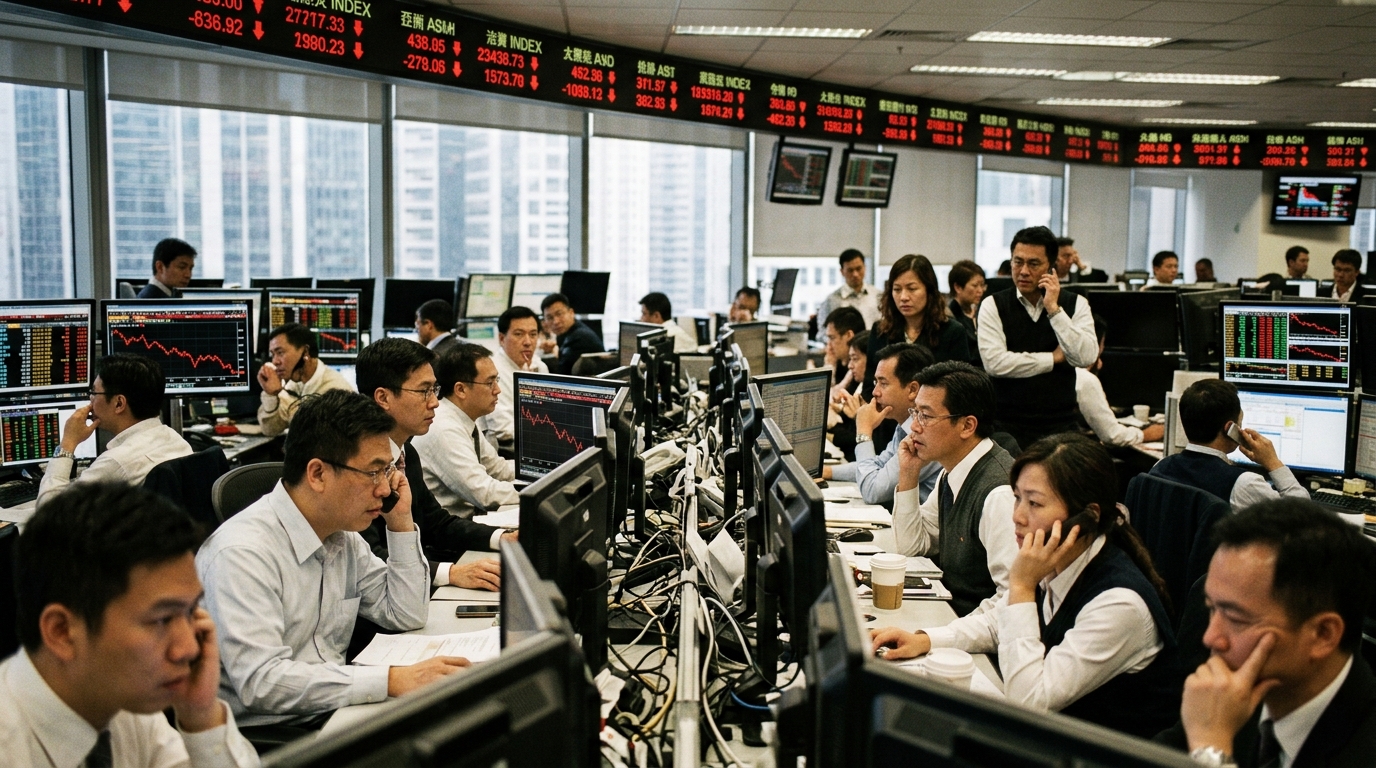
The recent euphoria that dominated global markets, fueled by almost messianic expectations for Artificial Intelligence, seems to have hit a wall of reality. In the past few hours, Asian stock markets have experienced significant turbulence, with major indices retreating sharply as investors rush to lock in their gains. This movement is not merely a technical correction, but a deeper reassessment of the value of companies that form the backbone of the global technology supply chain.
The Anatomy of a Downturn
At the center of the slump were the semiconductor and hardware giants. Japan's Nikkei 225 and South Korea's Kospi led the losses, as companies like TSMC, Samsung Electronics, and SK Hynix saw their shares come under heavy pressure. For months, these firms were considered the 'safe havens' of the digital revolution, with their valuations reaching levels that many analysts described as excessive.
Investor psychology has shifted abruptly. While previously every AI-related news item was treated as a buying opportunity, a sense of skepticism now prevails. The market seems to be asking: 'When will we see the actual return on these investments in corporate earnings?' Profit-taking is the natural reaction in a market that feels it has run too far, too fast.
Geopolitical and Macroeconomic Pressures
Beyond technological fatigue, Asia is facing a complex mix of macroeconomic challenges. The strength of the US dollar continues to exert pressure on local currencies, making imports more expensive and forcing central banks to maintain a cautious stance. Simultaneously, trade restrictions between the US and China in the high-tech chip sector create an environment of uncertainty that discourages long-term investors.
- The Nikkei's fall was influenced by speculation regarding a shift in the Bank of Japan's monetary policy.
- The Hang Seng index in Hong Kong is pressured by the sluggish recovery of the Chinese economy.
- Investors are rotating capital from growth stocks into more defensive sectors.
"The market cannot subsist solely on promises of the future. It needs tangible evidence that AI is translating into operational profitability for the broader economy," says a leading analyst in Tokyo.
The Bubble That Hasn't Burst (Yet)
Is this the beginning of the end for the AI rally? Most analysts agree that this is a necessary 'decompression.' Technological revolutions historically follow a path of intense ascent, followed by a period of disillusionment, and finally, steady growth. The current decline in Asia may be the signal that we are moving into the second phase of this cycle.
For Asian nations, which serve as the world's factory for AI, the challenge is twofold. They must maintain their dominance in production while simultaneously managing the volatility of their capital markets. The coming period will be critical for re-evaluating investment strategies, as the 'easy money' phase of AI begins to demand more concrete results.





