

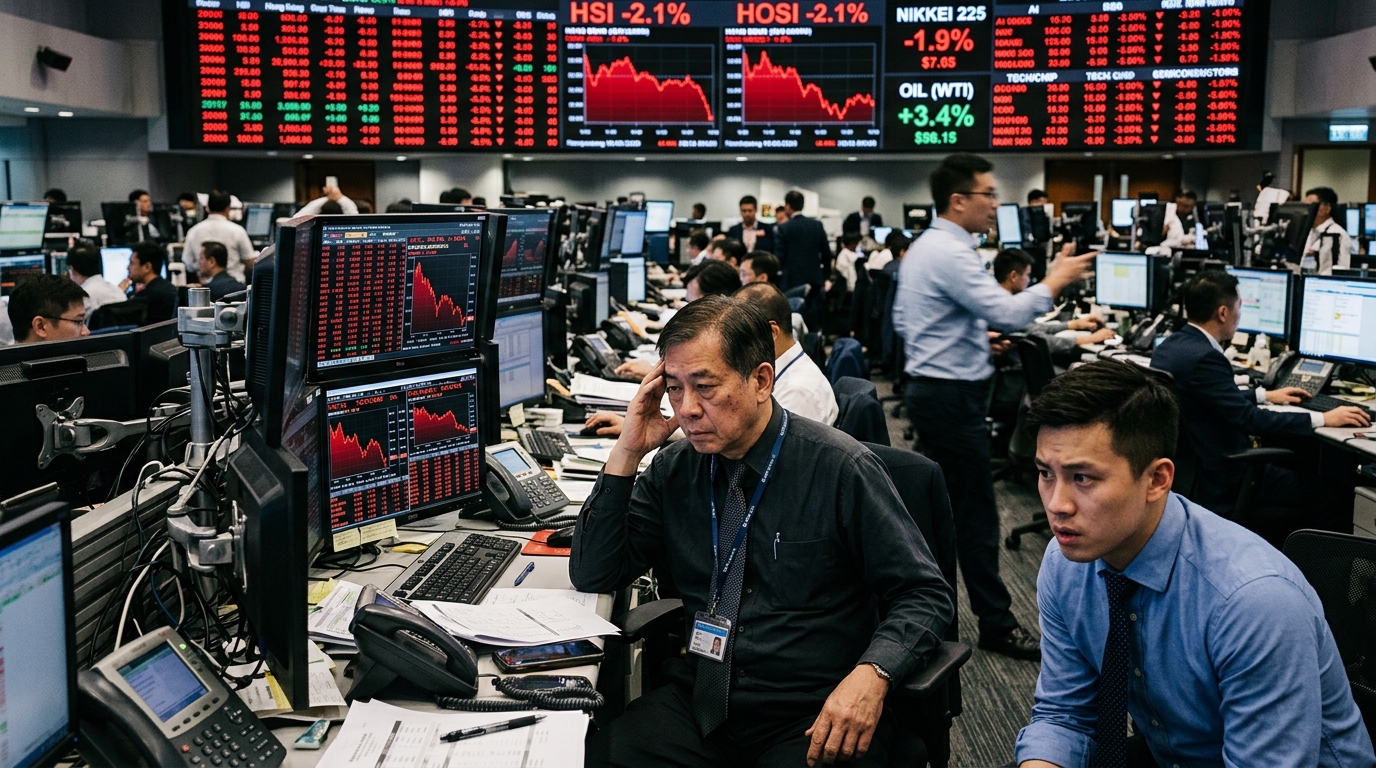
The global investment community is watching with bated breath as the wave of enthusiasm for Artificial Intelligence (AI), which fueled an unprecedented rally in previous months, appears to be hitting a wall of reality. The recent slump in technology stocks on Wall Street has triggered an immediate chain reaction across Asian markets, with indices in Tokyo, Seoul, and Taipei recording significant losses. Simultaneously, rising oil prices are adding a layer of uncertainty, reigniting fears of persistent inflation.
The Retreat from 'AI Hype'
For more than a year, the market narrative has been dominated by the promise of AI. Companies like Nvidia, Microsoft, and TSMC saw their valuations soar to dizzying heights. However, investors are now beginning to ask the critical question: when will these massive infrastructure investments in AI start delivering actual profits? The recent sell-off in New York was not just a random fluctuation but a signal that the market is now seeking tangible proof of profitability, rather than mere potential.
In Asia, the impact was instantaneous. Japan's Nikkei 225 and South Korea's Kospi, both heavily weighted toward the semiconductor sector, faced intense pressure. These economies' reliance on the global technology supply chain makes them particularly vulnerable to shifts in sentiment on Wall Street. When the 'Magnificent Seven' of the US market sneeze, Asia catches a cold.
The Oil Factor and Inflationary Pressures
While technology stocks retreat, black gold is moving in the opposite direction. The rise in oil prices is attributed to a combination of geopolitical tensions in the Middle East and expectations of production cuts from OPEC+. For Asian economies, which are largely energy importers, this development poses a double threat. On one hand, it increases production and transportation costs; on the other, it squeezes consumer disposable income.
Central banks are now in a precarious position. While there was hope for gradual interest rate cuts as inflation receded, the rise in energy costs could derail these plans. If oil remains at elevated levels, the Federal Reserve and its Asian counterparts might be forced to keep interest rates high for a longer period, further weighing on economic growth.
Strategic Rotation or Temporary Correction?
Many analysts argue that what we are witnessing is a healthy correction. Valuations in the tech sector had strayed far from historical averages, and a pullback was inevitable. However, the simultaneous rise in commodities complicates the picture. Investors appear to be rotating out of 'growth stocks' and into more 'defensive' options or commodities, seeking safety in an environment of increased volatility.
"The market is moving from the phase of euphoria to the phase of scrutiny. AI will change the world, but the path to widespread adoption and profitability is not a straight line," notes a leading market analyst in Singapore.
In conclusion, the current turmoil highlights the fragility of the global economic balance. Asia, as the engine of global manufacturing, sits at the heart of these pressures. The coming weeks will be decisive in determining whether this decline will evolve into a deeper crisis or if it will serve as an opportunity for repositioning at more rational price levels.





