

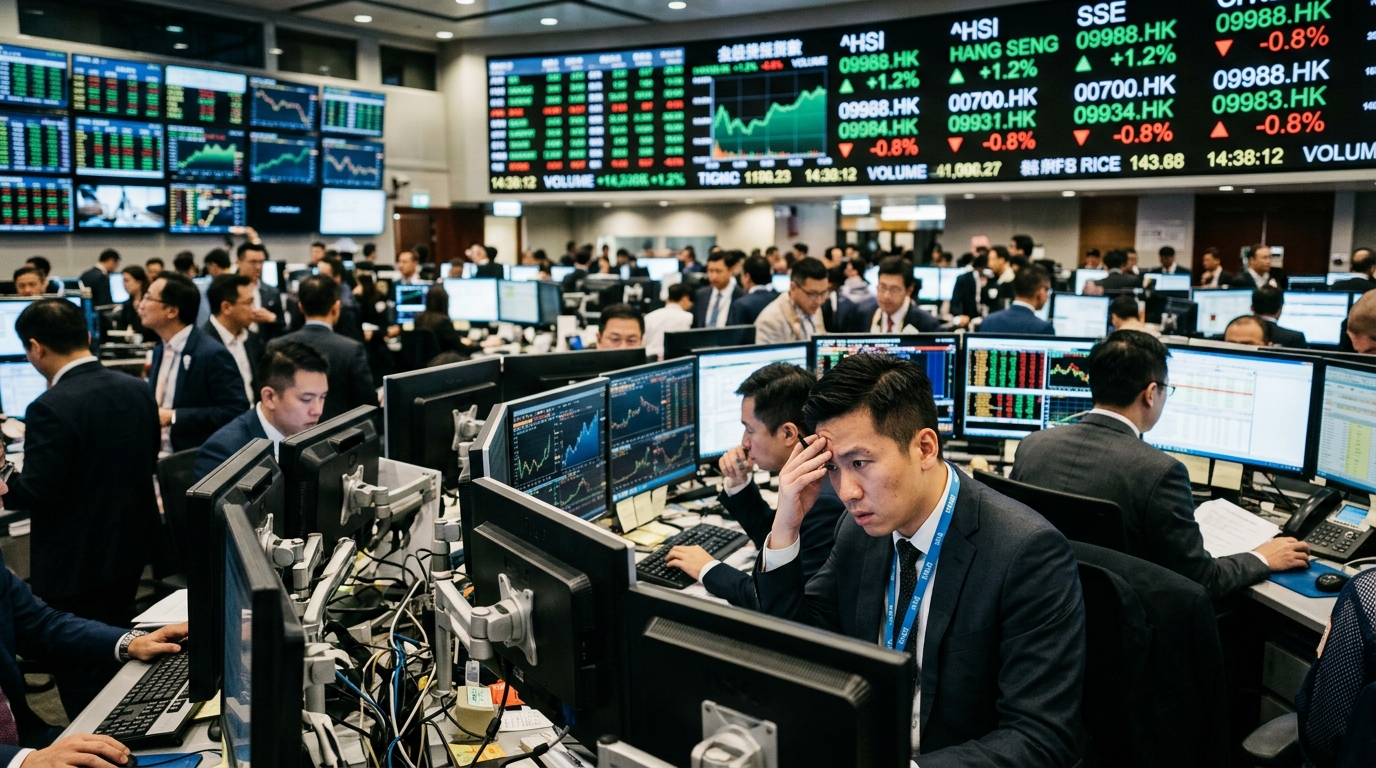
The era of unbridled confidence in the promises of Artificial Intelligence appears to be reaching its conclusion for Chinese tech giants. As Alibaba Group Holding Ltd. and Tencent Holdings Ltd. prepare to report their financial results for the first quarter of 2026, the market is no longer satisfied with grand visions. Investors, weary of China's economic slowdown and mounting geopolitical pressures, are now demanding the bottom line: when and how will the billions of dollars funneled into Large Language Models (LLMs) translate into net profits?
The High-Stakes Investment Trap
For over two years, Alibaba and Tencent have been locked in a costly arms race, striving to keep pace with global leaders like OpenAI and Microsoft. Alibaba has restructured its entire ecosystem around its 'Tongyi Qianwen' model, while Tencent has deeply integrated its 'Hunyuan' model across its suite of applications, from WeChat to cloud services. However, the sheer cost of compute power, coupled with the complexities of acquiring advanced chips under US export controls, has sent capital expenditure (CapEx) soaring to dizzying heights.
Shareholder anxiety is centered on the fact that while the technology is advancing, commercial monetization remains sluggish. Chinese enterprises, unlike their American counterparts, seem more hesitant to pay premium subscription fees for AI services, especially in an environment where domestic consumption remains tepid. This has forced the giants into a 'price war' over AI tokens, slashing margins to capture market share in a race to the bottom.
The Price War and Cloud Strategy
Recently, Alibaba sent shockwaves through the industry by slashing prices for its AI cloud services by as much as 97% for certain models. This move, while aggressive, is interpreted by analysts as a desperate attempt to 'lock in' customers before new competitors emerge. Tencent quickly followed suit with its own price cuts, creating a landscape where profitability is being sacrificed on the altar of market dominance.
- Alibaba is betting on integrating AI into its e-commerce platforms (Taobao, Tmall) to enhance user experience and merchant efficiency.
- Tencent is targeting precision advertising via WeChat, utilizing AI to boost conversion rates for advertisers.
- Baidu and ByteDance remain formidable rivals, with the latter leveraging Douyin's massive user base to scale its AI offerings.
"It’s no longer enough to claim you have the best model in China. You must demonstrate how that model reduces operational costs or generates entirely new revenue streams that didn't exist a year ago," says a senior analyst at Morgan Stanley in Hong Kong.
Geopolitics and the Quest for Self-Reliance
An additional factor complicating the profit equation is the mandatory push for technological self-reliance. With Washington restricting access to high-end Nvidia chips (such as the H100 and the newer Blackwell series), Chinese firms are forced to invest heavily in developing proprietary semiconductors or optimizing their models for less efficient domestic hardware. This 'efficiency penalty' increases the cost of training and inference, further delaying the return on investment.
In conclusion, the current earnings season will be a watershed moment. If Alibaba and Tencent fail to convince the market that AI is a cash-generating engine rather than a capital-consuming 'black hole,' the pressure on their valuations will only intensify. The market has moved past the hype; it is now demanding performance.





