

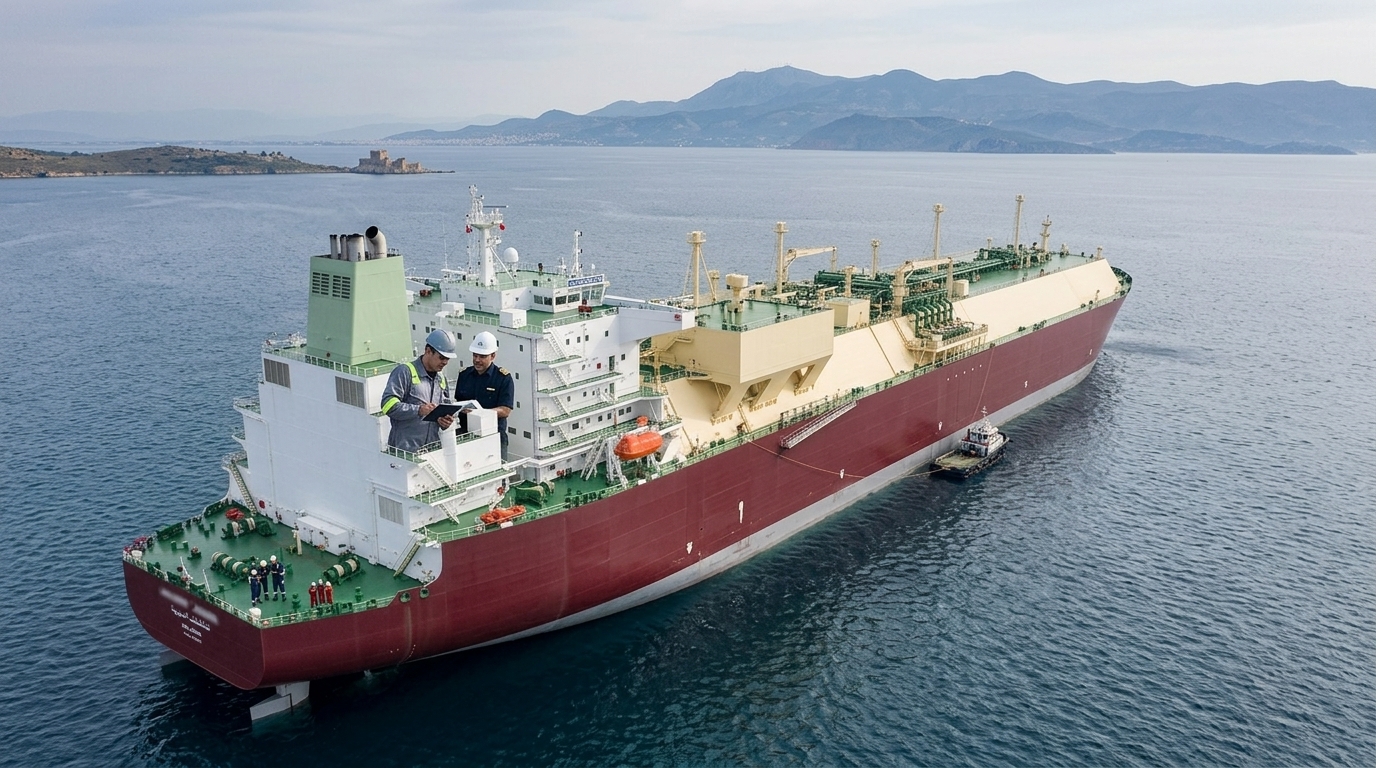
In an era where the global energy chessboard is being rearranged at a breakneck pace, Greece is reaffirming its role as a critical hub for the energy security of Southeastern Europe. The recent finalization of the agreement between Atlantic SEE LNG Trade—the joint venture involving Aktor (60%) and DEPA Commercial (40%)—and US giant Venture Global, is a development that transcends narrow business boundaries and acquires deep geopolitical significance. The commitment to supply 1 million tons of liquefied natural gas (LNG) annually until 2050 highlights Athens' long-term strategy to decouple from traditional sources and create a stable "Vertical Corridor" of energy.
The Strategic Alliance of Aktor and DEPA
Atlantic SEE is not merely a commercial entity; it is the vehicle through which two domestic giants join forces. Aktor, under its new management structure and the strategic direction of the Intrakat Group, seeks to diversify its portfolio by investing dynamically in the energy sector. On the other hand, DEPA Commercial brings the technical expertise and historical experience in the gas market. This cooperation allows the Greek side to negotiate with terms of power in the international market, ensuring competitive prices and supply stability.
The agreement with Venture Global concerns the CP2 LNG project under development in Louisiana, USA. This is one of the largest and most modern LNG export facilities in the world, which has already attracted interest from leading global energy players. For Atlantic SEE, securing these quantities means that Greece not only covers its own needs but becomes a main supplier for neighboring countries such as Bulgaria, Romania, Moldova, and even Ukraine.
The "Vertical Corridor" and the Geopolitical Dimension
This deal is the cornerstone for the operation of the so-called "Vertical Corridor." Unlike traditional pipelines that transported gas from East to West, the Vertical Corridor allows energy to flow from the South (Greece) to the North. This infrastructure is supported by the Alexandroupolis FSRU, which acts as a gateway for American LNG arriving through Atlantic SEE.
"This agreement is not just about today, but about the next three decades. We are ensuring that our region will have access to cleaner energy, reducing dependence on volatile geopolitical factors," say sources close to the joint venture's management.
The duration of the agreement (until 2050) coincides with the European Union's goals for the green transition. Although natural gas remains a fossil fuel, it is considered the necessary "bridge fuel" that will allow the gradual phasing out of lignite and coal, while ensuring the stability of the electrical system. Venture Global has committed to using carbon capture technologies (CCS), making the produced LNG more environmentally friendly compared to other sources.
Economic Implications and Energy Costs
For the Greek consumer and industry, this agreement promises greater price predictability in the medium term. Long-term Sale and Purchase Agreements (SPAs) offer protection against the sharp fluctuations of the spot market, which caused the energy crisis of previous years. Furthermore, Aktor's participation ensures that a significant part of the added value from the transport and marketing of gas remains in the Greek economy, boosting infrastructure investments and new jobs.
- Securing 1 million tons of LNG annually for 25+ years.
- Strategic partnership with a leading US exporter.
- Enhancing Greece's role as an energy transit hub.
- Supporting the energy security of the Balkans and Central Europe.
In conclusion, Atlantic SEE's move to close this deal with Venture Global is a vote of confidence in the prospects of the Greek economy and regional cooperation. In a world seeking stability, Greece is positioning itself at the heart of energy developments, building bridges that will last for generations.





