

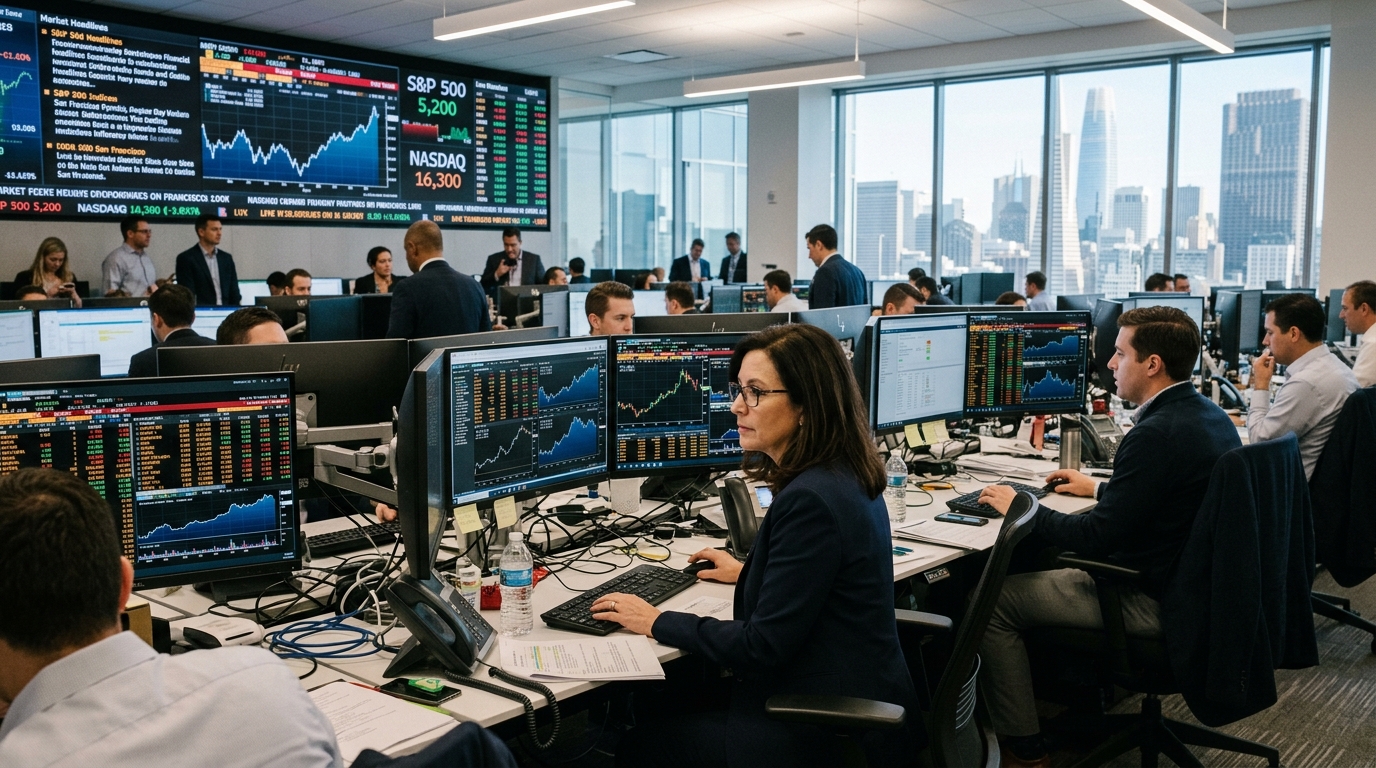
The narrative of San Francisco’s "doom loop," which dominated financial headlines for the past three years, is finally giving way to a more optimistic reality. The driving force behind this shift is none other than the Artificial Intelligence (AI) explosion. In a recent appearance on Bloomberg Tech, Chad Tredway, Global Head of Real Estate at JPMorgan Asset Management, articulated how the current AI cycle is fundamentally reshaping the real estate landscape in the City by the Bay.
The Strategy of Second-Order Effects
One of the most compelling aspects of Tredway’s analysis is JPMorgan’s deliberate choice not to invest directly in data centers in the traditional sense. Instead, the asset management giant is focusing on what are known as "second-order effects" of the AI ecosystem. While data centers provide the technological backbone, the real value for institutional real estate investors lies in the surrounding infrastructure and the physical space requirements generated by the concentration of talent.
According to Tredway, San Francisco is benefiting from a unique convergence: the presence of the world’s leading AI minds and their inherent need for physical collaboration. Despite the rise of remote work, AI companies—ranging from behemoths like OpenAI and Anthropic to thousands of burgeoning startups—show a clear preference for proximity. This is driving an increased demand for "Class A" office spaces—high-end environments that offer amenities and technological infrastructure that cannot be replicated at home.
Downtown Renaissance and the Interest Rate Challenge
As of June 2026, San Francisco is in a profound state of transition. Tredway points out that the real estate market is no longer a monolithic entity. There is a sharp bifurcation between older, obsolete office buildings and modern spaces that embrace the needs of tech firms. JPMorgan sees significant opportunities in retrofitting and repositioning assets that can serve this new wave of AI professionals.
- Talent Concentration: San Francisco remains the global epicenter for AI engineering, consistently attracting capital and human resources.
- Quality Upgrade: Demand is shifting from mere square footage to the quality and functionality of the environment.
- Network Infrastructure: The necessity for high-speed connectivity and power reliability makes specific locations significantly more attractive than others.
However, the landscape is not without its perils. The macroeconomic environment, with interest rates remaining at levels that demand disciplined leverage management, means investors must be exceedingly selective. Tredway emphasizes that JPMorgan’s strategy is rooted in resilience and long-term value, avoiding the speculative bubbles that often accompany technological revolutions.
"We aren’t just investing in bricks and mortar; we are investing in a city’s capacity to generate innovation. San Francisco, despite its challenges, remains the laboratory of the future," the sentiment suggests.
Social Implications and the Future of Urban Living
The revitalization of real estate through AI brings the issue of housing back to the forefront. As high-earning tech workers return to the city, pressure on rents and home prices is mounting. JPMorgan Asset Management is closely monitoring this sector, recognizing that the sustainability of the economic recovery depends on the availability of adequate and affordable housing for the broader workforce.
In conclusion, Chad Tredway’s analysis suggests we are at the beginning of a new real estate cycle where technology is not just a tenant, but the architect of urban reconstruction. San Francisco, serving as ground zero for this change, offers valuable lessons for future cities worldwide. JPMorgan’s strategy to focus on broader infrastructure rather than narrowly on data centers represents a vote of confidence in the multifaceted value of urban centers in the age of AI.





