

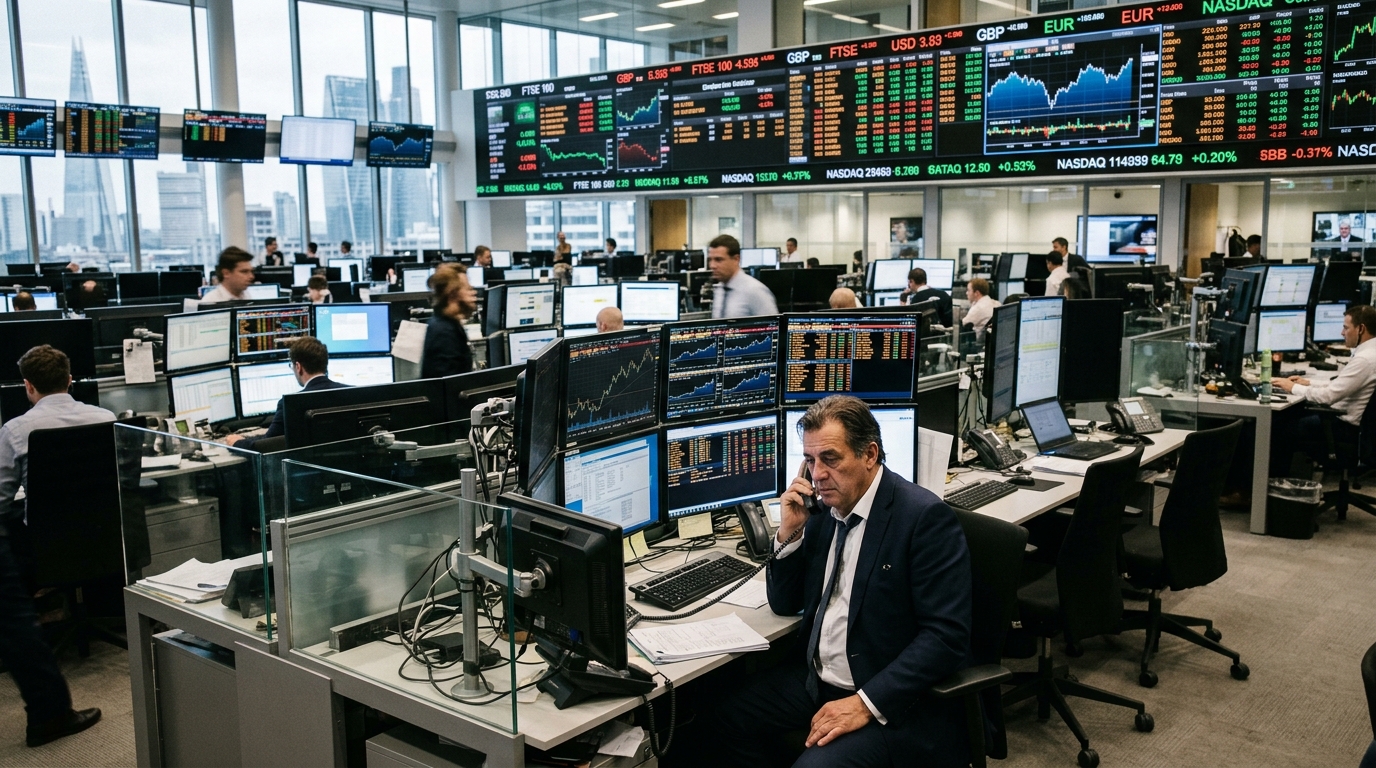
Wall Street, the enduring symbol of capitalism and human ambition, is facing an existential crisis that stems not from a market crash or geopolitical instability, but from the lines of code within Artificial Intelligence (AI). According to recent reports and analyses, such as those from The New York Times, major investment banks—from Goldman Sachs to JPMorgan Chase—are fundamentally reshaping their workforce, drastically reducing junior analyst hiring and replacing traditional 'grunt work' with sophisticated Generative AI models.
The Automation of the Junior Analyst
For decades, entry into Wall Street meant 100-hour work weeks, with young graduates toiling away at creating pitch decks, analyzing vast volumes of data in Excel, and drafting reports. This process, long considered a 'baptism by fire,' is now being automated. AI models can now synthesize financial analyses in seconds, identify trends across thousands of pages of corporate filings, and generate complex financial models with minimal human intervention.
Banks report that productivity has skyrocketed, but this comes at a heavy price for employment. The traditional banking pyramid, where a large base of young analysts supported a smaller number of senior executives, is collapsing. Today, a single experienced banker, aided by a specialized AI system, can perform the work that previously required an entire team of Ivy League graduates.
The Apprenticeship Gap and Long-term Risks
Beyond immediate job losses, a more serious question arises: How will the next generation of Wall Street leaders be trained? If AI takes over all entry-level tasks, young workers will be deprived of the experience gained through hands-on friction with data. Wall Street has always relied on an apprenticeship model. Without the 'lower' rungs of the hierarchy, the ascent to the top becomes uncertain and steep.
- Hiring Contraction: Major banks have reduced junior analyst positions by up to 30% in certain departments.
- Skill Shift: The ability to operate AI tools is now more critical than speed in Excel.
- Power Concentration: Technology allows giants to dominate with fewer staff, significantly boosting profit margins.
The Ethical and Systemic Dimension
Replacing humans with algorithms in financial decision-making carries risks that extend beyond the labor market. The 'illusion of precision' offered by AI could lead to systemic errors if models rely on biased or incorrect data. Furthermore, the social impact of eliminating high-skill jobs creates a new form of 'white-collar' unemployment, which could have unpredictable consequences for the global economy.
"It's no longer about whether AI will change Wall Street, but about how many of us will remain in the room when the lights of automation are fully turned on," says a senior investment banking executive who requested anonymity.
In conclusion, the Wall Street of 2026 is a place where code holds more value than a degree. This transition is inevitable, but its management will determine whether the financial industry remains a living organism or becomes a cold, automated machine generating wealth for a select few.





